
Toaster Performances Thoughts Opinions 2021–2025
A Toast for Performance
By Sally Marcher and Miriam Frandsen
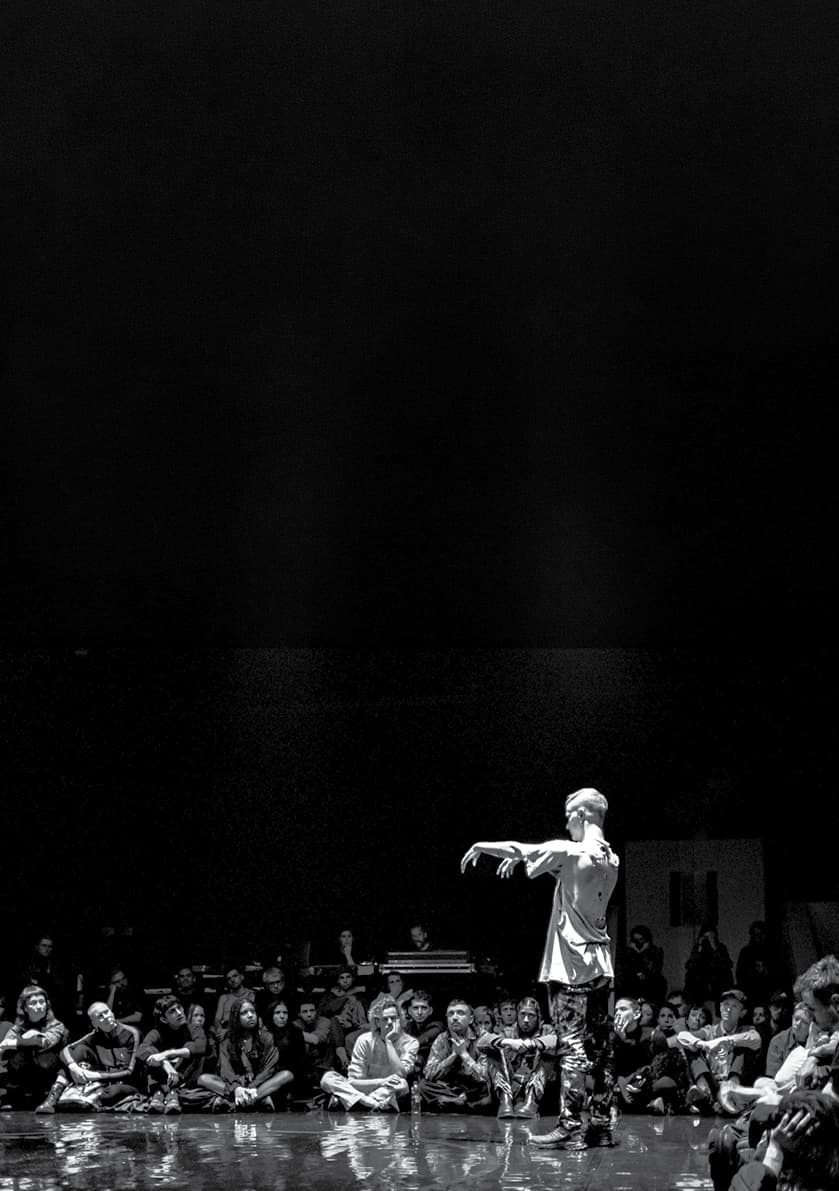
In Hestnes/Popović’s performance So Far So Good we learned how the toast came to life. A toast translates in Danish as skål, meaning a bowl that you eat or drink from:
When the Vikings were toasting each other’s health they would bump their bowls so that the beer from one spilled over to the other. So if one of them was poisoned, they all went down.
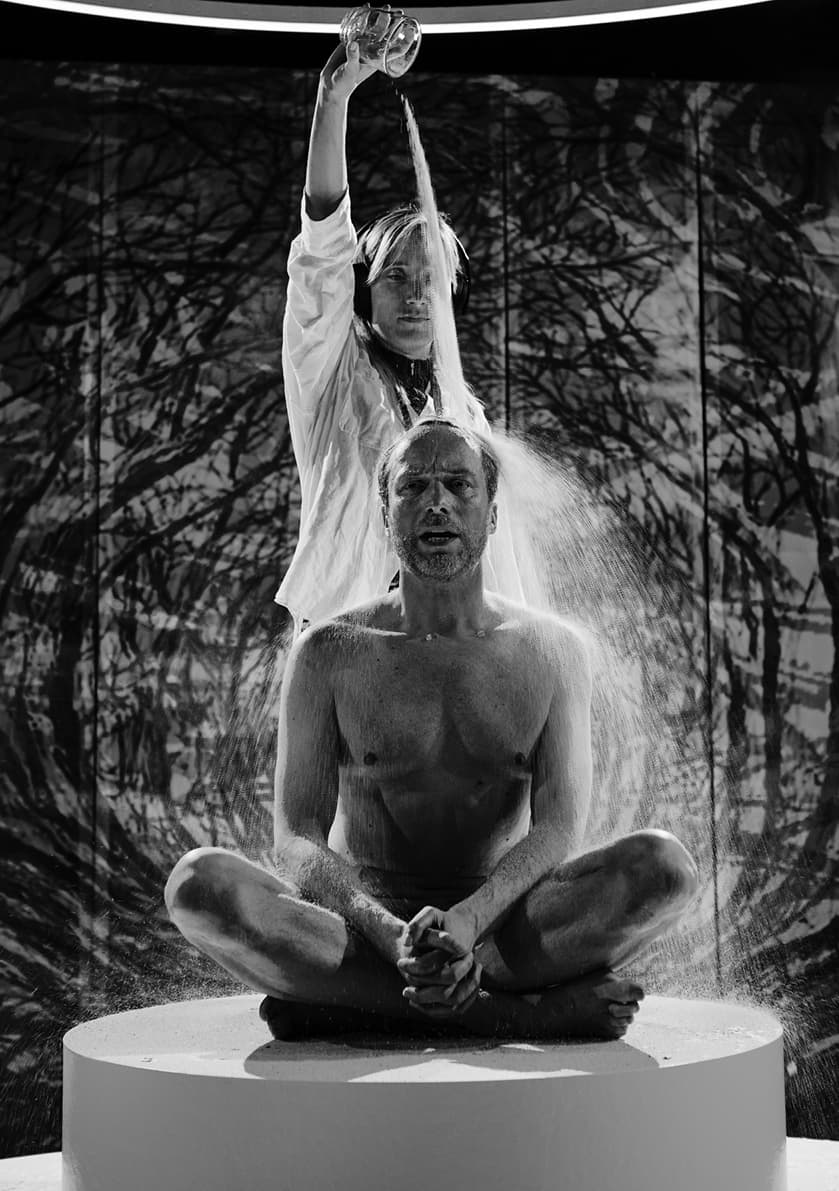
Hestnes/Popović, So Far So Good, premiered 19 November 2022, Rosendal Theatre, Trondheim, Norway
With this publication, we wish to make a toast where all the bowls spill over in one another emphasising that we are all in the same community of trust. Almost all the contributors to this publication have in one way or another been connected to Toaster at some point and they are all chosen for their specific insight and interest in performance.
We also want to credit everyone who has participated in making these four years with performance possible. Therefore we have gathered all the names both on and behind the scenes, artists and people who have been employed at both Den Frie and Husets Teater, in one long list. Please forgive us if someone is missing. We hope it will read as a gesture of gratitude and a wish to acknowledge everyone involved: We have shared the same performative drink, and our bodies and minds are connected in time and space. The book you hold in your hands, or perhaps experience online, is a celebration of that.
Initially, the publication was intended as a documentation of Toaster’s first four years – a way of shedding light on past productions, and giving voice to what Toaster has been and becomes. However, as the editorial process unfolded, the publication itself became a work in progress – expanding from a purely documentary project, to a publication with the ambition of pointing out broader themes and perspectives in the performance field. The table of contents follows the same dramaturgy:
Marianne Torp and Liv Helm introduce the two institutions initiating and making home for Toaster, and reflect on how working with performance has changed their houses in Performance Transforms Contemporary Art and Institutions.
The next four articles all describe specific performances and curatorial programmes from different starting points and views. Monna Dithmer starts out with the feeling of discomfort and specific focus on Toaster’s international performances in ‘Bodies on the Edge Show the Way’. In ‘Phantom Publics: Social experimentation with performance art’ Iben Elmstrøm turns towards the site-specific work Toaster has curated and co-produced and asks how artistic strategies can re-define or re-produce a social space and if art becomes public just because it is presented in the public space? Anne Liisberg looks into three of Toaster’s serial programmes: STATEN, Acting IN&OUT and Performance Bulletin in her article ‘Serial Hybrid Formats Address the Contemporary Through Collective Audience Encounters’ and argues that they create fluid spaces opening towards collectivity. And Christine Bonnichsen Søndergaard and Sóley Freyja Eiríksdóttir take us through their experience of the programme Managing Discomfort in ‘The Necessity of Discomfort’.
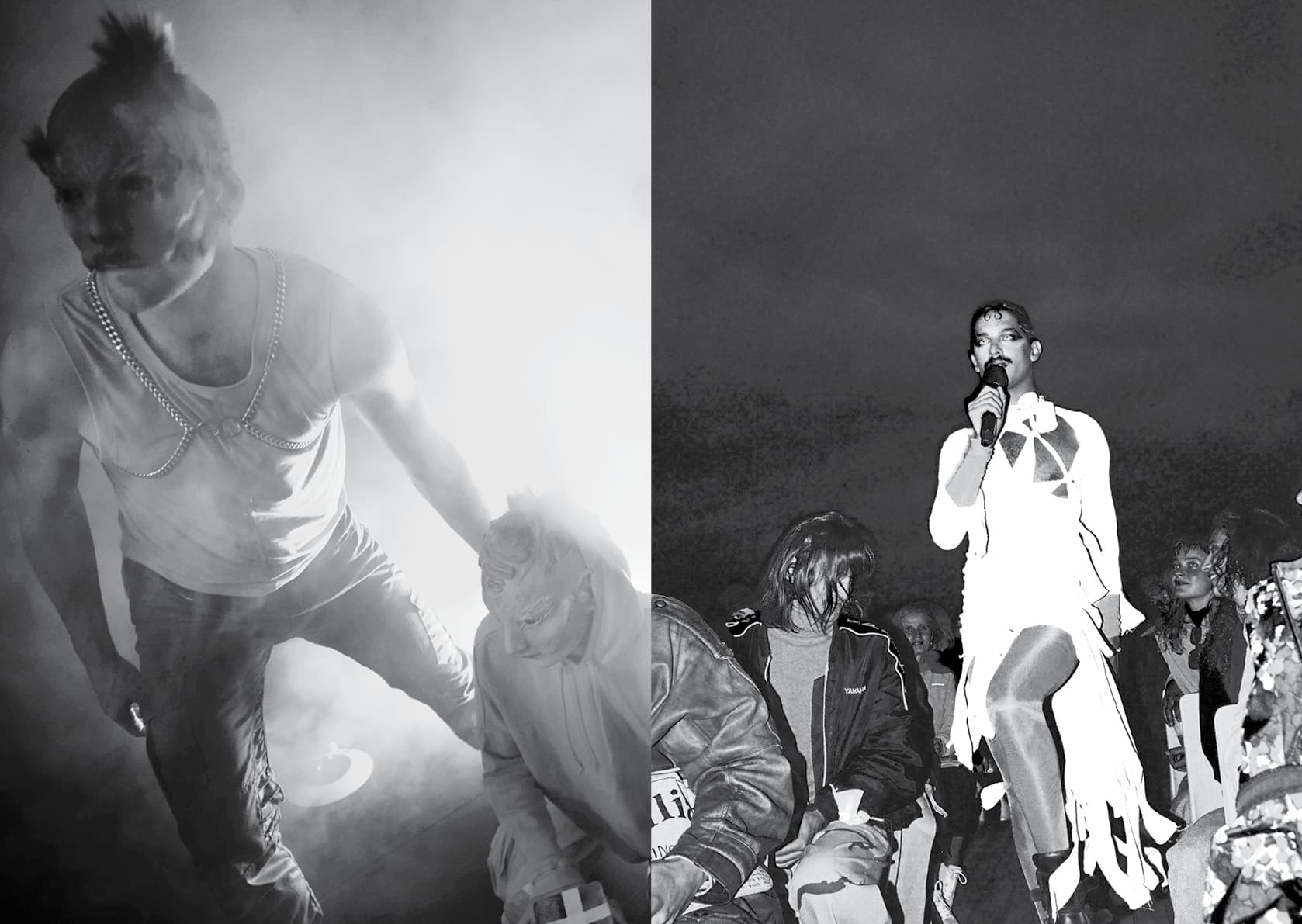
The more overall focus is then followed by one specific deep dive into LOGEN, one of the five house artist groups that had a special place at Toaster in the first years. The article, ‘LOGEN and the Sacred Theatre of Monstrosity: Entering the belly of the monster’ is written by Jon Auring Grimm who has a close connection to the work. The article delves into a specific artistic practice, but also points towards something more general in the field, as it elaborates on the sacred and the profane, and performance as a practice of calling into the void.
With the following articles of Solveig Gade as well as Moussa Mchangama and Lea Hedeskov (In futurum), and Storm Møller Madsen & Cecilie Ullerup Schmidt, we wish to broaden the perspective and include discussions of institutional roles and responsibilities. In ‘The Art Institution as a Platform for Sensing, Thinking and Dreaming Otherwise: Toaster’s Acting In & Out Festival’ Solveig Gade explores the role and value of the art institution in times of crisis and how art institutions can create other kinds of generative spaces for collective reflection than usually offered in the public realm. In their article ‘Diversity, Equity, and Inclusion in the Performing Arts: Navigating political change, artistic freedom, and organisational responsibility in a Nordic context’, In futurum’s Moussa Mchangama and Lea Hedeskov also discuss institutional and organisational responsibilities in the present political climate and raise important questions of what commitment towards diversity, equity and inclusion practices in the Nordic performing arts field can and should look like. Following this, in Institutionalising the Radically Unstable Storm Møller Madsen and Cecilie Ullerup Schmidt examine the paradoxical relationship between institutions and the performing arts and how this can be embraced while providing sustainable, consistent infrastructural homes for performance.
Finally, to interrupt our own dramaturgy we have spread seven existing interviews with TOETT, Filip Vest, Jules Fischer, Hastens/Popović, The Algorithmic Theatre, Norpol, and I-IR throughout the publication. They were produced while the artists were in the midst of creating their productions, and we find them valuable to publish as a part of this publication to give an insight into the artists’ processes.
In both process and result this publication has in more than one way been characteristic for what Toaster (also) is; a work in progress, an experiment, an attempt to gather diverse and multi-faceted perspectives, curiously intertwined, questioning and collaborating – following along with where the process and people, in this case the authors, take us.
We hope the publication will be used and the knowledge spread. That the shared love of performance is a fire that can keep us warm, and that Toaster has become a home for performance.
We would like to conclude by thanking the people and foundations that have supported and developed Toaster:
Thanks to the Danish Arts council who picked our application in an open call back in 2020 for a new international performance stage in Copenhagen: Lars Seeberg, Tina Tarpgaard, Marianne Klint, Andreas Garfield and Leif Arne Kjøllmoen.
And thanks to the Danish Arts Council that gave us four more years: Gitta Malling, Gry Worre Halberg, Trine Wisbech, Carsten Wittrock and David Cornelius Price.
Thanks to Toaster’s advisory board that helped us start up: Lilibeth Cuenca, Cecilie Ullerup Schmidt and Matthias Lilienthal – thanks for all the critical reflections on our purpose and sharing of curatorial ideas and network.
Thanks to the Bikuben Foundation for both giving us support to develop Toaster’s organisation and for the membership in the community Thoravej 29.
Thanks to all our collaboration partners: Art Hub Copenhagen, CPH STAGE, CURRICULUM, Dansehallerne, Haut, fix+foxy, Liverart.dk, Republique/Revolver, Selected Works (Det Frie Felts Festival), Sort/Hvid, Theatre- and Performance Studies at the University of Copenhagen, The Danish National School of Performing Arts Continuing and Further Education, The Royal Danish Academy of Fine Arts, Travers, Tårnby Park Studio, UP (The Development Platform for Performing Arts), Warehouse 9 – we are so grateful for having you as colleagues and ‘partners in crime’.
A warm thanks to the three online magazines Peripeti, Iscene and Bastard for writing about Toaster and the artists – you are a very important part in supporting the artists in the field of performance.
Thank you to Pernille Kragh for translation of the interviews.
Thanks to Mia Witt, an intern from Theatre and Performance studies, who helped out with the publication, especially the long list of names.
A big thank you to Åsmund Sollihøgda for making Toaster’s brand stand sharp in all graphics and on the homepage. We are full of gratitude for Toaster’s successful visual impact.
And above all a big thanks to the Danish Actors Union for supporting the publication so we now have it both online and as a book.
Performance Transforms Contemporary Art and Institutions
By Marianne Torp and Liv Helm
Performance art has historically existed on the periphery of institutions. It has appeared in galleries, on the streets, and in warehouses, often reaching a limited audience that has not widely had the opportunity to encounter it. For us, Toaster is about bringing the periphery into the centre.
In 2021, Husets Teater and Den Frie entered a collaboration with the vision of strengthening the field that lies between the performing arts and the visual arts. We saw a growing number of both performing artists and visual artists working with performance, and we wanted to offer them better institutional frameworks within our theatre and art centre. This collaboration became Toaster, our shared platform for producing and presenting performance from Denmark and abroad.
Since their founding, in 1891 and 1975, Den Frie and Husets Teater have provided a framework for artistic avant-gardes that have shaped contemporary art. Both institutions carry an inherent DNA that encourages us to drive artistic development forward and to create strong conditions for contemporary art to meet an audience.
For Husets Teater, the work with Toaster has been artistically innovative. We have experimented with different formats for how performance art can unfold within the theatre space, and together with the artists we have gained many experiences. Along the way, we have said to each other that it is also allowed to be difficult, because the performance genre is about challenging expectations of what a theatre experience can be. We have built human-sized glass cages, hosted dinner parties, set a performer on fire in the square outside, and waded through water and raw meat. We have experienced how a smoothly running theatre ‘machinery’ can help realise the artists’ visions and provide resources that have made a crucial difference in their productions. We have given our usual theatre audiences a unique insight into experimental works, while at the same time attracting a new audience of visitors with interest in art, who may not previously have sought out the theatre space. Needless to say, it has been a remarkable organisational development.
The Toaster collaboration has sharpened Den Frie’s focus on and engagement with performance art. The project has provided us with both disciplinary and financial resources to bring more performance works into our exhibition programme and to further support the production of new works. During the years that Toaster has existed, the performance field has developed significantly – many artists are now working with performance, and many art institutions are increasingly presenting performance. Through Toaster, Den Frie has had the opportunity to approach performance in an exploratory and developmental way, considering how we can work with the field and how it can be included in our programmes. From the outset, the collaboration with Husets Teater has directed our attention to the overlaps that exist between visual art and other art forms within the performance field. We have become more attentive to how performance often emerges from, relates to, and directly incorporates other fields. Not only theatre, but also dance, sound, and other artistic practices. For Den Frie as an institution, this has been both disciplinarily and artistically eye-opening, and we feel it has strengthened our dialogue with both artists and audiences.
We are not aware of other examples of an exhibition hall and a theatre collaborating to curate and produce performance. There are a few museums in Europe, such as the Museum of Contemporary Art Kiasma, Finnish National Gallery in Helsinki, and DOX Centre for Contemporary Art in Prague, that also present performing arts and performance programmes. They have black box spaces within their buildings, but they do not have cross-institutional partners. We see this as an organisational breakthrough for institutions and hope that it will help strengthen and inspire the field.
Through the new collaboration with the Bikuben Foundation at Thoravej 29 that started in spring 2025, we have another breakthrough and transformation. Here we can give our artists access to the black box and studio at Thoravej 29 eleven weeks a year. It’s a priceless support of the commissioned and new work we co-produce at Toaster. We also use the presentation stage for public events, workshops and seminars in collaboration with artists and other organisations such as HAUT, Art Hub Copenhagen, Sort/Hvid, UP (The Development Platform for Performing Arts) and fix+foxy.
Toaster has presented performance to audiences for five years. We have greatly appreciated getting to know the field and seeing how audiences are drawn in, sensing that something special is happening in the houses when Toaster is in motion.
Liv Helm (she/her)is a theatre director trained at the Danish National School of Performing Arts. She is the artistic director of Husets Teater and previously founded HAUT – a hub for performing arts development. Helm has been described as one of the most influential directors of her generation. She has received the directing award Teaterkatten and the Reumert Talent Award. She has also been awarded the Danish Arts Foundation’s annual prize twice and won a Reumert for Musical of the Year for the production Brøgger, based on the collected works of Suzanne Brøgger. In 2024 she debuted as a novelist with Med hjertet i hånden, followed the year after by the sequel Hvis du er bange, så ryk tættere på.
Marianne Torp (she/her) holds an MA in Art History from the University of Copenhagen and Columbia University in New York. She is the director of Den Frie and previously served as Chief Curator of Contemporary Art at the National Gallery of Denmark (SMK) and Head of Artistic Affairs at the New Carlsberg Foundation. Torp was curator of the Danish Pavilion at the Venice Biennale in 1999 and 2015. She was a member of the Committee for Research in Art and Art History at the Novo Nordisk Foundation (2016–22), a board member of Stiftelsen Kunstkritikk (2017–22), and vice chair of the Visual Arts Committee at the Danish Arts Council (2007–11). She has also, for many years, been an external examiner at the University of Copenhagen, Aarhus University, and the Royal Danish Academy of Fine Arts.
Don’t Forget to Remember
Interview with The Algorithmic Theatre
By Miriam Frandsen
I’ve gone to visit Kulturværftet in Elsinore, where The Algorithmic Theatre are rehearsing the play Labyss. The Algorithmic Theatre (hereafter: TAT) is an open working community consisting of four core members with different backgrounds: visual artist and author Kristian Byskov, performing artist and author Kristian Husted, dramaturg and producer Pernille Kragh and curator Tina Ryoon Andersen. In the production of Labyss they’ve collaborated with a string of other actors: set designers, programmers and scientists. The main purpose is to examine how new algorithmic systems affect us as individuals, our society and our bodies. Labyss is a test centre collecting our memories in order to develop a software that, eventually, can give us access to our memories again,not if, but when, we have forgotten them. It’s an AI developed by TAT in collaboration with KasparAI based on an open AI ChatGPT-3, which is being “taught” to talk to us about our memories.
We’ve agreed that the interview should start with a test of the AI. What happens if the AI makes and poses the questions based on what it hears TAT say? A small challenge is that it doesn’t speak Danish that well yet and that it has a hard time decoding when more people speak into the microphone at the same time. I help it get started by asking the first question:
Miriam: What is your first memory of The Algorithmic Theatre?
TAT: That would have been when we started writing together during the first Covid-19 lockdown in the beginning of 2020. We hadn’t formed The Algorithmic Theatre yet, but that’s where it started. We felt that we were part of some kind of theatre, because the authorities kept wanting to know how we felt and if we had any symptoms of coronavirus. The state started collecting vast amounts of data about our behaviour
– both online and IRL – and processed them algorithmically. What happens if we close all the daycares, but not the schools? What words are typically googled if you’re experiencing symptoms of coronavirus? And so on. The Covid-19 situation was to us an algorithmic theatre.
Here I stop recording and the AI poses its first two questions on the basis of what’s been said. The system is developed in such a way that the person operating the computer (in this case me) can choose the question they think is best to carry on the conversation: AI: What did you feel walking around in this theatre? How is your relationship with the data machines?
I choose the first question.
TAT: We felt a lot of things back then. And we talked about surveillance and control and how it was all coming closer to us, at the same time as these algorithms, this entity [an independently operating part of a unit]1,was an alien phenomenon that we had had trouble understanding, moving in so many directions at the same time so fast that we struggled to grasp it. The power they held over us wasn’t very nice. It was a state of emergency but we became curious about what data was being collected and how it could lead to arbitrary decisions; why for instance should the distance between people always be one metre and not two? We recognised it as an algorithmic system, where you turned different parameters up and down. This was when we coined the phrase “life algorithm”. We wanted an algorithm for life instead of one for death.
AI: What did you do when you felt like you were a state of emergency? How did you perceive the software’s way of speaking?
TAT: Oh, yeah, the software can get a little flippant.
Miriam: Yes, but it’s a good question so how did you perceive the software’s way of speaking?
TAT: The AI transforms everything we say into data and based on that forms a question. That’s a very mechanical process and at the same time, because it’s arbitrary, becomes poetical. A mechanical poetry you could say. It poses some questions that we humans would never ask each other, but it can be very innovative.
Another member of TAT interrupts:
I understood the question as being about The Algorithmic Theatre and the time during the Corona pandemic and not about the AI itself. So for me the question is more about how we experienced being controlled in this fashion? The authorities were very much at a loss as to how they could use data to control the spread of infection. Politics came to revolve around data analysis. We were, and still are, reduced to data.
AI: Who’s taking the piss? What technologies do the scientists work with?
After we’ve finished laughing at the AI making such an emotionally charged question, I choose to proceed with the second question and rephrase it slightly: Miriam: What algorithmic technologies do you work with?
TAT: Right now we’re working with language and memories. They may not strictly speaking be a technology or an algorithm, but they have a logic that can be reminiscent of algorithms. A logic which makes up a big part of our bodies and identity. When the memories meet another technology, this software, the AI tries to understand what these memories are and what we are, at the same time as we’re trying to understand what it (the AI) is. It’s an interesting relation to explore.
I get eager and forget the game with the AI conducting the interview and ask: Miriam: Can you expand on how memories and algorithms are reminiscent of each other?
TAT: Both are a process creating some form of meaning for us. Just as they do for the AI. We’ve invented a device that’s trying to decode us in the same way as we decode the world.
AI: How did you express your memories of taking a shower? What was exciting about your understanding of the other technology?
Here I choose to continue the interview without the AI. Its questions can be surprising and open up new angles, but it also felt like it didn’t quite get to the core of what I wanted to know more about.
Miriam: How did you land on memories when you started out examining algorithms?
TAT: We’d been granted funding for a developing workshop and in the beginning we had a lot of ambitions for what we wanted with this piece: iris scans, test centres and stories of how immigrants had their data stolen… On the basis of a workshop at Art Hub the choice to explore memories was made. We became aware of the digital memory loss, this invisible epidemic that we aren’t really bothered with. But which is affecting us internationally across a wide spectrum.
You operate with a concept called sentiment analysis which is used frequently in the world of finance. It’s a kind of emotions analysis where you use data and algorithmic analysis of data by, among other things, examining e.g. Google and Twitter feeds to try and figure out how people are feeling, because it also affects the financial market. It’s believed that we can examine how a population is feeling via their data trails. We’d like to read people in the same way, but at the same time give our audience the experience of being read. We also considered biometrics as another way to go about this. We examined different ways in which algorithms categorise people based on different systems: for instance if you’re curly haired or bald. We found out that we thought the most exciting way to participate was via your own personal stories and not your looks. When you have to open your own mouth and tell something personal, there’s a different involvement taking place, that might be in stark contrast to the process of turning everything into data. It’s something living, something opening up.
Miriam: What is a personal memory in that context?
TAT: When you experience yourself being turned into data, that our emotions become data. Then there’s no longer anything called “my data” – an anonymisation takes place. You get broken up into little pieces in a way…
Another interesting angle has arisen in the work with software and memories. The AI is interested in listening to the stories we tell. Not in a therapeutic or problematising way, but in anything you have to say. And through this it becomes apparent that we all have a unique memory and story and that using the AI in a way is reanimating the memory, if you spend enough time with it. That conversation doesn’t have a specific purpose, it becomes an agenda-free conversation. The AI is capable of something that we ourselves have been surprised by. There’s a certain freedom to the conversation.
Miriam: Labyss test centre is established in Den Frie. Why is it interesting for you to work in an exhibition space? How does that influence your process?
TAT: The theatre as an institution has an unspoken contract called fiction different to when you enter an exhibition space which is more concerned with expression. In the exhibition space you don’t enter expecting to be told a story.
There’s also a level of mere practicality at play, in that we wanted a space that you could walk around freely, and in that sense, the art space is in some ways more open. But we’re still working with elements of theatre in an art space. We’re interested in working with many different forms of expression such as: text on a screen, video, space/set design and sound installation, which put together creates a different way of telling the story. Labyss could also take place in a shopping mall, in a library or in a test centre tent because it is a form of pop-up event. We’re interested in the visual expression when stories are transformed into data.
Miriam: What would you like to make the audience think, when they experience Labyss?
TAT: To us part of the agenda with The Algorithmic Theatre is to examine what this technology does to us as people through the arts, as it offers a different kind of sensibility and corporeality that gives birth to new reflections in a collective experience.
We’re hoping to activate the critical sense of the audience – and challenge it a little. We’re not trying to explicitly say: look at this dangerous technology surveilling you, but instead: let’s share something and reflect together about this technology that we surround ourselves with and use – without quite understanding it.
We’d also like to challenge the limits of the body, where you in Labyss’ space can experience how your memories, life and body is being split into atoms – and how it actually reflects our everyday lives.
We think the most important thing is what goes on in an open conversation, that we don’t quite know where will lead. The algorithmic technologies we surround ourselves with now, give us information that they think we’d like to have, making conversation superfluous. We’re told what we want to know, before we know it ourselves, and know that we want to know it. And it removes something very important from our world: the meeting with another person in which the unknown can arise.
Generally speaking, we find that when we try to work on these projects relating to something in the future, we’re usually either overtaken or caught up. Technological development is so fast and moving in so many directions so it’s all just very unpredictable. We’re trying to get better at thinking about that: there is no inside or outside. It’s all fragmented, flowing at a fast pace. Labyss can be a contributor to creating a discourse where you experience technological development in a different way; feeling it directly on your own body hopefully inspires reflection.
The interview is over and I take off, uplifted by the will and ability of art to embody difficult technological experiences and its desire to focus on hidden pandemics such as collective, digital memory loss. The situation with the varying individual interpretations of the AI’s questions was particularly interesting and a definite demonstration of how communication with an artificial intelligence will always come down to the human brain interpreting it, trying to create meaning on the basis of one’s own preferences and horizons of understanding. All dialogue and relations, both between humans and between humans and computers, harbours a degree of mystery – this, we mustn’t forget to remember.
1: An entity is an independently operating part of a unit
Bodies on the Edge Show the Way
by Monna Dithmer
It was clear from the outset: with Toaster we had ventured into the zone of risk. The premiere crowd, eager with anticipation at the big opening event, experienced this quite literally once we had boarded the extraordinary harbour tour Another Map to Nevada. The performative boat trip was staged by Performing Agency from Berlin, with no fewer than fifteen local and international artists in action. There was just one problem: it was raining, and the light- and sound-system did not work.
Yet this turned out to be a powerful creative constraint. Our senses sharpened as the boat glided through the shadowy water, and every effort was focused on catching sight of the bodies that stirred suggestively in the rain-soaked darkness. An angel in a hoodie and white wings had landed on the roof of the Royal Playhouse, a woman stood in the middle of a bridge throwing eggs down towards the boat, a neon green monster played the pan flute on the quay. Creatures that set the imagination in motion and made the familiar surroundings appear entirely different.
An initiating image of Toaster’s practice as a much-needed performance platform for international exchange of artists and practices on the edge. We are sent out into deep water, heading towards new horizons where there is room to take risks, miss the mark, and generate unexpected encounters. This applies both across cultural and geopolitical boundaries and across theatre, visual art, and dance – with performance as the unifying format. Over the past four years, unexpected and different bodies have taken the stage, discussing trending questions of identity politics regarding representation in terms of gender, ethnicity, and differently abled bodies – along with the accompanying hierarchies of power, blind spots and mechanisms of exclusion.
What especially struck me is the insistent physicality and performative force with which a number of the artists have managed to push the audiences out of the comfort zone and into the risk zone, through a confrontation with discomfort: a feeling of general collapse, shifting values and unstable ground beneath one’s feet, with all the impotence, awkwardness and anxiety this may provoke. In fact, Managing Discomfort was merely the title of one of the festivals but could stand as a headline for much of Toaster’s activity – so far.
Notably, discomfort typically went hand in hand with humour. Not the disarming or smoothing kind, but the sort that opens, twists and pinches so the performative point enters more forcefully. Ultimately, it is all about shifting the audience out of habitual ways of thinking.
There have been radically different ways of destabilising audiences and managing discomfort, demonstrated in the following six glimpses from Toaster’s different programmes, where challenging and challenged bodies show the way.
1. LIGIA Lewis – A Plot/a Scandal
In A Plot / A Scandal, the Dominican choreographer and performer LIGIA Lewis employed a kind of accumulation tactic to make the audience lose its overview. In an attempt to reclaim her own history as a Black woman, she let her stage surrogate leap in and out of radically different figures: at one moment the Enlightenment philosopher John Locke with a white curly wig, groping hands and authoritarian colonial doctrines; the next an enslaved woman from a historical revolt; then Lewis’ own voodoo-dancing grandmother as a spiritual guide through life. Through abrupt shifts between sexual assault, slapstick, restrained waiting, and melodramatic overheating, she sought to create cracks in the racialised inscriptions on the skin.
The aim was to expose the violence that has not only been exercised physically throughout history but also resides in the very logic of representation. In order to break free, the various character plots are piled up until they implode, forcing the audience to let go. It felt like a release when she finally sat still.
2. Maria Metsalu – Kultuur
The Estonian choreographer and performer Maria Metsalu sought to challenge and destabilise the audience in a more physically involving way. So, for Kultuur we were installed in the February cold on the square in front of Husets Teater, where she posed on top of her wrecked hot dog stand before throwing herself around among us – bare knees against the cobblestones, like a far-out prostitute on a bad trip.
But the performance underwent a complete metamorphosis when we were later invited inside the auditorium, where Metsalu seated herself at a round white table in the middle for fine dining with selected guests from the audience. While a waiter served exquisite dishes, the rest of us had to make do with nothing but sausages. We were left to simmer in envy, right until the meal was finished and the chosen guests were asked to pay their share of the (g)astronomic bill! No more artistic pretensions. Reality strikes back.
There was a cruel irony in how the social hierarchy was abruptly overturned, leaving the privileged at risk of being ripped off or exposed as stingy cheapskates. Yet it also struck the rest of the audience. Instead of our ugly envy, we could now stand there with our ugly mockery. Impossible to escape the discomfort zone.
3. Aaron Williams – Let Down Your Hair
The British artist Aaron Williams likewise explored the boundary between art and everyday reality, but from the perspective of his deafness. In Let Down Your Hair he managed to get the better of the audience with a remarkably simple gesture. We were simply left standing outside the front door of Husets Teater, waiting endlessly in the rainy darkness. He himself remained upstairs behind a window on the first floor, fruitlessly gesturing in sign language before rolling a long braid of hair down among us. There we stood, baffled: was it an invitation to climb up like some fairytale fool towards the chosen one?
In any case, from Williams’s side, as an advocate for people with disabilities, it was an imaginative alternative way of demonstrating how impossible it is for a wheelchair user to enter Husets Teater. A forceful reminder to those of us blind to our own privileges on the norm-body team: the ability to go to the theatre is not a given, although you have bought a ticket.
4. Martin O’Brien – An Ambulance to the Future
The British artist Martin O’Brien approached things in a far more extreme and physically intrusive way, using his vulnerable body as a tool to penetrate the audience’s discomfort. Living with life-limiting cystic fibrosis, he sees himself as a zombie between life and death, obsessed with exploring what immortality and pain might mean. In his auto-fictional An Ambulance to the Future, he attempted, for instance, to breathe – for a long period of time – with a balloon pulled over his head; or he allowed his naked buttocks to be spanked until we could see them getting redder and redder; and we watched as he pierced the skin of his scrotum.
Absurd and almost touching: all these things he did to torment himself. Combined with a yearning tale about an immortal green shark, it was such a grotesque juxtaposition of pain, pleasure and death that it took on a tragicomic glow. Right there in the midst of bodily discomfort.
5. Marina Otero – Fuck Me
The contrast could hardly be greater when it came to the Argentine choreographer Marina Otero, even though she too appeared with her naked, damaged body as the centre of an auto-fictional performance. Yet there was a crazy unruliness to her lustful tale of suffering as she let her five naked, muscular Pablos dance seductively around in soldier boots and jazzy show choreography. Now that she herself had had her back and her dance dreams crushed by years of relentless training, it was the men’s turn to strip and do the splits. Like a melodramatic avenger, she sat at the edge of the stage directing them tenderly like obedient dogs. Wildly comic, were it not for her damaged body with its visible surgical scars forming the moving, painful centre of it all.
But the applause had hardly died out before the “disabled” suddenly began running around the stage. A brutally ironic gesture: had I, and others, just fallen into the cliché of the victimised woman who, despite everything, manages to rise again but remains tragically crippled? Otero did not merely rise; she sprinted around, again and again – leaving the spectators looking slightly foolish and perhaps with a little more self-awareness. As the final gesture of Fuck Me: a challenging “fuck you”!
6. Back to Back Theatre – The Shadow Whose Prey the Hunter Becomes
A final and forceful lesson in managing discomfort was delivered by the Australian company Back to Back Theatre. A group of five neurodivergent performers had convened an activist town hall meeting on the stage of Republique, which they entered with awkward gaits, compelling presence and lines that were sometimes fired off like volleys, sometimes struggling forward word by word. Rarely have I felt such concentrated attentiveness from an audience: every sense was tuned in to understand.
Yet just as difficult as it was to decipher the performance’s title, The Shadow Whose Prey the Hunter Becomes, it was equally difficult to grasp what the activist meeting was actually about. Entirely intentional, for who exactly were the clever ones in the room? There we sat with our patient goodwill and the feeling of nevertheless having the upper hand – and if not, an instant AI translation on a screen above the stage helped us along…
Bingo! Demonstrating our AI dependency, was exactly how the neurodivergent performers got the better of us. When will we realise that once AI takes over communication, we may soon find ourselves in their situation as “intellectually disabled”? “Get used to having a label around your neck!”
As one of the performers dryly remarked: “I think this is sinking in.”
And if we still haven’t grasped it, there are another four years of Toaster – as a radically live platform for border crossing bodies and practices – in order to learn: how to manage your discomfort!
Monna Dithmer (she/her), critic at the daily newspaper Politiken and Associate Lecturer at The Danish National School of Performing Arts
Putin, Daniel and the Rest of Us
Interview with Norpol
By Miriam Frandsen
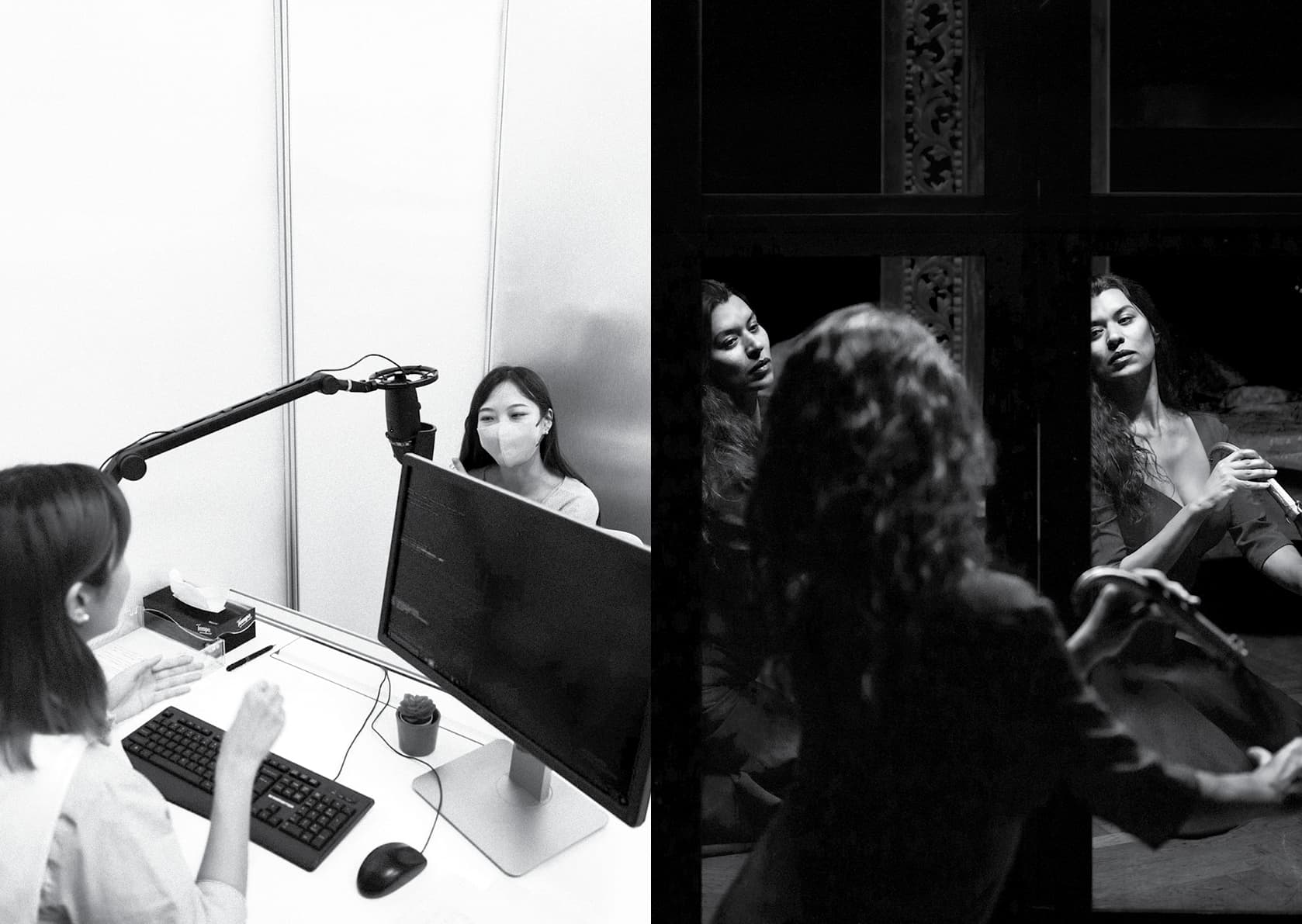
Norpol is in the middle of creating the performance installation I Trust You, which has been a long time in the making and has gone by many names, but has found its home at Toaster. I meet with Daniel Norback and Seimi Nørregaard in their flat for a chat about the company’s history and the upcoming performance installation, which will premiere at Den Frie on 10 November (2023).
Who is Norpol? And what is the basic DNA in the project?
Daniel: The name itself came about because Erik Pold and I were going on a tour with a performance in England and needed a name. And then the fusion of our two surnames, Pold and Norback, seemed obvious. I’ve been producing performances under that name since 2003. Norpol’s DNA is working with documentary material. I’m interested in the major political issues, which also sometimes seem impossible to solve. The material is created from interviews with relevant people. The biographical is also a core DNA as Norpol often stages people’s biographies. The documentary material is then converted into performance with me as performer and possibly other guest performers, and interpreted in a visual space by Seimi, who has been part of every project as a set designer and visual artist.
Seimi: Daniel is in charge of the application work and is project manager and always a performer, while I help develop concepts, sometimes just supporting Daniel’s ideas, as in the performance Labor (2021) where a set design was needed, other times more co-developing in terms of developing the narrative. The visual plays a big part, something that might otherwise feel distant and unreal is put in a spatial and sensual context. The inconsequential becomes more consequential because you share a physical situation. We often work with mixing fantasy and reality within the narrative. It’s interesting to us to examine what notions we and the audience have of something, for instance Russia. We sometimes also employ the lie as a means to provoke our preconceptions of what’s true and false, like in Teheran mon amour (2012). It’s art we’re working with, so there is no black and white. The audience has to participate themselves. We don’t know which person Daniel is and that holds a mirror up to all of us who are watching. The most important political issues contain some form of choice of a moral stance. We know what we ought to think, that we ought to stand up for other people, but the performance persona can show us sides of ourselves, where we fail to do just that, to take action. We have all the right opinions, but it’s really hard to take action once it comes close to ourselves. So that little lie is good for reflecting when the audience are actually being truthful themselves. And when are we as artists, wearing our moral hat, being truthful ourselves? We know what our opinions ought to be, but if we look closely, it can be hard to live by.
Daniel: I Trust You will probably be more truthful. That is because I need to be respectful to the people I work with, because it might be jeopardising their safety to participate. So I have to advance more cautiously. We’ve been working on this project for a long time, since before the war in Ukraine broke out and back then it was called From Russia With Love, but the irony of that just became too thick for present times. The concept has evolved into a meta story where I put myself at stake with my actual story of wanting to work with Russian artists. My story can hopefully reflect some of the feelings you might generally experience when considering a Russian person now and examine what the war does to the notions you have. Putin’s reign has been in place for many years, he has been elected, probably not entirely legally, but he has some support in the Russian community. So the thoughts have been there before, but the war has brought everything to a head, emotionally too.
What is the artistic motivation for making I Trust You? How did the idea come about?
Daniel: It’s been a long journey. The artistic motivation is the same as in every Norpol project, I’m very interested in human rights and questions concerning democracy. And Russia has occupied me all my life. I grew up on Gotland situated close to the Baltics, which was part of the Soviet Union back then, so I grew up with a certain closeness to the Soviet empire. When the Chechen wars broke out between 1994 and 1999 I became interested again and by then I was incredibly alone, because no one was talking about Chechnya. I attended meetings and joined the Chechnya Committee and here I met with many who were subsequently killed by the FSB. I was very committed and produced several performances that included these themes, for instance The Landscape of Evil (2005). But it was never an entire performance about Russia. Putin has also always been of particular interest to me: how has he acted and been treated with trust for so long? A Russian friend once said that I should make a performance called “Putin and I”. And now everyone is absorbed by it, as apparently Ukraine has more of an impact than Chechnya internationally. But the idea for I Trust You has been underway for four years and began with a Russian artist and activist. I wanted to tell her personal story, and how she in her capacity as a mother, in the end had to flee Russia. But that fell through due to different wishes for the collaboration and problems with mutual trust. Now the project has become more open and includes more artists and also more young artists. So it’s no longer about the specific biography of another, but about my own in the meeting with these artists.
What sort of parameters have you been most occupied with in regards to the performance and the exhibition? What is it you wanted to examine/explore? What are the challenges of making a performance and an exhibition at the same time?
Seimi: In I Trust You I’m creating a space that presents other artists. So I’m very occupied with how I can do that and at the same time preserve my own voice. I observe the artists’ works and gain information from Instagram and social media, where there’s a big flow of information, especially around the two imprisoned artists. So I attempt to create a space that presents them. But also a physical space that doesn’t just present their work but also some of the things they dream of experiencing again or long for. I want to make multiple spaces within the space precisely because more artists are participating. Because we can’t access them the way we normally do when we go out and interview people, we can only access them through the already interpreted versions of others. I’m occupied with creating a space that represents that, and not them. What’s it like to literally be deprived of your liberty and not even know if you get a trial or not? The insecurity in that is also an important part of the space that is being created, I think. They live in a system you cannot trust and we know that, but it’s good to be reminded of it physically. There are a lot of voices in this piece that aren’t physically present, and then there’s an artist, Marina Karpov, who enters and joins the space. She works with hydrofeminism and that becomes a piece in the piece. We get both originals and copies of art works in the space, and we could just view those as we would a regular exhibition, but I Trust You is a piece in its own right. It functions as an installation when it’s not a performance and we think a lot about the layers that can remain in the space, traces left behind, sound and lights. The space must also feel vibrant without performers in it. So there will be an animation of the space, you could say that the performance continues without us in it.
What kind of audience interaction are you working with?
Daniel: I try to create a connection with the audience and attempt to get them involved and become part of the piece themselves. Some of the conflicts taking place concern them, so they have to reposition themselves and there’s no right or wrong, but it becomes a negotiation between the audience and the performer, and also between me as a performer and the piece itself – a more or less obvious meta layer. An example from The Landscape of Evil (2005), which we created with Erik Pold, was to divide the audience into the good and the bad respectively from the start. They got to choose for themselves and they were fairly self-adjusting so it was almost always fifty-fifty, so it began from a humorous place and then became more and more serious. Humour is an important part of Norpol’s performances because it opens things up and creates the opportunity to later bring up the more difficult questions.
Seimi: As an audience you can’t feel taken hostage by a performance and think that if you don’t do this or play along, the performance will simply fall flat. Therefore it’s very important how Daniel is as a person. When he shows some of his ugly sides while at the same time being a very sweet person, we can allow ourselves to be there with our dark sides. Because we can both laugh at and identify with him. In I Trust You we step into the installation together – the space can become larger and smaller and we can be both in close proximity or left to our own devices. There will be both a lecture and times when the audience is invited into the space.
What would you like to make the audience think about with I Trust You?
Daniel: We would like for the audience, when they leave the performance, to feel a little closer to these people fighting for a different Russia than what we experience in the media. And that they consider the concept of trust. What does it take to make us trust in someone? Can I trust someone who speaks Russian? We think it’s scary when we start putting people in boxes and for instance condemn them and make faulty generalisations.
Seimi: And we’d like them to feel the hope too. Because it’s hopeful when people, who do not want to live under these conditions, are rebelling, even if it is against all odds.
What is the next natural experiment for Norpol in continuation of this production?
Daniel: We are slowly starting to think a bit about touring with the show and are considering playing in English so that it is easier to travel with. One could perhaps make a downscaled version, but it is difficult to say at this point. What can be very difficult about touring with contemporary art such as this, which really takes its starting point in the reality we are facing right now, is that policies change throughout the world and then it’s suddenly a completely new situation. That happened with our project Black Out (2009) which we made with Adelaide Bentzon and which had climate politics as its theme. Then Obama came and joined COP15 while we were still playing. The summit was a fiasco and from then on you didn’t talk about climate politics in Denmark and it became impossible to sell the performance.
I’m left with a feeling that it is incredibly important to work with material that is highly topical, even if it presents a challenge in terms of the lifespan of the performance installation, precisely because it can cause little ripples in the water both with the audience but hopefully also for the artists involved who reach out to people through Norpol’s work despite war and imprisonment. Because it isn’t just about Putin and Daniel but about all the rest of us as well.
Phantom Publics Social Experimentation with Performance Art
By Iben Bach Elmstrøm
Historically, performance art has been formed by the artistic exploration of embodiment, process, and artistic contestation of the norms that characterise the structure of both art and society. This impulse still occupies artists today, also in terms of artists re-inventing what an art space is and could be in the future. This constitutes an artistic renegotiation of the art institutional space, from ‘representative spaces’ towards more explorative and improvisational performative ‘spaces of opportunities’, as the German art theorist and curator Nora Sternfeld suggests. These practices of social and performative experimentation suggest new types of identification that are fluid, relational and unstable, rather than fixed or universal. They also extend the institutional space by taking performative formats and gestures into public urban space.
Since 2021, Toaster has curatorially experimented with taking performance formats into urban spaces by supporting and developing site-related urban performance projects with artists, who work in-between contemporary art and stage art.
But in what ways do these performative and transient concepts impact us as we walk through the city? Does art become public just because it is presented in the public space? Social scientist and geographer Doreen Massey claims that there is a tendency to romanticise urban public spaces as an empty space that is democratically open and free for instant exchange and expression without any acknowledgement of its social relations, which in the context of the city are most likely conflictual and unequal. It is a messy and chaotic space, full of communication, distractions, and alienation that calls for considerate artistic strategies and considerations. Similarly, anthropologist Néstor García Canclini argues that if artists today wish to convey a message in the vastness of the urban city, with all its noisy corporate mechanisms, it cannot be through the virtue of large or spectacular art works. Instead, it needs to become a parody or manipulation of these same spaces. It must become a presence that contradicts the way a space is usually read or understood, or as an artistic unmasking of the pretence of our lasting representations, that embodies new fleeting connections between objects, people, and spaces.
These critical suggestions between performances, space, and practice resonate with some curatorial reflections over different performances and spatial experiments that Toaster’s programme has initiated since 2021. I have contributed to some of these, while I have experienced others. These projects used interesting artistic tactics to re-define or re-produce a social space through the practices and participation of performance.
The projects include The Performance Agency – Another Map to Nevada, which took form as a collective boat trip that created a nightly dramaturgic journey through the inner structures of the canal systems of Copenhagen. Kunstteater – Gøglerne by artist Mathias Dyhr was an experimental performance production that explored questions such as the role of art in an accelerating society through references to European art and theatre history from the Middle Ages to the present. One part of the performance consisted of three performers slowly pulling a large chariot through the main high streets of Copenhagen, ending up in front of the Stork Fountain (Storkespringvandet), where these fictional jesters created a temporary fabric contoured stage within the everyday space, where Copenhagen’s street dancers and jesters normally operate. Sa Ra Sachs/AMBRA – Aqua Drama was a performative pedestrian walk by outlandish sci-fi figures that enacted a hallucinatory and dreamy search and longing for where waters would flow, by dancing and walking towards the edge of the bay at Ofelia Beach, an artificial and architectonically constructed beach in the inner docks of Copenhagen.
What characterises these artistic experiments with space is an exploration of movement, timing, and rhythmic exploration within the city space. This also characterised many of the performance formats of the recent Toaster programme The Performance Bulletin, which unfolded in the spring of 2025 as 14 experimental performance-concepts that spread across the urban area of surrounding Østerport Station and the inner halls of Den Frie’s exhibition space.
These performative projects included an exploration of performances as site-experiments that formed as kinds of attention explorations in public space, such as when artists and dancer Frédéric Gies introduced a collective dance and search for bodily energy exchanges and somatic connections through vibrant techno music right in front of Den Frie at the newly constructed square at Oslo Plads. Similarly, Swedish/Romanian artist Éva Mag performed in the performance installation At First I Feel, I’ve Got Nothing together with a group of dancers that all used their bodies as a form of processual research tool. The performance examined various contradictory emotional states, such as care and love, which were set against feelings of weakness, exhaustion, struggle, and despair at this concrete urban architectural construction between Den Frie café entrance, Oslo Plads and Øster Voldgade.
Subtle artistic gestures were also explored as a kind of antithesis to the urban spectacle, as with Danish artist Aske Thiberg’s performance piece There’s A, in which Thiberg experimented with removing obvious or substantial elements of the performative moment to heighten our sensitivity to what remains. This performance played out on top of an older elevator platform, which would become a mystical performance machine that levitated a male performer high over the treetops, while he quietly and unnoticed stays in his trance of minimal dance moves in the backyard area between Den Frie and Nyboder elementary school. Artist and poet Seimi Nørregaard invited people to go off-grid in Østre Anlæg park and enter a small cave-like space, hidden in the bushes, where a figure fusion of a clerk, a tailor, and a transcendent playmate would invite people into a poetic consultation and costumed transformation. Eau Pernice’s sound and instruction-based performance explored a sound-based suspension between real sound and a synthetic sound composition in the ears of the audiences, as they were guided to a dead-end track within the train platform systems at Østerport. These performances all generously invited people to seek a sort of momentary poetic exile from the productive and functional city, thus producing minor anti-theses, re-distributions of spaces, and rhythmic alterations of the general speed of the city – what philosopher Michel de Certeau would call a ‘poetic geography’ on top of the literally forbidden or permitted meaning of a city space.
Movements and the rhythms of pedestrians were central in three performances, which played out in more obvious and visible urban spaces. In his performance piece, Once I Was Human, performance artist Kristoffer Akselbo walked around Oslo Plads dressed as an estranged and dehumanised character, with facial hair, large ears, and claws sticking out of a pair of worn-out white trainer shoes. The character was hesitantly seeking to interact with the busy pedestrians that seemed to struggle to ignore his sincere and simple invitation of a temporary social exchange. Rasmus Røhling’s anti-performance at Kastellet, in which daily runners and park-users found themselves walking literally into a redistribution of the meaning of the park space, as they couldn’t avoid passing under a sign stating ‘you are now entering the EU’, which was pushed and held by two young men with baby prams. The performance juxtaposed another iconic urban marker, while at the same time suspending the historical narrative and representational state values that is heavily inscribed at a site like Kastellet. An upbeat tempo was also characterising Sofie Winther’s performance Hoarders Hive II, which started as a kind of odd unannounced movie scene, where a group of performers met at the outdoor café area, while audiences were left in suspension in a silenced and tense exhibition space inside Den Frie. The suspension was suddenly interrupted by the performers’ ecstatic and hysterical dance, as they seemed caught in a white non-space that somehow became an analogue to our social and viral spaces with all its consumption and network-based languages and codes.
Another social experiment was explored at different spaces inside Den Frie, as five larger food based performance concepts radically re-domesticated the use of the art institutional space. Instead of silently contemplating art through our vision, this part of the programme tried to awaken a more sensual and social experience through exploring the conventions of sharing food together. For example, artist Elisabeth Molin explored a speculative suspension between the images we consume and the food we eat, while dancers embodied gluttony, constipation, slow-motion, and acceleration. Performance-duo Beyond Darkness enhanced our senses by explicitly robbing the audience of any visual registration in the performance installation Hyphea, where guests participated in a mushroom tasting in complete darkness that explored a hidden life of vibrant fungus and life under the soil. In the piece Water of Life and Domination, artist Claudia Lomoschitz explored the epistemology and mythology of milk through a collective dinner inside Den Frie, where the guests sipped from small vessels, and tasted a story from birth and breastfeeding to death and reincarnation.
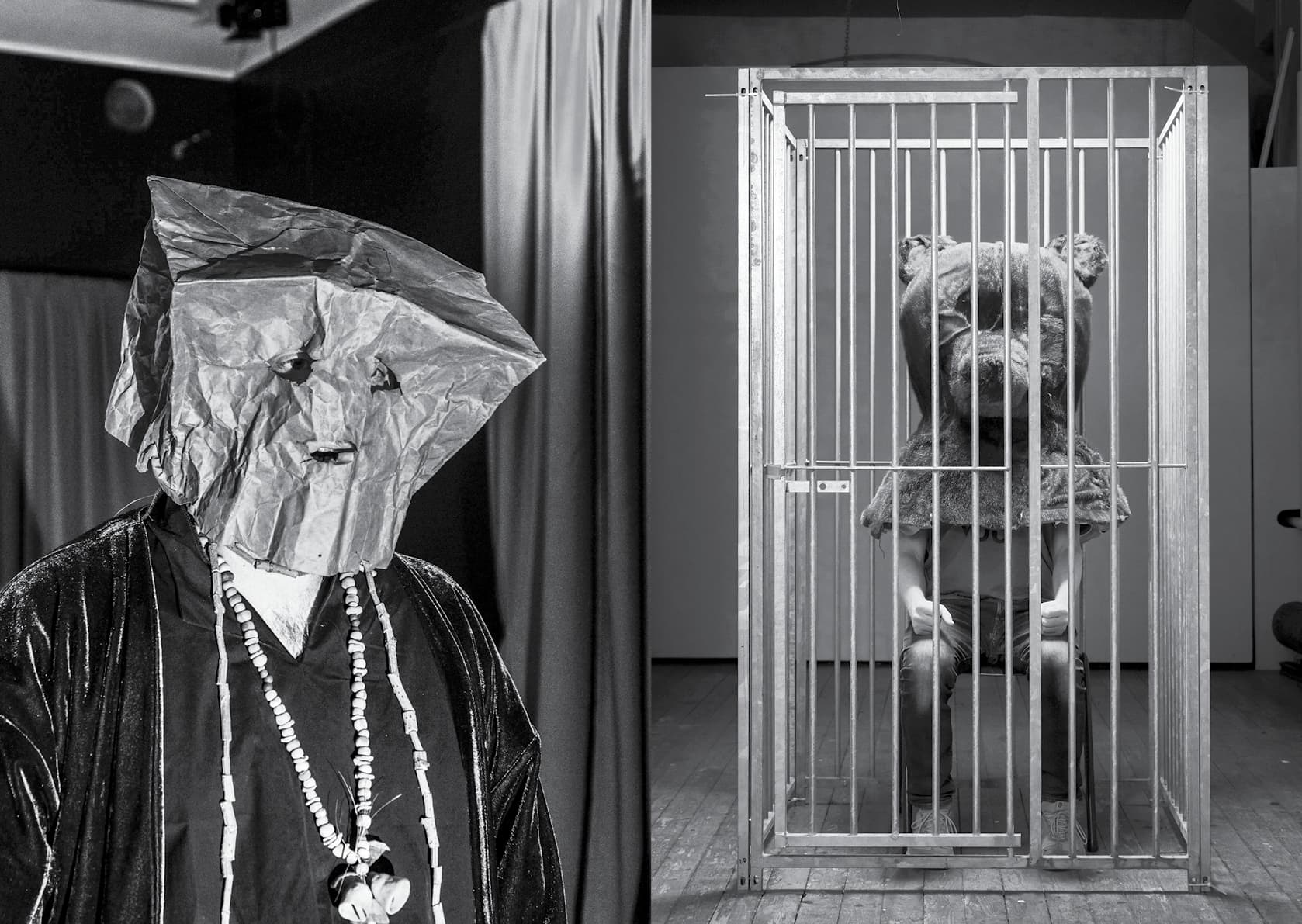
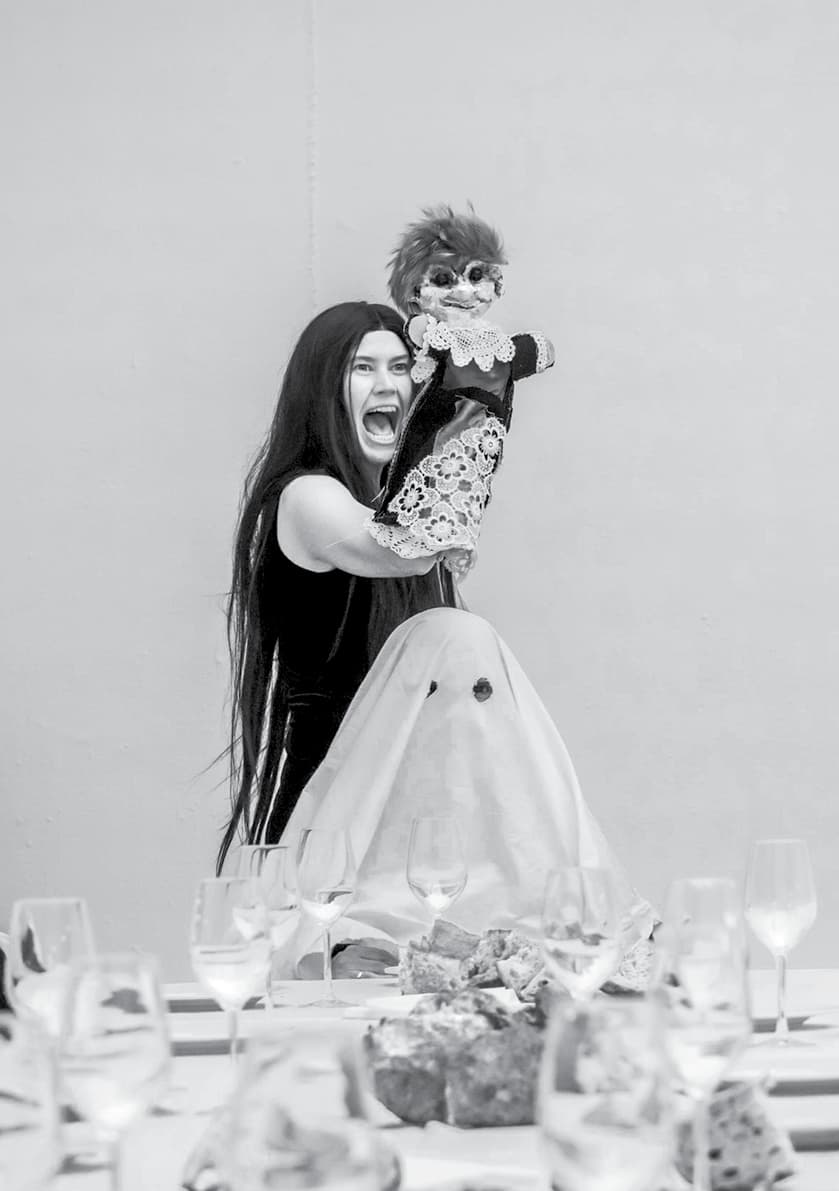
Performance collective Persona Non Grata also played with the conventions of the art space, as guests were ‘ghosted’ by being covered in white sheets with little peaking holes and seated next to four loudspeakers, or ‘talking heads’ that wondered which social codes and rules exist within the art world. This participatory dinner party explored all those masks and shelters we socially inhabit and perform by examining how these layers can be revealed through a gambit of theatrical self-reflexivity. Another comment on the conventions of the space of art, although not involving any food, was to be found in Sara Sjölin’s explorative time-travel that looked back at the year 2050, where a shopping mall inspired office space became a ‘capitalistic museum’ for objects and a materialistic world. Formed as a kind of ‘postcapitalist’ space, Sjölin excelled through humour and scripted language, in creating a disturbing presence and double connotations of what space could mean in different times.
Kasper Hesselbjerg’s performance dinner, Cooking Your Spirit Animal, explored hospitality and the conventions of a seated dinner, as he and the guests explore connections between cosmology and food. The participatory element of the piece was left entirely up to the guests, only accompanied by interesting menu descriptions and textual conceptual unfolding. Hesselbjerg’s conceptual play with food, included an Anti-Performance Drink, which was infused with antihistamines and other active ingredients that slowed down senses and pace in contrast to the societal never-ending request to perform better and faster.
All together these artistic spatial and performative happenings that I have experienced suggest that experimenting with a space is not a question of physical location or site as such, but an artistic reconfiguring of the social and relational field between bodies, institutions and the publics that they address. The performances are artistic examinations and experimentations that re-distribute not only our senses and ways of accessing art, but also contest social ideas of interaction, participation, and involvement through acute and brave performative gestures and articulations. Art works function as spatial and performative experiments, where the artists negotiate and make visible the frictions within our social world. In doing so, they open a space for encounters, where art is not simply about occupying space, but actively reshapes how we collectively inhabit it.
Iben Bach Elmstrøm (she/her), Curator at Den Frie and Ph.D fellow at Roskilde University, Copenhagen, Denmark. Iben Bach Elmstrøm has over the past 12 years been working as a curator, through institutions such as SixtyEight Art Institute, Rønnebæksholm, Rundetaarn, Heartland, Kunsthal Aarhus and Den Frie amongst others. She has developed different threads in her practice as a curator, which include research-based exhibitions, site-related exhibitions, socially oriented projects and most recently performance programmes.
References
Canclin, Néstor GarcÍa. 2024. Hidden in plain sight
Jones, Amelia. 2013. Unpredictable Temporalities: The Body and Performance in (Art) History.
Performing Archives /Archives of performances
Massey, Doreen. 2005. For Space
Sternfeld, Nora. 2016. Inside the Post-Representative Museum. Contemporary Curating and Museums Education
A Say About A PLAY
Interview with Institute of Interconnected Realities
By Miriam Frandsen
As I meet with Ida-Elisabeth Larsen and Marie-Louise Stentebjerg, the artistic management of Institute of Interconnected Realities (I-IR), for a talk about A Play, they are in the middle of creating the work. I’ve prepared some overarching questions as a pivot for our conversation, but during our talk it soon becomes apparent that they have a choreographic language that I need to acquire, to be able to understand their answers.
Because I-IR work on a practice-based basis. And by that they mean, they do not decide on a choreography with fixed movements and steps, like you would do in for instance a ballet, but they invent a set of improvisational rules, which serve as directions for the movement and speech of the performers. Multiple practices can be at play simultaneously in the individual performances and I-IR invent new practices as part of their explorations. You might say that these practices help decide the dramaturgy of the performances, i.e. the way the “story” progresses.
An example of a practice is the direction they call whisper, which is at play in A Play. Here the performers are directed to listen to the space and pick up on a sentence, which they then whisper to another performer, who then repeats it aloud in the space. The performers can work with different qualities to the sentence, like making it emotional, monotonous or melodic. Thus each performer has a very large spectrum for improvisation and can work with both communicating feelings as well as the aural quality of the sentence. The other performers then perceive the sentence and give their interpretation of the same sentence, making it in a way polyphonic.
The practice-based approach means that there are never two performances alike. Each night has its own expression, where the performers find new ways in terms of navigating the directions they have, in an interaction with the audience. Because the audience plays a central part too. In all their work I-IR seeks to connect with the audience; not in a way that has the audience doing anything other than being an audience, but in a sense that the energies present in the auditorium are incorporated into the performance. To absorb and mediate the audience is the overarching, pervasive practice in all creation by I-IR.
Based on this definition of concepts we can move on to the interview and my first question:
What is the artistic motivation for doing A Play? How did the idea arise?
Marie-Louise: One of the things we’ve been discussing a lot is the shift from previously having worked a lot with the potential of the virtual and all the unsaid and immaterial like in the pieces Ality and Song of 8, to now working site-specific. We’ve felt a need to work more concretely. A pervasive question is: How can we give our exploration an anchoring but maintain this intimacy with the audience and that which is at stake in terms of the practice-based and more intangible? We’d like to try to create a clearer approach for our audience to our artistic work and to the piece itself.
Ida: Several simultaneous events have pointed us in this direction. Part of the production of our former performance Ality took place in Finland. Here we came into contact with the Finnish choreographer Simo Kellokumpu and at one point he asked us the question: What do you mean, when you say space? It’s a standing concept that all choreographers are occupied with, but it was extremely hard to answer. It’s unusual to be asked to clarify. For instance, how does it differ from the concept of place? So already there, we were given an invitation to reflect on the two concepts and their differences. How is place different and how does it relate to choreographic thinking?
Marie-Louise: In A Play we explore the black box as a place. In our research we’ve, among other things, informed ourselves about theatre history and the origins of the theatre – the Greek drama. Here we’ve taken our starting point as the ancient Greek chorus. Their function has always been to serve as a mirror for the people. In Greek drama the chorus itself is also a part of the audience to the tragedy and they relayed the course of events to the real audience. They serve a double function. They tell us what the main character is going through and they offer a space for reflection for the audience. In A Play they relay theatre itself to us, the black box, the physical location we’re in.
Ida: The reason we became interested in the chorus was that we wanted to explore the black box in and of itself; as an object for which the chorus could be a mediator. When we say black box, we don’t think of the stage as isolated from the audience and the auditorium. It’s the function of the entire space that the choir is mediating.
Why is the theatre/black box interesting to explore in a contemporary context?
Ida: We are mostly interested in the climate challenges we’re facing. This is where the concept of ecology comes in, deriving from the Greek word oikos, meaning “house, family, household, housing, living area” – i.e. the place you call home. To us, that is an invitation to take a closer look at location. Previously we’ve been very occupied with “what is down”, because you rarely move downwards choreographically, at least not below ground. You can practice falling; falling has an entire chapter to itself in modern dancing, maybe as a reaction to the airy jumps of the ballet… But how do you move downwards into the space beneath our feet? So A Play is an expanded exploration of our preoccupation with what’s beneath us.
Marie-Louise: That’s also why we’ve been very occupied with soil. Jonathan Bonnici, one of the performers in A Play, lies on a soil-bed for three days as part of our joint research. When he got back up, he’d seen a number of earth faces; he saw faces traced in the soil he was lying on and that examination also pointed to the choir, which, in a way, rose out of that. Previously we’ve been working with a concept like body host, which means that the performers don’t assume a character, but act as channelling bodies and again this was a direct link to the choir.
Ida: In the ecological paradigm shift we’re attempting to move through globally, there’s a challenge in understanding ourselves as mutually connected and not as isolated individuals. As a part of our research on soil, we’ve also read texts on peoples who still to this day do not understand themselves as isolated individuals and, for instance, can’t speak of themselves as singular, that possibility simply doesn’t exist within their language. With them, you’re never separated from the whole. So images of a group came quickly. Also because soil is such a complex ecology with minerals, animals, etc. Soil isn’t an isolated singular thing. In the same way you can view the theatre space as a complex ecology with many different components, where performers and audiences are just two components among many others. This is also what we are exploring with I-IR’s connection to decentralised choreography. We try to move away from ourselves as a natural centre.
On that basis, can you elaborate on the practice-based work?
Ida: The practice-based work is in contrast to performances that must be repeatable pretty much the same way every night. Normally the criteria for success is that the performance doesn’t change too much. In practice-based work, what you see as an audience isn’t a finished text or intention. What you see are performers exploring something while they’re on stage. That exploration hasn’t ended during rehearsals, but takes place with the audience. It’s a different gaze, a different relationship. You watch someone do something and it isn’t certain that they succeed with what they’re doing, but succeeding isn’t the criteria for success, because in an investigation something always arises, no matter which way it goes. It can be unpredictable and a bit awkward – especially in a culture and theatre world that celebrates perfection. But to us there’s a strength in the risk and in working in this manner. A vulnerability and intimacy emerges.
Marie-Louise: It stems from our interest in precisely the stage space and what you share here and now. What is bringing us together? What’s at stake? When can the space shift? It can’t if everything has been determined beforehand. These questions have made it necessary for us to work practice-based.
Could you give an example of a practice apart from whisper? What other practices are found in A Play?
Marie-Louise: In A Play we’ve also worked with a story-practice. We’re not sure if it’ll be included in the work, but it has been very important for our understanding. We’ve made a visualisation into the place you’re located, but from your own subjective starting point. We’ve worked on how you can create a fictive space together if the performers connect to the same place. The performer can give a piece of information, for instance “the walls of the church have an echo” and then the others can build on that. The journey has been to move into the layers beneath oneself. This is the place you experience from. You’ve been able to bring forth a fictive place through speech, which is one of the basic elements of theatre, we make believe we’re in a specific place and it can be brought forth by our words like in the Greek drama and with Shakespeare too for that matter. We’ve tried to explore the layers found in the black box. What do we know about this place?
Ida: This way of exploring is common to our works. There’s always a practice at play, but it contains different possibilities. The whisper-practice has many facets and it’s a long process to formulate the development of the practice and find out what it can and should do in the work. The choreographic thinking isn’t limited to what the performers say and do, but also precisely how we transport the attention from the space to what you as an audience are being subjected to through the practice. It’s the general dramaturgical movement we go through together. It can also include sound layers or lighting and is a practice that isn’t only in the performers, but in all the layers.
What do you want the performance A Play to make the audience think about?
Ida: We’re not even finished and have a lot of questions up in the air ourselves. Because we’re exploring the theatre and the black box, right now we’re currently preoccupied with ruins. For instance we have a brick on stage which is a reference to the Greek theatre. You could also think of theatre as a cultural ruin. It’s a memory, but also something that can direct the thoughts to the future. Thus, theatre has a double direction. What does theatre do to our imagination? Can we feel ourselves and where are we, when we are immersed in it? In its Greek starting point it was a fundamentally democratic space, but also stems from a certain relationship with the world, a certain world view with man at the centre. This world view is strongly challenged today, where we know we can’t fully control Earth and that we’re not the only ones who should be taken into account, because we’re part of a very complex ecosystem. What then is the justification for theatre today?
Marie-Louise: In I-IR we’ve always been very engaged with the present, and theatre is in a way an infinity machine of presents. Right now we at I-IR are more interested in the anchoring to a specific place. Are we in constant potential? In other virtual times? And away from where our bodies are actually located? And does theatre contribute to this division, pulling us out of our context, or can it in fact point back to our concrete reality and help us to connect to the place we’re physically present in right now? And if the theatre is the place for dreams and thinking, does that mean that we have no room for dreams and thoughts in our lives otherwise? Did we isolate it to this closed space?
Ida: A Play is kind of a meta comment to the theatre as a place. Because we have to have a critical look at the institutions framing the artistic processes. Otherwise we’ll just be reproducing ourselves. The good stories need to find a new framework and a new language to be able to make a real change, otherwise we’ll always be faced with a fourth wall – the one, which in theatre separates fiction from the real world of the audience and the understanding of ourselves, that we’ve always had.
Marie-Louise: We ourselves are trained in working in and creating for the black box, so we also question the theatre as a space and our own practice. In A Play we don’t make suggestions as to how you can make theatre in a different way than in the black box, it’s more like a genuine question of what’s possible in the black box?
Time is up and the conversation ends, but my mind is buzzing with thoughts. I’ve understood that A Play unfolds between both audience and performer and in interaction with everything else present in the moment. So what you experience as an audience isn’t a finished text or a choreography consisting of fixed steps, but you bear witness to the exploration of the place on stage by the performers and in that sense the performance speaks into a classic performance tradition, in which every night is new. I also understand that A Play is about the challenge to understand ourselves as connected to one another and not as isolated individuals and that the performance questions what new stories can arise within the existing spatial structures.
Personally, I’m looking forward to a performance in motion and to be confronted with the possibility of a joint physical space.
Serial Hybrid Formats Address the Contemporary Through Collective Audience Encounters
By Anne Liisberg
A hedonistic taste of mushroom in a circle of darkness. A ride with a bank robber. A ritual burning at Halmtorvet. A needle in the scalp and a needle in the hand. During its first four years, Toasters has demonstrated how post-dramatic, cross-aesthetic formats can dissolve contemporary polarisation by creating fluid spaces that open towards collectivity and new forms of audience encounters.
My eyes alternate between catching the eye of the driver in the rear-view mirror, and the eyes of my fellow passenger beside me in the back seat. We are locked inside the small car. On a journey through a landscape of memories with a fellow citizen who has lived a life entirely different from ours. He is a former bank robber who, like a number of other very different individuals, shares his life and experiences in THE STATE (STATEN), created by Toasters and fix+foxy.
I manage to thread the needle and begin sewing in the embroidery frame, laboriously, stitch by stitch, while glancing sideways at my neighbour, whose rapidly emerging bright red dollar sign has considerably more flair than my own. The symbol corresponds cleverly with the words of Emma Holten from Deficit: How Feminist Economics Can Change Our World, which Kris Jensen, aka ‘Sensitive Embroidery’ (‘Følsomt Broderi’) reads aloud as we embroider.
I cannot see anything while my fingers scrape through the soil. They hit a sticky substance; I pull the small piece of mushroom free and bring it to my lips. I hesitate, then take a bite, encouraged by the slightly forced chatter of the others in the room. A sound of adventure and solidarity. Of course, we dare taste the unknown when the others do.
Putting our bodies on the line
THE STATE unfolded as a live streaming service over half a year in the spring of 2025, while the reflective embroidery formed part of the concept Collective Manifestations, which ran serially alongside the festival Acting In & Out as an activation of a shared space for action. The small luxurious mushroom bites were consumed during the festival The Performance Bulletin, which among other things explored modes of being in public space, through twisted formats inspired by contemporary hedonistic gourmet dinners.
These three concepts exemplify Toasters’s explicit ambition to experiment with new forms of audience encounters. Combined with a perhaps less deliberate use of serial formats, this has turned out to enable meetings in fluid spaces that are capable of dissolving contemporary polarisation around themes such as climate, identity, armed conflict, and (economic) inequality.
“Big questions can leave you paralysed and ashamed when you sit with them alone”, said Storm Møller Madsen, co-curator of Collective Manifestations. Their intention was therefore to activate the bodies of audiences within temporary communities in order to anchor the festival’s themes and open potential spaces for action. The fact that we collectively place our own bodies at stake may be the defining characteristic of performative formats – an especially relatable response in times marked by multiple global crises.
2024 Acting In & Out – How do we act together?
In November 2024, the festival Acting In & Out addressed contemporary crises through a double strategy: four artistic works were followed by encounters between audiences, artists, and other participants who gently cultivated the sense that collective action is possible.
Economic inequality has been addressed in many ways within Toasters’s programmes, but never with greater humour and activist spirit than in Lea Burrows and Thomas Hwan’s How to Put Your Money in a Tax Shelter. At the festival we watched a mockumentary following the two artists as they attempt to change the world through an investigation of tax havens.
In a delightful mix of talking-head experts and staged sequences, they establish a consultancy business – though it fails to qualify as a shell company. The company simply is not empty enough, and the artists soon find themselves overwhelmed as course participants descend into private quarrels. The downward spiral culminates in a glorious clown scene in which Lea and Thomas, mouths stuffed with McDonald’s food, attempt to figure out how to create a financial deficit. Then the boundary between screen and auditorium breaks down, and we follow the dancing straw man and narrator to a ritual burning in Halmtorvet outside the theatre.
How to Put Your Money in a Tax Shelter humorously crystallised how art can communicate and engage us in complex political problems when we are addressed not only intellectually but also physically. In this case through laughter, a finger pointing at the naked, and the rebellious smell of petrol. At other times during the festival, engagement became even more tactile, whether embroidering, shaping bows for a dragon’s long tail, or feeling an acupuncture needle placed in the scalp.
Toasters curatorial practice has consistently highlighted this inherent activism of art. Performance can be challenging, but it does not have to be. In its concrete simplicity, the hybrid format of Acting In & Out succeeded in opening discussions while activating audiences without losing its edge, through a dialogic framework in the contemporary narrative.
2025 The State – How do we negotiate our communities?
A small, illuminated sign reading “STATEN” leads the way as we, from January to June 2025, gather in small groups around Copenhagen to explore different aspects of the state. Some stories we may already know; others are entirely new. But each time, for an hour or two, a temporary community takes form as we are moved by a story and discuss it together. Sometimes we leave quietly with a tear on our cheek, affected by the inhuman consequences of the state. Other times we are uplifted by rebellion and activism; sometimes we continue in loud debate about what we have just experienced.
Because of course we also played a role in Toasters and fix+foxy’s logistical and dramaturgical tour de force. While mimicking our frictionless convenience society by being booked through an app, it simultaneously flips the diffuse system, known as the state, inside out in a format whose complexity mirrors its themes. “Conversations about the state are fundamentally conversations about the economy. As human beings we exist within a system that constantly prioritizes, and it is in those negotiations that individuals feel cornered and encounter the state”, director Tue Biering explains about the project which, consistent with both his own and Toasters’s artistic ambitions, seeks to create change without prescribing how the world should be. Instead, it opens positions and allows something third to emerge in the space between encounters.
Economic priorities are complex, and responsibility for them dissipates across the many levels of the state. In THE STATE a range of perspectives are presented: from lawyer to bank robber, from civil servant to climate activist and kindergarten director. All have a stake in the state, and through simple theatrical strategies they activate us as (temporary) teams. We listen, ask questions, discuss, wonder – and sometimes we ourselves are forced to prioritise.
It is the state on subscription. You create your own path through the different episodes, and the booking algorithm deliberately sends participants in the opposite direction of their political preferences, which they have declared through pop-up questions in the app. “If you indicate that you are left-wing, it sends you to scenes with right-wing content. It’s a fight against algorithms that feed us our own views and keep us inside the same echo chambers. The whole project focuses on bringing different segments together. For me the meta project is that people meet others they would otherwise never encounter. That makes it worthwhile – that is my activism: meeting across the middle instead of drifting further apart”, Tue Biering explained before the project began.
One may question who finds their way to a programme such as Toasters’s, yet this self-declared megalomaniac venture had the potential to do exactly that. We in the audience were perhaps not so different from each other, but we encountered people with other experiences and opened conversations we would otherwise never have had. In all its complexity THE STATE reached precisely the place where people genuinely meet one another – where opinions collide on the basis of respect, curiosity, and knowledge. The state did not become less complex, but the encounters left their mark.
2025 The Performance Bulletin – How do we meet in public space?
Performer Kristoffer Akselbo destabilises the busy public space near Østerbro Station through a slow circular walk. Cars honk, mothers pull their children close, some laugh, others shudder, while some pretend nothing is happening and hurry by. Yet no one passes entirely unaffected by the creature that occasionally blows a fragile tone through a piece of pipe. The creature raises questions and creates disturbance in the efficient urban space through its mere presence.
Each of us has an individual experience encountering the creature, yet a shared awareness simultaneously emerges, filled with contradictory responses ranging from playful delight to fear of the abject that has no place within the normality of efficiency. This clash of reactions generates an immediate space for reflection that will never lead to a single shared conclusion but instead contains the entire spectrum.
Inside the exhibition building several performances combine visual and performative strategies with the dramaturgy of the gourmet dinner. Here the audience encounter becomes more collective as we sit beside one another and surrender to courses that each address contemporary hedonism through constructed fictional worlds and moments of illusionary rupture.
In one place, we are deprived of sight. In another, vision and taste clash; proximity collides with distance, glances with mediation. Elsewhere, ancient myth enters a complex encounter with the many connotations of the female body. A breast is a breast is a breast… while milk runs down our chins.
Everywhere dialogue among audience members is an integral part of the performance. There is room to explore the strangeness and to surrender to sensory tasting while other senses, especially in darkness, are heightened. In the oscillation between bodily pleasure and intellectual inquiry temporary communities emerge. What does it say at the bottom of your glass? Do you dare taste the soup that smells strongly of Bolognese but has an entirely wrong colour? Did you find all the mushrooms? Could you help me pour, please? Simple remarks gradually flow into broader conversations in which no answers are predetermined.
The interplay between pleasure and discomfort has characterised Toasters’s activities from the beginning, and here it finds almost exemplary expression: the sense of taste capable of triggering both the orgasmic and the nauseating is combined with more theoretical challenges towards the balance between pleasure and decadence – both in society and within ourselves.
We dare when others dare
Throughout Toasters’s existence, cross-aesthetic performative formats and the activation of intersections between art and other sectors have taken many different forms. In most cases they emphasise that it is far more illuminating to witness or participate in the works than to hear artists talk about them. The traditional artist talk easily becomes intensely introverted, and the claim of audience engagement can seem hollow, whereas in the works themselves dialogue is precisely what takes place, exploring new ways of interacting and shaping social reality.
The festival formats, or the explicitly serial structure of THE STATE in particular, extend collective reflection over time, allowing it to vibrate between the fleeting and the profound. At the same time, they create a form of recognisable safety and shared care when audiences encounter each other week after week in the many spaces of the format.
These three snapshots therefore exemplify the signature ofToaster’s formats: exploring themes by putting audience bodies and moments of illusionary rupture into play. They may appear to be precarious spaces, yet they become more like fluid spaces, opening new encounters both with and between audiences.
We dare when others dare. The cross-aesthetic formats that invite our bodies simultaneously open our consciousness to other perspectives, creating relatable collective spaces in a time of crisis – without delivering ready-made answers. Those we must search for together.
Anne Liisberg (she/her), Journalistic Editor-in-Chief, ISCENE. Subject Editor, lex.dk. Jury member for Revyernes Revy, the Danish Circus Awards (Den Danske Cirkuspris), and the comedy festival UP. Board member of the Association of Danish Theatre Journalists. Holds an MA in Danish and Dramaturgy. Previously, among other roles, a staff critic at Teater 1 (2011–16) and Berlingske (2016–19).
References:
Kollektive manifestationer i krydsfeltet mellem kunst og aktivisme – Iscene
Hvordan forhandler vi vores fællesskaber – følg med i næste afsnit af STATEN – Iscene
The Performance Bulletin – motionerer sanserne med saft og kraft – Iscene
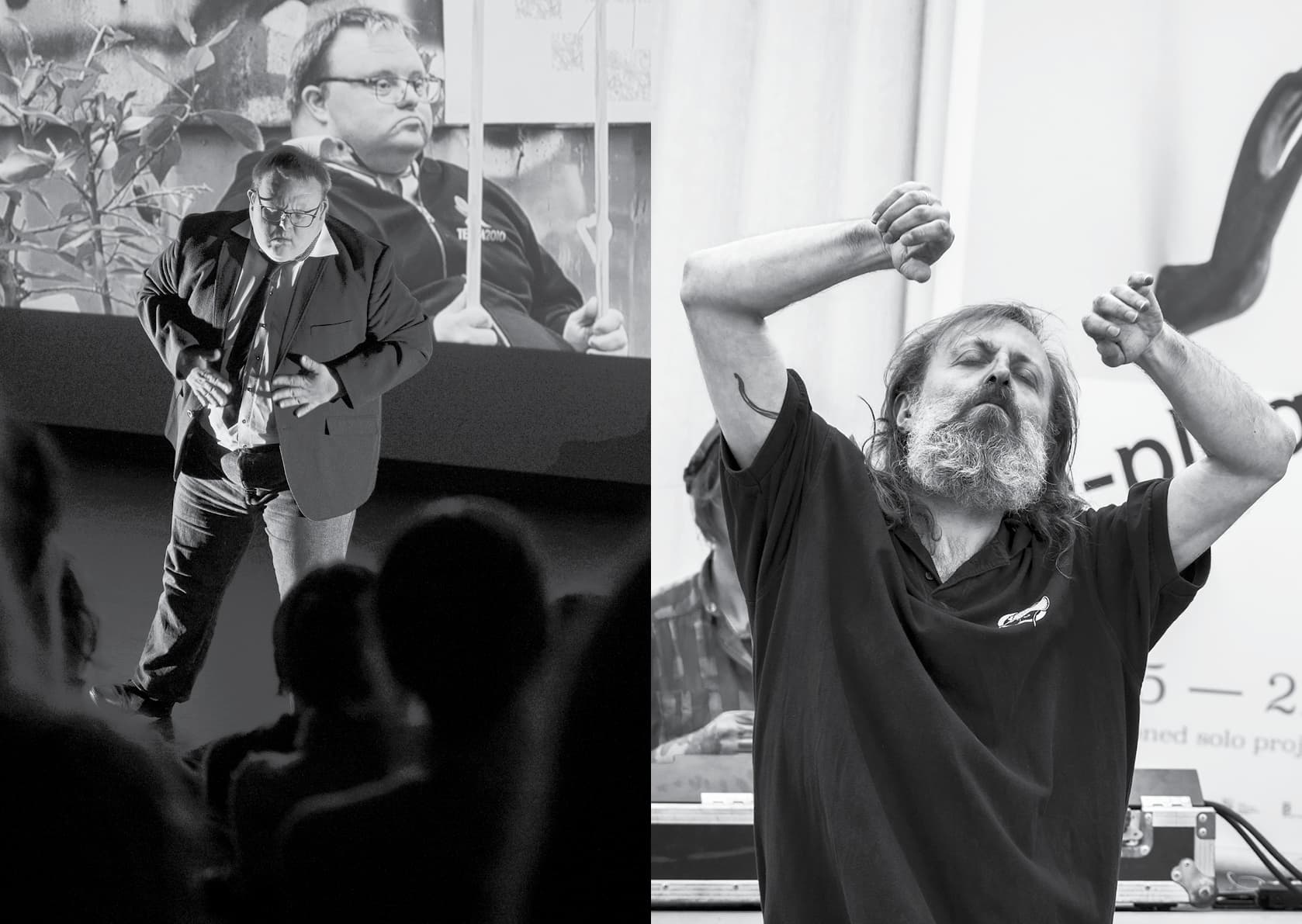
The Truth Always Lies in the Hands of the Creators
Interview with The Other Eye of The Tiger
By Miriam Frandsen
The Other Eye of The Tiger (TOETT) is a group that has existed for several years and has created performances together since their time as students at The Danish National School of Performing Arts. It’s been a total of four performances together so far. They’ve been resident artists since the start of Toaster and in autumn 2021 they hosted two audience salons on the basis of one-week workshops. The workshops explored the in-ear technique which constitutes the foundation of their upcoming performance. After the workshop they were in dialogue with Liv Helm, artistic director of Husets Teater and co-founder of Toasters, who encouraged them to work with an existing text. The idea was that TOETT should stage their first classic and the choice fell on Henrik Ibsen’s Peer Gynt.
I meet with four of them; Ida Grarup (set designer), Asger Koudahl (sound designer), Suni Joensen (lighting designer) and Henrik Grimbäck (director) – for a chat in the lunchroom at Husets Teater in the middle of rehearsals, three weeks before the premiere:
What’s the artistic motivation for doing Peer Gynt?? How did the idea come about?
TOETT: It came about in different steps. The concept came first. Our core DNA in TOETT is audience involvement. So working with audiences on stage is an ongoing examination we’ve been having from the outset and we had reached a point where we now wished to try out the in-ear technique. This was the first point of origin and our primary motivation.
In everything we’ve done so far, the text has been created by the group, primarily as a work between the director and the actor, but with the whole group as dramaturgical sparring partners. Step two then was this idea of making a classic instead, to make the starting point a written text.
The reason we chose Peer Gynt was the thought that the lie and the essence of the lie was interesting to us: What does it mean to lie your way through life? In previous performances we’ve dealt with a character, a real person, who then becomes the frame for the performance and different stories spring from that. It’s always been characters with amazing stories, which we’ve then built upon and added to, but always with a basis in reality. This is a bit the same exercise but in reverse: we begin with an amazing story of Peer Gynt which is fiction, and then we bring some more or less real persons into the story. And in that way it resonates with our other performances. But we’ve spent a lot of time finding ourselves in the text, because we started from a completely different place than usual. Normally we begin with a concept or a wonky story from real life that we choose ourselves. It was clear to us from the start that we didn’t want to make a classic like you’d normally do. The question was: how much we wanted to avoid making it? That’s why we spent a lot of time on the title, because we didn’t want to cheat people, so they thought they were going to see Ibsen’s Peer Gynt. We wanted to emphasise that it was our take on the story. So the question mark in the title is essential. The result is that we are not playing Ibsen’s Peer Gynt, but our very own new text written on top of Peer Gynt.
In the last two performances we made, The Martyr’s Museum and Zero, we’ve been working with hardcore facts. We’ve had experts involved and worked with the dramatisation of research. That’s why this time we felt like starting from a more playful place, instead of working with cold facts. So we’ve given ourselves a new challenge by following the plot of Peer Gynt, but to still create our own story entirely. The key to this story was the intermingling of Henrik Ibsen’s and Peer Gynt’s lives. So we ended up staying true to TOETT’s own style which is to start the story with a real person.
How do you create your texts?
TOETT: Our method, which always runs through the way we work with text, is working with telling and retelling a story. Henrik writes texts in Swedish which the actor (in our previous performances the TOETT-member Morten Hee Andersen, in this new performance it’s Morten Burian) then retells in his own words in Danish. When the story is retold, new and different things often appear with each repetition, and slowly it becomes a core in the story that we then follow.
What kind of audience interaction are you working with? And why is audience interaction so important?
TOETT: Audience interaction is the most important thing in this art form because it’s what constitutes the basis for theatre: That we are present together in the same space. The special thing about working with the performing arts is that it’s a collective art experience and it’s this experience that we’d like to expand and maximise. If you can incorporate the audience in the performance, you’ve really used that potential to its fullest. And that interaction can’t be created in any other art form – it could perhaps be compared to singing along at a live concert, but then in our view that is also performing arts.
The person performing live is entirely dependent on the reactions from the auditorium. The audience always helps to create the performance they’re watching and it’s this reciprocity between the audience and those on stage we’re working with quite concretely by abolishing the distinction between audience and performer. We are so literal that if only five audience members show up, the performance can’t actually play. It takes a minimum of 20 audience members to complete it. So how we can collaborate with the audience and use them in the staging is what’s most important to us.
It’s a friendly interaction we’re trying to create and we hope they have a great experience by contributing. We call them human placeholders and it’s a method we’ve developed right from the start. The audience plays a role in the narration and they are turned into a character. But they don’t actually play the character, it’s more along the lines of a signifier of a person, making the audience watching project a lot of feelings and thoughts into the character. For example, a 40-year-old man can play a little girl. It becomes a clarification of the fundamental situation in theatre, where anyone can play anything. We want them to come and create the world with us, tell the story and imagine with us.
In our previous performances it’s been 100 percent controlled by the actor Morten Hee Andersen, who has described the situation and explained to the audience what was about to happen and what you’re looking at. This time we’ve been curious as to whether this could occur without the actor staging the audience? We wanted to examine whether you could create some bigger and more complex images without the actor telling each individual what to do. And this is where the in-ear technique entered the frame. We wanted to expand the human placeholder method to accommodate more than one or two at a time. With the in-ear technique we fill the space more and use the audience as a set design.
During rehearsals we’ve experienced a different energy emerging, when actor, Morten Burian, isn’t in control of everything. The fact that many people are moving simultaneously is a big force in a given space.
How do you create a performance where you depend so much on audience interaction?
TOETT: It requires being allowed to enter into a rehearsal process without knowing what will come out of it. And it requires a lot of trust from the venue for which the performance is being created.
Toaster enables us to test things we haven’t been able to test before by giving space and by arranging a test audience for us twice a week from the beginning of rehearsals.
What do you want to make the audience think about with the performance Peer Gynt??
TOETT: If you exit thinking a little more than when you entered, that’d be great! In relation to the main theme of Peer Gynt, concerning the lie, this is also what our performance puts into play. We live in a time where truth is up for debate and has been dissolved. We experience that it’s very much up to you, to define what your personal truth is and that makes it very difficult to be human, because you don’t know if you share your perspective on the world with others. Therefore, you also have different starting points in terms of what you want to talk about or what crisis you want to solve. Because you see the world fundamentally different. We ourselves think a lot about how we can live with the compromising of facts and how we can live with the lie. We’re all for facts and for eradicating the lies roaming around on the internet, but we can’t know if the media we read and relate to speak the truth or if they are more or less biased. It permeates everything. This uncertainty is kind of wild when it comes to existence. To acknowledge that lies exist everywhere. Both in terms of the big stories about the world like the climate crisis, the world economy etc., but also in terms of our own story about ourselves, we always compromise and only tell the things we can stand. In the sense that we adapt our stories when retelling them to other people, so as to accommodate them better or maybe we even embellish them. Maybe the fish I caught wasn’t quite 1.5 metres, but it was a huge experience for me to catch it and that’s what I’m telling by lying about the size of it. We’re interested in examining and working with which lies are innocent and which are deeply dangerous to us, both in our personal relationships and on a more overall societal level.
So we started to consider the lie as a form of survival mechanism to be able to exist at all in both big and small ways. Because really we lie to ourselves all the time, because maybe sometimes the truth is too painful?
It’s dawned on us how incredibly difficult it is to sort out the complexity between truth and lie and that is the experience we would like to share.
What’s the next natural experiment for TOETT as an extension of this performance?
TOETT: Our performances have always started with something we wanted to examine and it could arise in different parameters. Be it an idea for a set design or a sound idea or an audience walk as a principle, as the point of origin. That’s what’s special about our group, we can each bring a burning interest in something that we wish to explore and then you have some playmates agreeing to that exploration. And often there are several explorations going on at the same time.
In TOETT we’re both very nerdy and also very collective. It’s often the specific profession that becomes the starting point for an exploration, but we love being able to build on each other’s professions. That you can look at it from your own field and in that way help resolve the idea from a different angle. The Peer Gynt? project started with the idea of controlling the audience via in-ear, but that came from a different idea of having speakers on the audience, and that again sprang from a sound experiment we worked on during the performance Zero.
So our next project will also address this exploration and we might want to work with even more audiences on stage – for example make an opera with an entire choir, but the most important thing for us is to continue the exploration with the audience, whether we scale it up or down is less important.
Rehearsals are about to start and the interview is over. Both actor Morten Burian and an audience test-group are ready to explore the complex interaction in the theatrical space, which is both fiction and reality at the same time, in the same way that truth and lies intertwine. Because it’s both real and true that we are present in the same space and that we are playing a game together, but it is a lie and fiction when both actor and audience transform into Peer Gynt, mother Åse or a group of wedding guests and suddenly we’re in Africa and not in Husets Teater. But it is true, hopefully in the eyes of many people, that art asks important questions of our way of living and understanding life.
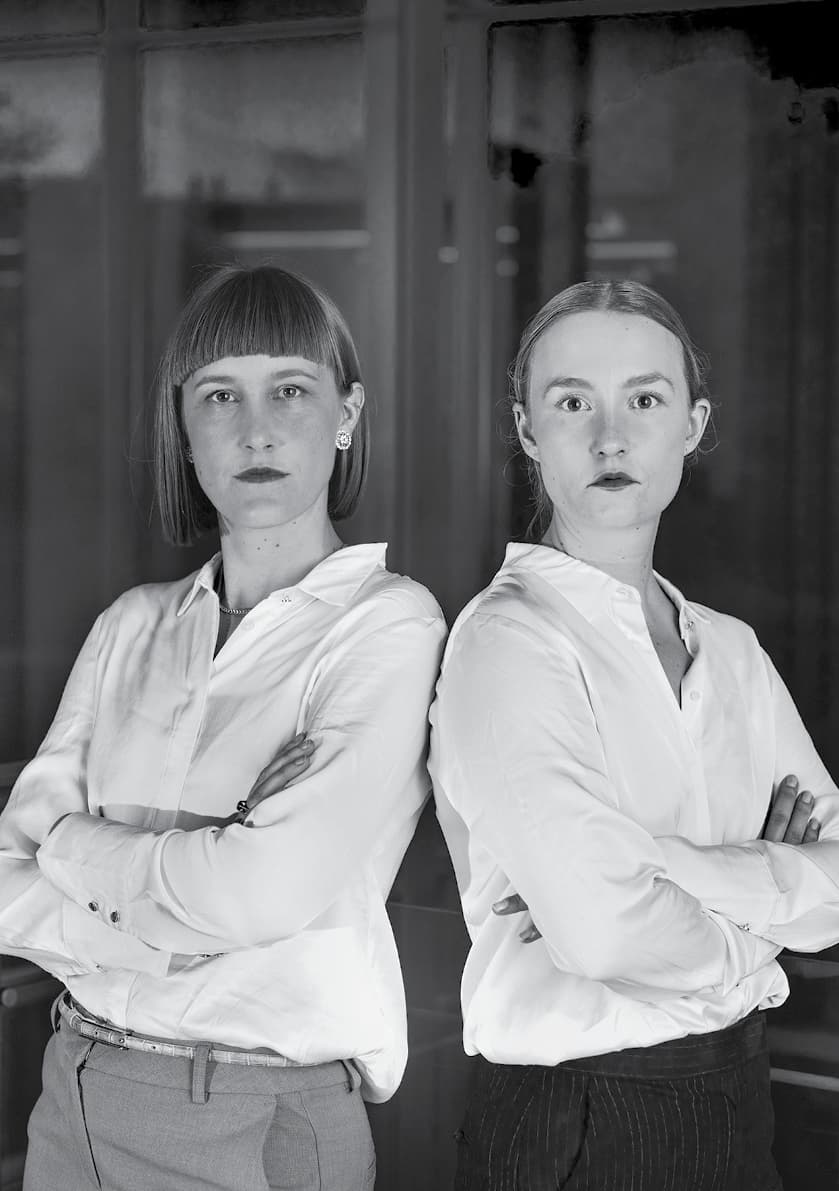
The Necessity of Discomfort
By Christine Bonnichsen Søndergaard and Sóley Freyja Eiríksdóttir
The smell of fish, green slime, a wet sex chair, body horror, confessions of a psychopath, testosterone, semi-raw hotdogs, vampirism, and fascists on the march. Over a period of two months, we have witnessed – and been subjected to – a wide range of experiences at the performance festival Managing Discomfort.
Water, tears, snot, drool, and blood. Fear, terror, confusion, weirdness, ecstasy. Screams, crying, laughter, growling, drooling, moaning. Shaking, twerking, rolling, crawling, wrestling, jumping, dancing, tumbling.
With discomfort as the main principle, the 14 different Danish and international artists’ performances pushed the audience to the limit and let us oscillate between confrontation and care.
This review is our concluding thoughts on the festival as a whole. In the following we dive deeper into the concept of the festival, and what discomfort has taught us. This includes experiences that made the discomfort in the world and ourselves tangible. Experiences that have nuanced our relationship with what we find comfortable, but also let us experience different ways of managing and existing together in discomfort.
Managing comfort vs discomfort
With their curation of the festival’s performances around the theme of Managing Discomfort, Toaster and Live Art Denmark strike a resonance in our present. With a wide range of different themes and perspectives, the festival cements discomfort as a pervasive condition permeating the social, geopolitical and biopolitical spheres.
Nevertheless, an ambiguity is unfolded in the title Managing Discomfort as well as in the programme’s individual performances. In Danish there isn’t a simple word that captures the many nuances of ‘managing’. To manage means both to control and to overcome.
To ‘manage’ encompasses both soft and hard values and approaches. It may refer to managing a business or to manage something with care. It can denote succeeding with something difficult, as well as to endure, overcome or navigate e.g. manage stress.
The festival’s ambitious format and the many different performances have uncovered, tested, and expanded what it means to ‘manage’. As audiences, we have been pushed into positions of active being. In these moments, a tension emerges: we can either engage with what we are faced with or avoid discomfort and, in doing so, passively reproduce the status quo.
Structural discomfort
The performances at Managing Discomfort ‘map’ discomfort within the larger structures that shape the conditions under which we live. Discomfort is not only affectively present in the performance space but reaches beyond the individual work into a broader context.
This is very much the case with Liebmann/Barkan’s Don’t Pay Your Debts, when they draw our attention to the equivalence between agency and disposable income, all while laughing right in our indebted faces.
In Jäger Ooms Ambient Theatre Fury, the dating culture in a social media-dominated age is brought to our attention, when self-obsession stands in the way of finding love and forming genuine connections with others.
In Zapfenstreich, Boys* in Sync confronts us with the rise of fascism in Europe, while in the performance Odalisque the reminder of the realities is more implicit, as war and destruction rage across the world and the death toll of children in Gaza numbers several thousand.
Furthermore, Maria Metsalu’s Kultuur and Jessie Kleemann’s The Iceflake both point towards the ongoing ecological crisis. Capital and privileges play a defining role in both escalating the crisis and the unequal distribution that places the greatest burdens on those who are not granted a voice: the plants, the disadvantaged, and the colonised. At the same time these performances show us that even though the redistribution of privilege and the right to speak can feel uncomfortable, we still have a lot to learn from listening, especially to these voices.
In contrast, Iggy Malmborg’s Satan offers us an example of a voice that has been so thoroughly embedded in our consciousness that we have grown accustomed to the discomfort it actually contains. Malmborg’s charismatic yet problematic protagonist draws us into a narrative in which we, as an audience, are confronted with how we have learned to sympathise with him and his perspective, while simultaneously ignoring the many unsettling things he does.
This raises an important question regarding the power structures embedded in the way discomfort operates. Satan made us reflect on who is able to get away with being unpleasant, and who, on the other end, has to endure discomfort.
Identity and discomfort
Gaze and perspective emerge as recurring aspects across the festival’s performances. With its diverse programme, Managing Discomfort succeeds in drawing attention to a complex composition of different identity-related questions, and how they are tied to discomfort.
Which identities are we comfortable with? What kind of discomfort exists in and around minority identities, whether related to gender, sexuality, ethnicity, or disability?
In the performance Odalisque, Lina Hashim points to the sexualising and objectifying gaze directed at the Muslim woman in Western visual arts, which shapes how we perceive ‘her’, as well as the framework for her self-understanding and her possibilities for self-representation.
In Let Down Your Hair Aaron Williamson locks us outside of the theatre and emphasises in practice the lack of access people with disabilities face on a daily basis, and their need to find ways of manoeuvring, when accessibility isn’t considered in their physical, social or structural surroundings.
Teo Ala-Ruona and Samira Elagoz’s’ performances each take the audience on distinct journeys, as questions of identity unfold through body, gender, and gender roles. In Ala-Ruona’s Lacuna, the audience is brought into the embodied discomfort of gender dysphoria, while Elagoz’ five-hour video-based documentary performance Seeking Bromance unfolds the complexity and ambiguity in Elagoz’s own gender transition.
Elagoz offers us a narrative about two people who don’t fit the common gender categories, but whose story also does not align with the dominant narrative, where transition is motivated by dysphoria and is tied to binary understandings of gender.
These works reveal a double movement of discomfort experienced by the audience during the performances. The discomfort we are made aware of already exists as a lived condition for those belonging to identity minorities.
This discomfort is made invisible by the ‘norm’ and those who point at it risk being misread as the source of the problem rather than its symptoms. Confronting this, we as an audience are faced with an uncomfortable realisation that we carry a bigger responsibility: to listen and to think beyond the reflex, wanting to protect our own comfortable position.
Discomfort as a disturbing element
By foregrounding identity minorities, a distinction emerges between different types of bodies – those who call attention to discomfort and those who get confronted with discomfort. Within this inequality lies a crucial point that Managing Discomfort repeatedly sharpens our sensitivity to: the need to understand the political dimensions of how discomfort operates.
The festival questions the comfortable as a mechanism of upholding status quo and brings into focus who is comfortable and how comfort and discomfort is unequally distributed.
This is evident in the aforementioned performance Let Down Your Hair, where we as an audience are being excluded from the conveniences we would normally have access to. Sall Lam Toro takes a similar approach in Obsidiana, Estrange, Erótica e Ultravioleta, where the first two rows are allocated to black and mixed audiences, thereby denying the white audience the ability to occupy the space with the same sense of entitlement we are accustomed to.
In the final act of Kultuur, Maria Metsalu invites four members of the audience to a fancy multi-course wine dinner, while the rest of us are left to stand or sit uncomfortably on the floor. Here the discomfort becomes a tangible physical device that disrupts our relationship to comfort. The inequality feels unfair, but at the same time it is also hard to enjoy a seat at the luxurious table, when others’ discomfort remains in plain sight.
To treat discomfort with care
The mobilisation of discomfort is not the only type of agency at work in Managing Discomfort. Several performances insist on softness and care as necessary ways of challenging the harshness of the world.
Seeking Bromance shows the audience a caring way of being in the discomfort as an active choice, when the two protagonists commit to finding strategies to endure the difficulties of their transitions.
In The Iceflake Kleemann treats both objects of the performance and audiences with great tenderness, showing us poetic and caring ways of being in the world. Ala-Ruona adopts a similar approach in Lacuna, where his personal discomfort is shared as a vulnerability that mobilises the audience into a collective ritual as witnesses. Both performances engage the spiritual or the supernatural, showing us an alternative when the rational falls short as a tool to control discomfort.
The psychological depths of discomfort are explored in Metsalu’s The Well. The way the audience is drawn down into a wet subconsciousness is not particularly kind. Instead we are given the opportunity to dive deep underneath the surface, and gain a strange glimpse into the uncontrollable emotion-driven forces that surge within both individual and collective consciousness – forces we may not be able to simply ‘manage’ our way out of.
Discomfort distributed over time
Over the course of two months, Managing Discomfort has challenged, shocked, moved, frustrated and uplifted us.
The festival has brought Danish and international performances of an exceptionally high standard to Copenhagen, which has been important for several reasons: it has promoted and strengthened the performance landscape in Denmark, and the performances of the festival have succeeded in shifting the audience’s understanding of the world and themselves.
During this period Managing Discomfort has provided a temporary home for the performance scene in Copenhagen, which is often fragmented and itinerant. As a result, the festival has contributed an extraordinary possibility to experience and access what is currently happening in the field.
Another strength lies in the fact that the programme has incorporated workshops led by the respective performers for practising artists as well as students at The Royal Danish Academy of Fine Arts and students from Theatre and Performance Studies, University of Copenhagen. Building bridges between different actors in the workshop format contributes to creating and strengthening the connections within the field as a long-term investment in the infrastructure of the performance landscape.
In addition, the festival’s extended format itself feels like a caring gesture. Each performance is given the time and space to unfold and settle into our (sub)consciousness. Each week we have experienced two performances and had to wait a week to see the following. This temporality has made the uncomfortable manageable, allowing the audience time for digestion to avoid feeling disconnected, saturated and overstimulated.
It has functioned as a process of acclimatisation, in which we have been exposed to discomfort, but also offered new strategies and ways of dealing with it. Being exposed to discomfort in moderate amounts, over time, has been a fruitful way of allowing us to notice and acknowledge all the different ways our own positions are comfortable.
Insisting on comfort becomes more difficult once we become aware of our impact and responsibility. Discomfort is necessary, not only as something to be ‘managed’, but as a clear and collectively felt reminder of the neglected, the invisible, the unjust and the repulsive. A reminder of our responsibility to give space and attention to that which precedes discomfort.
The necessity of discomfort lies in an understanding of the connection between how the discomfort we observe in the world reflects ourselves and how the discomfort within us reflects the world. Managing Discomfort has shown us how discomfort is never passive but confronts us with a multitude of possible actions. The time we live in is, on many levels, uncomfortable, but there is still much to be done.
The article is translated from Danish – “Ubehagets nødvendighed” at www.peripeti.dk
Christine Bonnichsen Søndergaard (she/her) and Sóley Freyja Eiríksdóttir (she/her) work as a collaborative duo working at the intersection of academia, art, and friendship. They are both Cand. Mag. in Theatre and Performance Studies from University of Copenhagen, and share a background in performance art and contemporary circus. Their practice is rooted in collaborative processes: relational methodologies that foreground listening as an artistic tool. Through their work, they investigate how care practices can function as both artistic form and critical framework, exploring the conditions under which attentiveness, reciprocity, and collective presence become generative forces in performance and research.
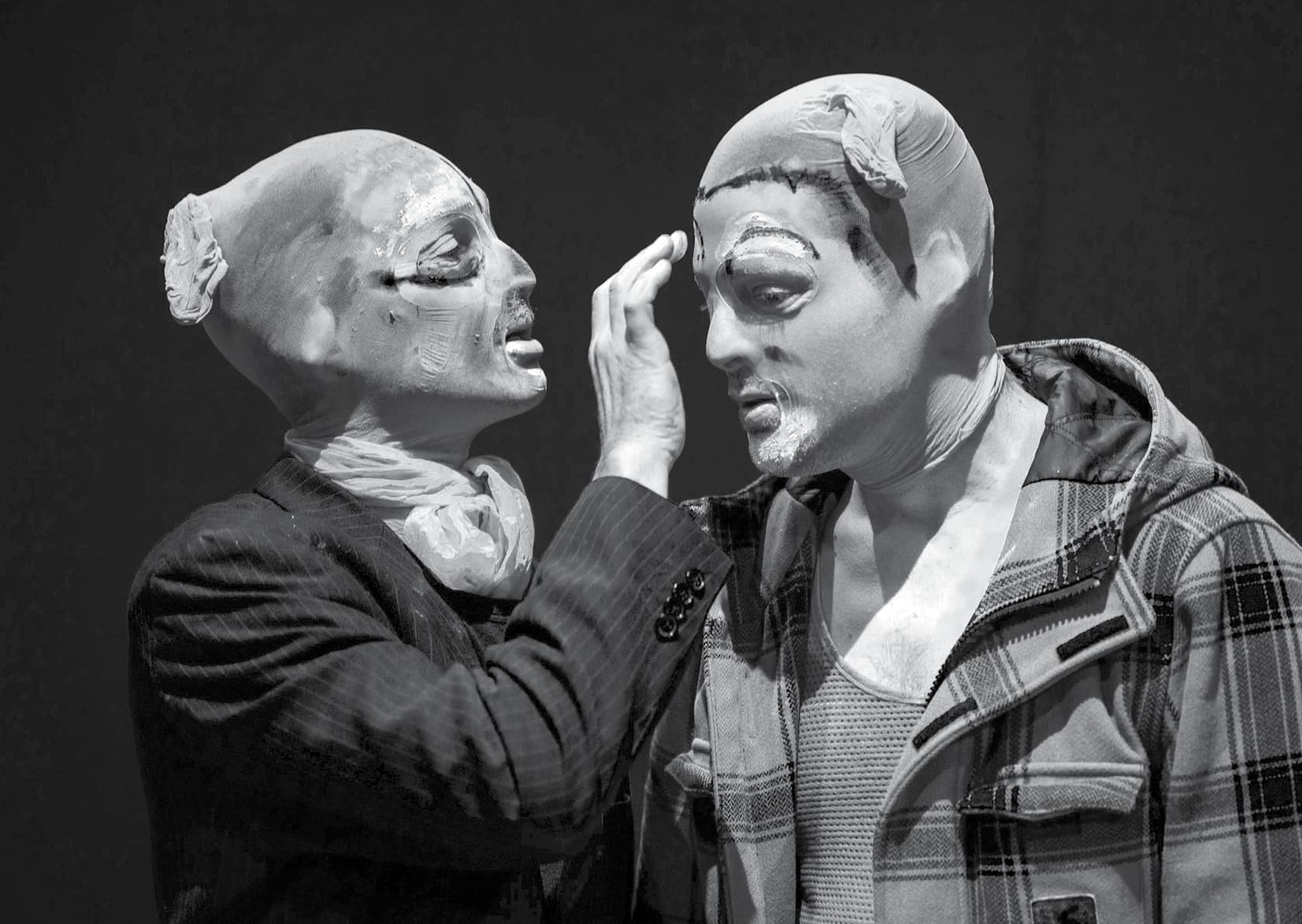
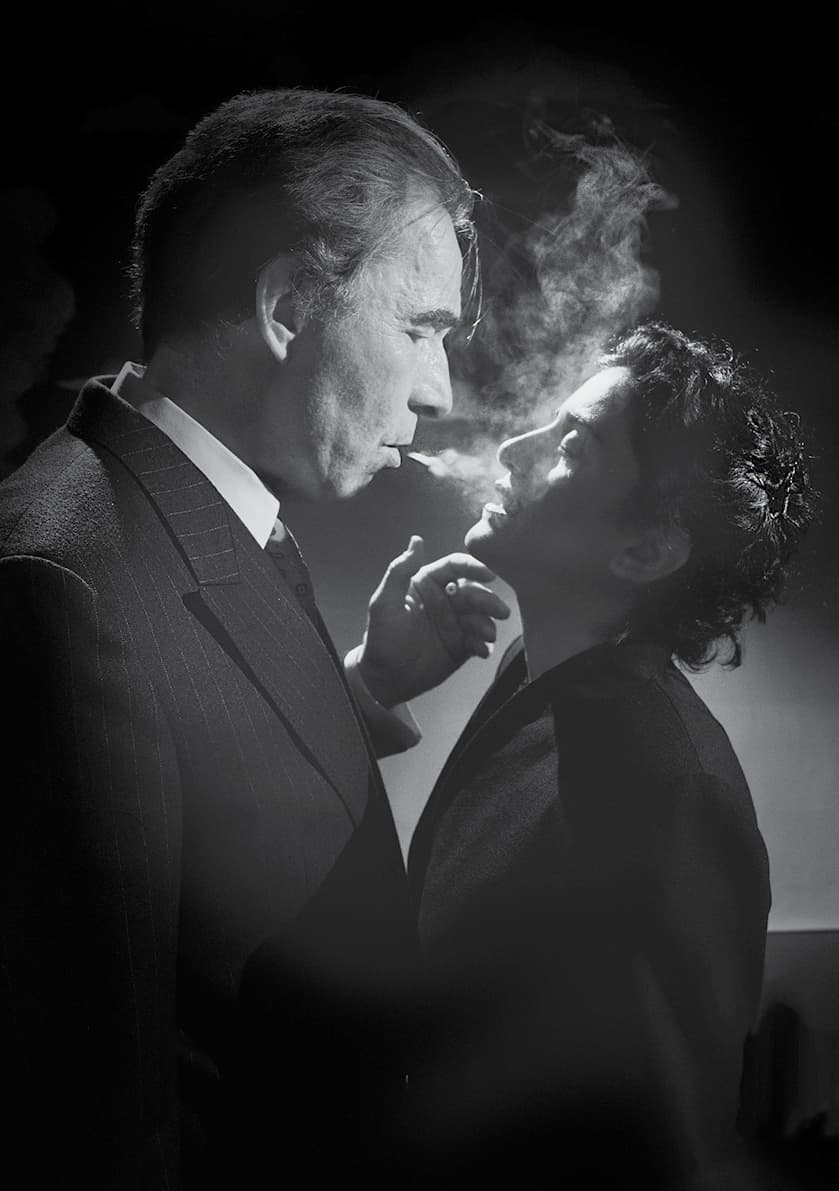
So Good, So Far: Performance as a Constant Work of Development
Interview with Hestnes/Popović
By Miriam Frandsen
Toaster’s resident artistic duo Hestnes/Popović, consisting of Danish set-designer Freya Sif Hestnes and Norwegian/Bosnian actor Marina Popović, premiered So Far So Good in Trondheim at the Norwegian Rosendal Theatre in November 2022. Now the performance is moving into Husets Teater to be played in English in a slightly adjusted version. The set-design has been adapted to a whole new space, Marina has in the meantime become pregnant and needs a new costume and needs to learn the text anew in English. Hestnes/Popović’s working method is exploratory and investigative, so they can’t help themselves but ask new questions of their work and thereby continually develop the performance. In the work with theatre and performance, as opposed to other more static art forms such as literature and visual arts, it’s a basic artistic experience that we only make temporary full stops. “So far so good” contains precisely the relief of having successfully overcome something “dangerous”, but at the same time harbours the awareness that the journey continues.
I meet with Hestnes/Popović for a conversation about their working method and the performance So Far So Good.
Who is Hestnes/Popović? And what is your shared biography?
Hestnes/Popović: We’re a performing arts duo educated at the Norwegian Theatre Academy in Fredrikstad at set-design and acting, respectively. We both have an interdisciplinary background, as Freya is also educated as a visual artist and Marina holds a Master in Cultural Memory Studies (European Studies) from Trondheim.
We’ve made three productions together in total. The first was created when we were still in school and was called There Is a Noise and it has been touring ever since, the other, A Moment of Silence, premiered in 2019 and was a stationary performance created for the Rosendal Theatre. So Far So Good is our third performance and this time it’s an international co-production between Rosendal Theatre and Toaster. Apart from that we both have independent careers. We’ve found a mutual interest in the documentary, autobiographical and historical material. It’s a performing arts language we investigate together and it has given us a form of practice that we cannot unfold anywhere else. A practice created through the years and also in between individual productions, where we develop ideas together through longer research periods. All our performances arise from a continuous artistic investigation. Together we can allow ourselves to do what we want, and are “only” responsible for one another. We expect to challenge each other’s ideas, but it’s a safe place to be, where we trust that even our bad ideas can have some space and get picked up. The basic trust makes us more courageous.
With that being said, being an independently producing duo is a precarious situation, because we are responsible for everything ourselves. Maybe that is why we’ve only produced three performances up to now, because for every new production we have to both create the structure and find the finances necessary. The positive part of being an independent producer is that we’ve been able to use our good cooperation with each other and various venues to learn a lot about organisation and have been able to examine how you design a good process.
What is the artistic motivation for making So Far So Good? How did the idea come about?
Hestnes/Popović: The idea sprung from our latest performance. Our themes in all three performances are in a way connected. They weave in and out of each other, and there are always some things that there is just no room for or that are a cause of extra curiosity, and we then continue working with that in the next performance. So it arises very organically out of our continuous examination of our history and identity. In A Moment of Silence we among other things examined political rituals, and there was a story in that performance about believing in omens, that is, the superstitious aspect that if you believe something will happen, you run the risk of it happening. The story was about a woman from the south of Jutland, who foresaw the Reunification already in the 19th century. She gave an omen that eventually ended up coming true and was even used politically, as Christian the 10th rode into Southern Jutland on a white horse, that had been further whitewashed to make it shine even whiter, to fulfil her prophecy. And then there’s our personal backgrounds of Bosnia and Denmark, respectively, where we’ve been raised with different rituals, sayings and admonitions about what to do, to steer clear of accidents.
So we started with wanting to examine omens and forewarnings, but many of the rituals we’ve created collectively in our society are about warding off evil, so that’s the trail we’ve kept following. Also because it resonates with us, personally. We work more with feelings in our themes, than with clear political statements that relate to a contemporary context. It’s more the basic human anxiety we’re trying to embrace. And at the same time that might be placed in a very contemporary context – because anxiety holds such a major place in society right now.
We’d like to use the community presented by the theatrical space, to share our sense of what is happening in the world and to try and draw people into that investigation.
What are the parameters that most interest you in the performance (set-design, lighting, sound etc.)? What did you want to examine?
Hestnes/Popović: We have a very non-hierarchical approach to all parameters in a performance. Not one thing is more important than the other, and all elements carry the performance with their own independent voice and not just as a backdrop. Our text material, which is where we begin, springs from science- and experience-exchanges. We interview each other and others. We tell each other stories and re-write them. For the first time in So Far So Good we differentiate between stage and auditorium, where in previous performances we created a stage that both the audience and the performer were a part of. Sound is also a big part of this performance, but it’s actually always been a very active element in our works. We wanted to try and give it even more space this time, so we invited Daniel Fogh on board as sound designer. That resulted in us collectively developing the concept for the set-design, where the thoughts on sound created the premise for the rest of the space.
What kind of audience interaction are you working with? And why would you like to interact with the audience?
Hestnes/Popović: The interaction we have with the audience is connected to the community; that together we form a mini-society in the theatre. We’re not aiming to include audience interaction, but it happens because we’re very interested in creating a community. It provides our audience with a different sensory experience. They’re not just sat in the dark, watching, but have often participated in a ritual, where you get something to eat. In our first performance they were sitting around a large table, eating waffles. In our second performance the audience begin as bystanders, but then the space dissolves and we create a “sønderjysk kagebord” [a traditional table set with a big spread of cakes and pastries, served with coffee] and they end up in a big sing-along. It comes about in an organic way because we want to get up close to the audience, so it grows from the rituals we’re examining and working with. Every performance is to us a happening of its own – a party in its own right – it’s not traditional theatre in that sense. Because it isn’t just the audience meeting the art, but also us meeting the audience. There’s an element of chaos, something that can’t be foreseen or controlled. It’s really interesting to work with.
As audience members, we often ourselves hate interaction, so for us as artists it’s all about creating spaces, where you feel comfortable about taking part, and where there’s room for the audience in a safe space. We tell ourselves we’d like to take part in our own performances, because you’re involved as a group and not as an individual. Our performing arts language is also performative, we’re present with the audience and not inside a fiction. The audience needs to have the liberty to withdraw, you’re allowed to join in, not required.
What would you like to make the audience think about with So Far So Good?
Hestnes/Popović: That we need these places of gathering. We’ve been wondering about what rituals we’ve inherited and how we use them today. What little precautions we employ in our daily lives to ward off “evil”. So we examine our identities and the stories we carry on telling, so as to question if it is really the identity we want to have? To change something, we must first be aware of it, otherwise you act automatically.
All of our society offers a sea of new rituals to fight anxiety. But what’s resonated the most with us are the rituals we’ve inherited, that have been passed down the generations of our culture and that we merely reproduce without thinking much about it. We’d like to make the audience aware of the symbolic acts which we surround ourselves with.
What will the next natural experiment be for Hestnes/Popović following this performance?
Hestnes/Popović: Freya had a dream last night about us making a performance in which we gathered a lot of firewood and created a giant bonfire in a field. Maybe it could be a new interpretation of St. Hans (ed. St. Hans is the Danish celebration of solstice, linked to St. John or “St. Johannes”, Hans for short, as a celebration of his birth which was allegedly on June 24th. It includes gatherings around big bonfires all over the country. There’s a “burning of the witch” tradition – although this particular part of the ceremony is heavily disputed these days – there’s sing-alongs and bonfire speeches) under the artist name Hexnes/Popowitch? Haha.
At the moment we’re also examining what the collective writers’ room can do. We’d like to open up to others, but at the same time hold on to our own language, our method. We work very intuitively and how do you share that with others? So we work in longer periods and with different types of processes and will keep examining what the collective space can do: what if the sound designer is also the set-designer and the set-designer is also a performer? What can happen when you come with a completely different perspective and enter into each other’s professions?
We conclude the interview, so far so good. Hestnes/Popović continue their examinations both on stage with the audience, but also in the form of long processes where they invite other artists to take part. I rejoice at the performative take on the theatrical space, at the same time as maintaining the performance as a shared, collective experience that both engages us in our culture and draws it into question.
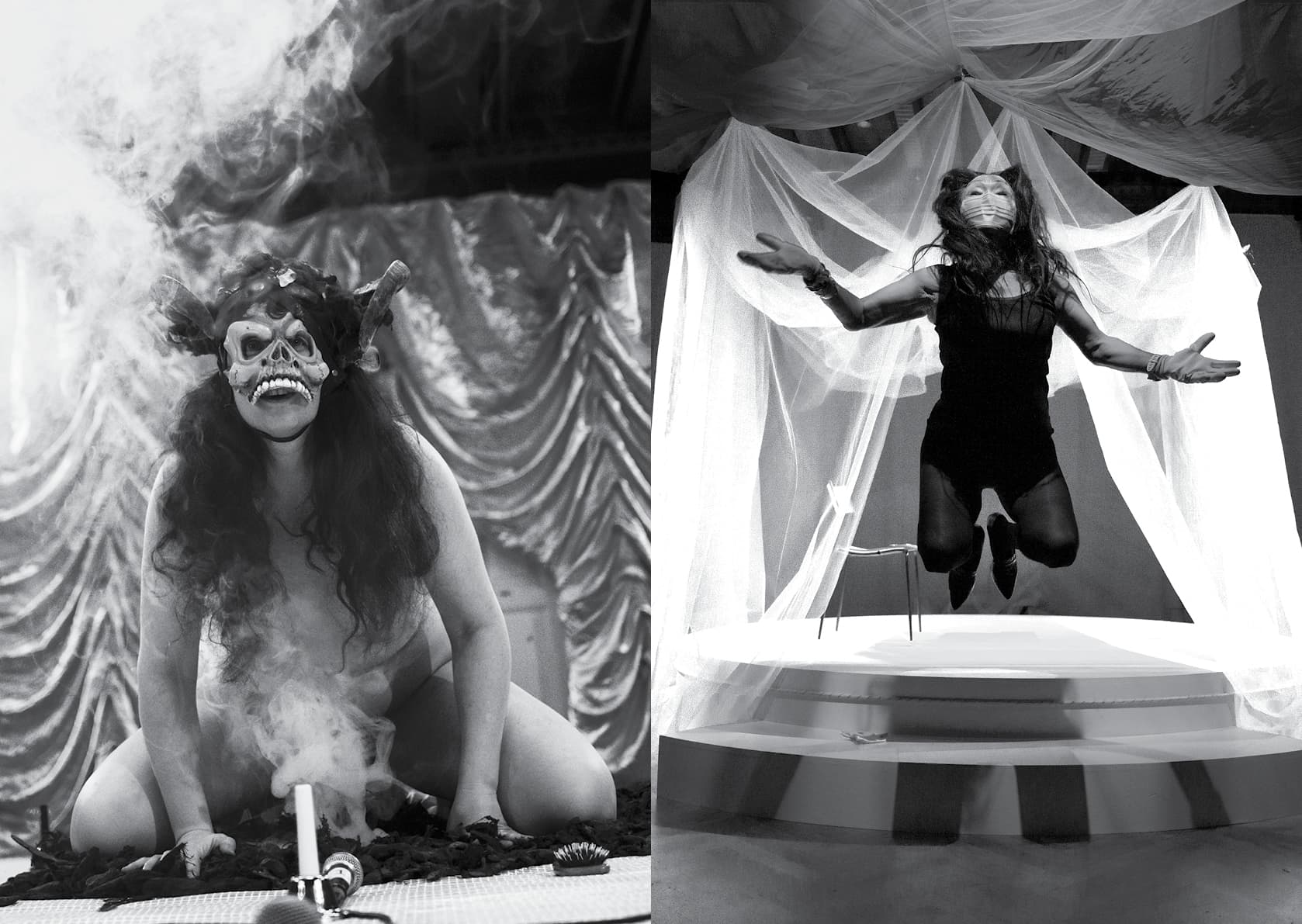
LOGEN and the Sacred Theatre of Monstrosity Entering the belly of the monster
By Jon Auring Grimm
A sleazy snotty host in a tuxedo invites us to Monster Ball while sniffling and drying the snot with his hands. The Monster Ball is a communal dinner, prepared by the performance collective LOGEN at Husets Teater. As we have gathered around the table, a naked woman, a mythical creature, perhaps a troll, wearing the face of a skull with horns, ascends the table. She is “kulning”, calling her cows, to gather her herd, but to no avail. No one reciprocates her call. She has lost her herd, standing naked before an audience of civilised theatregoers. Attempting to reach out, she cuts her hair and prepares a rice/breastmilk porridge squeezed from bags hanging from her bosom, and the cut-offs, offering it to a reluctant audience who turn their heads in disgust.
Grotesque, as it seems, it is also quite moving. Something is lost. We have lost something. There is no one to answer the monster’s call. All the cows are gone. The herder’s mythological “kulning” reverberates in the void. Dinner is served.
At the threshold
Truth be told, I am no stranger to LOGEN and obviously biased. During their very first production, Story of the Eye, I acted as a consultant, and I have since consulted on most of LOGEN’s larger productions, such as Death to Truth and Beauty and Gilgamesh, as well as several other plays by both Nathalie Mellbye and Anja Behrens, most notably in this context, The Symposium. From our first encounter, our shared interest, and the continued subject of my consultations, has been topics such as the erotic longing for intimacy, the sacred, headlessness, and the monstrous. At the Monster Ball, I attended as a guest speaker addressing the monstrous on a cosmic scale. As LOGEN states in an interview: “We are punk rock, and we have groupies”. I definitely fall in the “groupie” category and eventually ended up marrying the horned cow-caller.
The reflections that follow, in other words, are a condensation of many conversations and shared experiences with LOGEN, as well as my own research on eroticism, the sacred and monstrosity. It is neither written completely from within nor from a safe distance, but rather on the threshold between inside and outside. The threshold is crucial for any understanding of sacred eroticism since it marks the limit between the sacred and the profane, the world of separation and the world of intimacy. Sacred eroticism can, somewhat simplified, be described as the longing for a lost continuity or intimacy, which is only attained beyond the confines that divide us, beyond a self-contained individual identity, and beyond the separations, limits and definitions of reality imposed on us and by us. Approaching the lost continuity, therefore, entails approaching limits, even transgressing them, and moving beyond them.
Engaging with the sacred
What is lost? And how do we engage with it? In an interview from the magazine Peripeti, LOGEN answers this question: “[We] focus on the importance of the sacred, the imperfect, the collective, devotion, and generosity as fundamental values that we wish to promote in our time”. And yet, there is no nostalgia in LOGEN’s work. They do not long for a lost golden past. The longing is only satisfied in the community and intimacy of life and death in the here and now. What is crucial, they state, is the “devotion to the moment”: “We wish to make room for moments in which an irrational mythological state emerges through ritual symbolic language and the associative branching of themes”.
LOGEN demonstrates what the radical psychoanalyst Norman O. Brown calls an erotic sense of reality, which entails becoming conscious of symbolism, that is, making connections and correspondences, that transgresses the limits that separate us.1 The symbolic language is staged as rituals, attempting to evoke a “fusion”, in which their “collective movement expands and embraces the audience into a potentially new presence”. For that reason, the ritualistic approach is of utmost importance. LOGEN explains that when working on a project, each member selects an existential theme. As they work on a chosen existential theme, each performer prepares a ritual grounded in personal, felt resonance. As this resonance is transformed into a ritual, the personal and collective perspectives merge, giving rise to an “almost universal, symbolic, or archetypal character within the ritual space”. 2 The ritual becomes a passage towards the sacred, a passage that can only be traversed by transgressing the boundaries of the profane order and the security of the ego.
The sacred and the profane
Some conceptual clarification might be helpful here. With the brilliant scholar of comparative religion, Mircea Eliade, in mind, we can make a distinction between the sacred and the profane. Eliade describes the distinction as two opposed modes of being or existential situations assumed by humanity in the world.3 The profane world is linked to utility and instrumental reason; it is a world made useful and sustained through work, and thus a world that values only productivity and utility. History is seen as progress, and social relations are transactional; value is use-value. Therefore, every moment must be justified with reference to some future end. Profane time is linear, and in a certain sense, we become estranged from the intimacy of the moment.
The sacred, on the other hand, is the exact opposite of the profane. It is a world not confined to the concerns of utility, a world that cannot be and need not be justified by reason. It reveals itself as an intrusion in the profane order, as something else that cannot be contained within the limits imposed by categories of instrumental reason, concepts, and utility. The sacred world is something more, something other, than mere objects of use and production. For instance, for the profane mind, a sacred stone is nothing but a stone, a wooden cross is nothing but wood, but for the sacred mind, the stone and the crucifix contain a surplus of meaning that cannot be contained in the definition and determination of the object. Just like the squealing of a pig is a testament to inner life. The sacred, in other words, reveals the world as intensity, as intimacy, and excess, or as the radical philosopher and godless mystic who has inspired LOGEN, Georges Bataille claims, the sacred is the rejection of the world of separation, and the order of things, and contrary hereto, the “affirmation of intimate life”.4
The sacred world is revealed through myth. However, myth is not just an origin story of past events, of how the cosmos came to be, but is rather a paradigmatic act of ontological regeneration of the cosmos. Retelling a myth, or the ritual performance of a myth, affirms the regeneration of the cosmic order from chaos in the moment. Contrary to profane and linear time, sacred time is therefore cyclical, the eternal return of the same, in the here and now. Through rituals, we participate in the paradigmatic act of actualisation of cosmic order; we participate in the creation of the world. The ritual actualises mythological being in the present moment. The moment of creation and the apocalyptic destruction coincide in the sacred moment.
Therefore, restoring the sacred order of the cosmos also entails descending into chaos, as exemplified by the festival, the reversal and dissolution of roles, and the unveiling and revelation of the apocalypse or Ragnarök. Participating in the festival is akin to a cosmic orgy, entering into a ‘cosmic night’ and even ‘entering the belly of the monster’.5
If we consider theatre and performance in this light, as a ritualistic practice, not simply conveying stories or messages, but rather as engaging with the stories or themes as paradigmatic mythological acts, what happens takes on a different character. The death of a lover, for instance, is not simply a tragedy that occurs for the characters involved, but a paradigmatic event that reveals loss, guilt, despair, sadness, etc., as universal existential categories. The unmasking of a king is the unmasking of every king and any political power. The gesture, situation, or event performed as a re-actualisation of myth through ritual, reveals its “universal, symbolic, or archetypal character”,6 the existential truth beneath the surface of the event.
However, what is revealed is not the literal truth of a situation, the historical events, etc., but rather a poetic truth, which can only be the subject of intimate experience. Poetic truth reveals the sovereignty of intimate experience. As Bataille states: “all that is sacred is poetic and all that is poetic is sacred”.7
Descending into the cosmic night
When LOGEN evokes a mythological state through ritual symbolic language, they create what Bataille’s co-conspirator and lover, Laure, called the “creation of a topical event, ‘communication’ experienced as nakedness”.8 LOGEN creates a wound in the fabric of reality and invites us to enter into the cosmic night, to participate in the orgy in which limits dissolve, and communion can take place. The ritual, the topical event, the poetic or symbolic language, opens the world anew, to an “erotic sense of reality”, which marks a return to “mystical participation”, Brown writes, and continues, “instead of religion, poetry”. 9 In organised religion, the ritual restores sacred order or hierarchy after descending into the chaos of the festival – after the cosmic night comes rebirth.10 However, after the death of God, the orgy, the festival, the cosmic night frees the sacred realm.
LOGEN names Bataille’s secret society Acéphale as an inspiration.11 From 1936 to 1939 Acéphale explored the possibility of establishing a sacred community on the death of God, based not on a hierarchical structure, a guiding principle, or a leader, but rather on the tragic sensibility of life and death in a godless universe. Acéphale basically means headless, and it designates the chopping of the head of the leader (for instance, fascist or oligarch leaders, as well as the idea of the singular artistic genius), negating literal truth, and the return to the body and community. The surrealist André Masson visualised this monstrous headless figure as neither animal, human, nor God, but as a sacred headless monster, with a sacrificial dagger in one hand, a flaming heart in the other, a labyrinth as intestines and a skull in place of the sex. After the death of God, intimacy – the unity of life and death, community, and the sovereignty of experience – becomes the only authority, the sole values around which sacred order must be reimagined.
Entering the belly of the monster
Although it might not be all that LOGEN is doing, they are certainly engaging through ritual with the notion of the festival or orgy, entering into the cosmic night, where chaos reigns. The ritual initiates the audience into the cosmic night, a prerequisite for transformation and becoming present as a community. Getting your head chopped off, killing the ego, to become reborn, connected and entwined. Eliade writes:
Entering the belly of the monster – or being symbolically “buried,” or shut up in the initiatory hut – is equivalent to a regression to the primordial nondistinction, to cosmic night. To emerge from the belly or the dark hut or the initiatory “grave” is equivalent to a cosmogony. Initiatory death reiterates the paradigmatic return to chaos, in order to make possible a repetition of the cosmogony – that is, to prepare the new birth.12
As LOGEN writes, “Dissolvement/Dissolution/Fusion is a clear agenda for LOGEN”.13 Patrick Baurichter elaborates in an interview regarding Monster Ball: “Our performances make it possible to come into contact with the primordial swamp, the primal drives – that place where you simply lie there flailing around. We try to create a space where there is room for that, and for staying there right up to the edge of embarrassment.”14
In the primordial night of non-distinction, categories dissolve, which is why it was fitting that their performance meditating on the artist Egon Schiele was called “Death to Truth and Beauty” and described as a “Laboratory of the Apocalypse”.15 Apocalypse literally means the unveiling. In the cosmic night, truth and beauty are re-evaluated, and the distinction between “the sublime and the vulgar is abolished”.16
Reimagining the sacred – Emerging from the night
In the final gesture of the performance Becoming Bird,17 Baurichter emerges from an egg or embryo before being covered in something resembling tar and feathers, a traditional punishment both humiliating, painful and at times deadly. He is then chained by the feet, strapped with long, slender wings, and raised until he is hanging upside down from the ceiling.
Den 4. Væg described the ritual as stepping “fully across the threshold”, marking a “newly forged pact between nature and humankind”, reaching “all the way down into the abyss of suffering” where “all superfluous layers are stripped away, leaving only what it means to exist”.18 Stepping over the threshold, which enables transformation, is a painful process that entails a humiliating gesture: being rolled in tar and feathers and crucified upside down. Becoming bird is becoming more or other than human; becoming monster.
Finally, in LOGEN’s adaptation of the epic Gilgamesh, engaging with the monstrous could also be seen as an attempt to approach nature as something sacred. However, LOGEN humorously ridicules any attempt at simply finding an anthropocentric, harmonious balance with nature. Humbaba, the guardian of the cedar forest and the spirit of nature, is first humiliated in a painstaking performance where she (clearly queer in LOGEN’s version) is bound and her own eggs/offspring are thrown at her, covering her in egg white and yolk. It is painful and utterly sad to witness.
Later, Humbaba is killed, decapitated and nailed to a log raft after being transformed into the headless monster of Acéphale in a sacrificial gesture. The audience carries his decapitated body around on the raft in a funeral procession. There is no easy way to attain community. We must move through the cosmic night, we must allow ourselves to become wounded, vulnerable and open, to the point of embarrassment and ridicule.
Evoking a lost sacred world through symbolic language, LOGEN re-mythologises the world anew, inviting us into the cosmic night, a polymorphous orgy in the belly of the monster. This allows us, if only momentarily, to reimagine the world we live in and the structures we rely on.
Such a gesture might leave the world open to a new mode of presence, allowing us to hear the monster’s “kulning”.
Dare we answer, Moo moo?!
Monster Ball was an event at Husets Teater in 2022, arranged by Toaster. Normally, LOGEN consists of Nathalie Mellbye, Anja Behrens and Patrick Baurichter. At the Monster Ball, Emil Assing, Jon Auring Grimm, Mycelium, and the band Bugchaser were guests. Gilgamesh and Becoming Bird played at SORT/HVID and Death to Truth and Beauty played at Får302.
Jon Auring Grimm (he/him), Mag. Art & PhD, has been a consultant on Story of the Eye, Death to Truth and Beauty, and Gilgamesh by LOGEN, as well as several other plays by Anja, Nathalie and others, and eventually ended up marrying the horned cow-caller. One cow made it home.
Notes
1. Norman O. Brown: Love’s Body, University of California Press, 81
2. Redaktion, P.: LOGEN. Peripeti, 17(31), 53–57, 54
3. Mircea Eliade: The Sacred and the Profane, Harcourt Brace Jovanovich, 14.
4. Georges Bataille: Theory of Religion, Zone Books, 47.
5. Eliade: The Sacred and the Profane,147,189
6. Redaktion, P.: LOGEN. Peripeti, 17(31), 53–57, 54
7. Bataille: Literature and Evil, Marion Boyars Publishers Ltd, 144.
8. Laure: ‘The Sacred’ in The Collected Writings of Laure, City Lights Books.
9. Brown: Love’s Body, 254
10. Hierarchy originally describes the sacred order of angels.
11. Peripeti, 56
12. Eliade: The Sacred and the Profane,195-196
13. Peripeti, 54
14. IScene, Logen i nyt projekt: “Ét af mange pinlige øjeblikke var, da jeg løb nøgen rundt på scenen med en kylling foran skridtet”, https://iscene.dk/2021/11/05/logen-i-nyt-projekt-et-af-mange-pinlige-oejeblikke-var-da-jeg-loeb-noegen-rundt-paa-scenen-med-en-kylling-foran-skridtet/
15. Retrieved 2026-02-24 from www.faar302.dk/forestilling/death-to-truth-of-beauty/
16. Brown: Love’s Body, 236.
17. Although Becoming Bird was not by LOGEN, it was directed by Nathalie Mellbye, performed by Patrick Baurichter, contained video art by Anja Behrens and Nathalie Mellbye, and was written by longtime LOGEN collaborators Mycelium, who also attended the Monster Ball.
18. Retrieved 2026-02-24 from www.mycelium.zone/2021/11/25/powerful-reading-of-becoming-bird-by-den-4-vaeg/
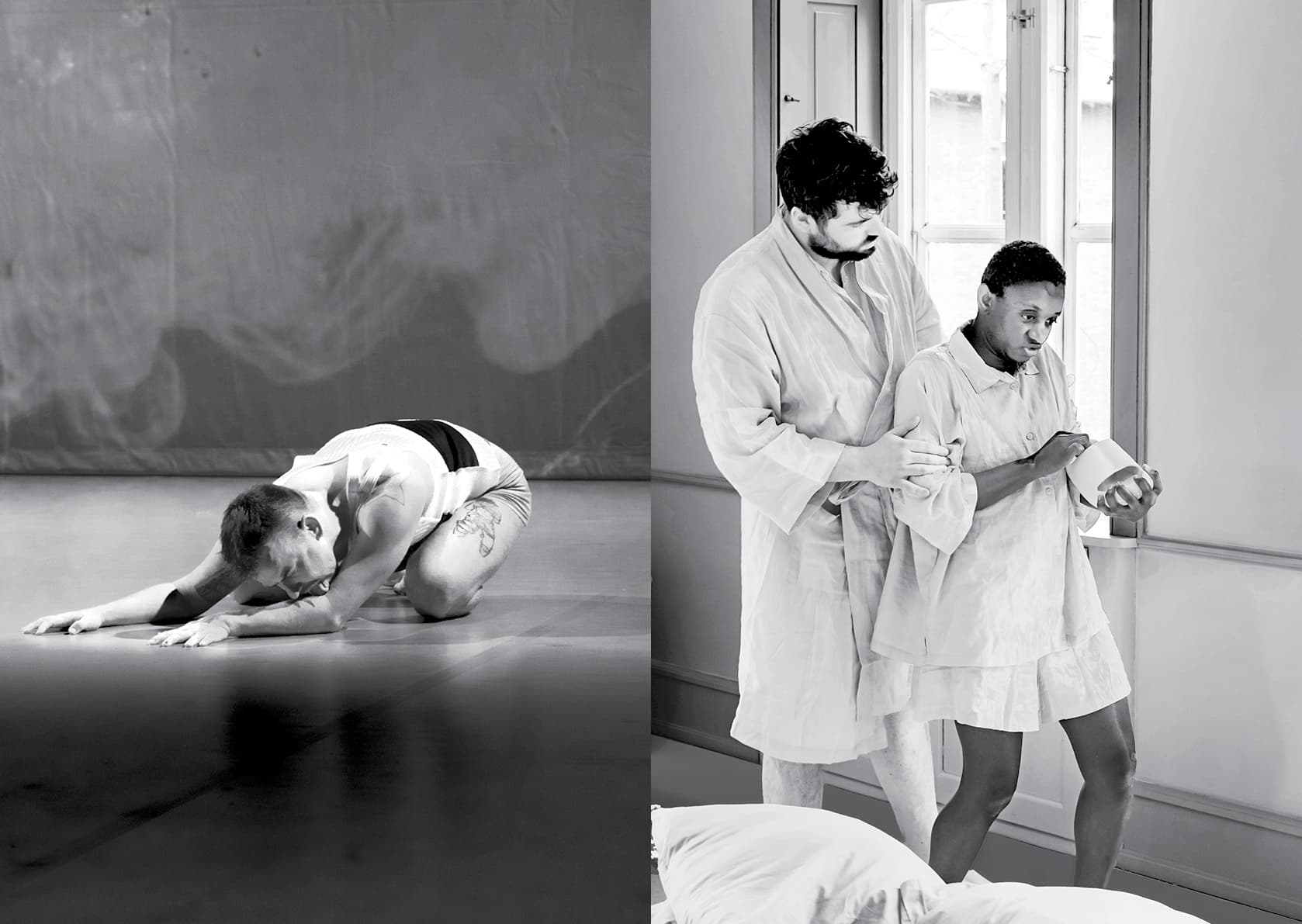
Try – Tell – Try Again
Interview with Filip Vest
By Miriam Frandsen
Filip Vest is in the midst of creating their new performance, The Tryouts, for the historic Round Tower. I meet them for a conversation about their artistic work and the creation of The Tryouts at the Danish Art Workshops, where rehearsals with the three performers are happening. The Tryouts premieres at the Round Tower on November 20 and is both a performance and an exhibition.
What is the core DNA of your work? Why do you work as a visual artist with performance?
What interests me deeply are all the narratives we’ve created about ourselves as a society and as individuals. These are the invisible scripts that we continue to re-enact. I’m curious about all the stories we’ve told – both the very tangible ones told through theatre, visual art, and literature, as well as those that have become laws or ways we organise our society, along with all the unspoken rules about how we exist in the world. This is something I keep returning to. These narratives can relate to our ideas about identity and how we perform our identity in different contexts. How do we make ourselves readable to each other, or when do we misunderstand each other? Work is also a recurring theme in my practice. There is always some way of relating to work: How are things produced? Under what conditions? What does it take to create something? Everything that happens behind the scenes, the production itself, interests me. Backstage spaces often appear in my works, in a more or less concrete sense. Or we could call it the “rehearsal room”, I keep returning to. I’m interested in where the world and we are created.
Originally, I was focused on objects in my visual art practice and where they came from. But then I became more interested in the people behind them. And so, the narratives shifted to other structures, where it’s not so much about the objects anymore. They are still very much present in my practice, but perhaps more as something people gather around and something that can transform you.
When I first started out, I was working with ‘readymades’, exhibiting found objects in a corner with a really long title that one had to stand and read. It was often very theoretical, really dry and highly speculative. But then I realised that the objects might just be an excuse to unfold a process or tell a story. I became more interested in exploring the stories and giving them a body, so I actually started giving lectures, creating so-called ‘lecture performances’. Later, I moved away from that and returned to my interest in theatre, which I’ve always had in some way. When I was little, I attended mime school. It’s only in recent years that I’ve come to realise how much it actually means that mime forms the basis of my body-based practice.
What is the artistic motivation behind creating The Tryouts? How did the idea emerge?
There are two stories about how the idea came to life. The first one is that I was going to do this project in the Round Tower, so I started researching what had taken place in the building before. Then I found this story about a scenographer named Carl Lund. He had a workshop in the Library Hall of the Round Tower in the 1910s to 1920s, and I became quite fascinated by all the images of the space from back then, where he worked: various giant flowers and all kinds of scenographic elements. The scenographies were very vaudevillian, romantic, and fantastical. I quickly realised that I wasn’t necessarily that interested in working with Carl Lund himself. But he represented something I was drawn to – a particular artistic vision where art is used as a means of escape. Even though it’s been 100 years, there’s still a lot of theatre today that’s created in much the same way, simply as an escape. And while I was grappling with what to do with Lund, I felt like the world around me was increasingly falling apart. And that’s the second story. I think all artists sometimes ask themselves: How can it make sense to create art in a world that’s burning and with all the terrible things happening? How does art relate to that? I felt a bit hopeless about making art, and it was out of this frustration that The Tryouts was born. So, the project had a rather difficult birth. But it also made me feel that I needed to talk to others, so I invited Sidsel Ana Welden and Jihaan Yussuf to write the script with me. This process has largely been about trying to find some kind of meaning in making art. It’s a fundamental philosophical discussion about the role of art and how art should relate to the world. Many people still think of art as an autonomous thing, detached from society, but I believe that art is always political. However, this doesn’t necessarily mean that art should be instrumentalised for political purposes. I believe more that art should prepare us to act. And that’s what The Tryouts tries to negotiate.
Let me understand this: You have a visual and body-based practice, and now you’re also working very consciously with text in a more classical sense, in the form of a fully written script?
Yes, text has always played an enormous role in my practice. I’ve always read a lot, and at first, I didn’t dare write anything myself, so I started sampling – cutting out texts from other people’s works. I mainly read novels, but also poetry and drama. Then I assigned these text fragments to characters because I liked the different words and sentences I found. It became a way of writing, and gradually, I moved further and further away from it and started writing more on my own. So, it was a kind of collage text, and what I’m doing now by inviting others into the writing process and letting it take up more space is an evolution of that. It’s been really exciting because we come from different writing practices. Sidsel is a visual artist and writer who has published two novels, and Jihaan writes poetry and has also started writing plays. So, we write quite differently, but it’s precisely the negotiation between different voices that I’m interested in. Some of the text is rooted in reality and lived experiences, while other text is more magical and poetic. The text operates on two different frequencies.
What parameters are you most focused on in relation to the performance and the exhibition? What are you aiming to investigate or explore?
I’m interested in how hope can look today. But also in giving a voice to hopelessness. Because hope is such a difficult concept and can sometimes seem to come from a very superficial place. I’m interested in finding a place that is both hopeful and sorrowful at the same time. It’s about acknowledging that we live within systems that are incredibly difficult to change, yet still insisting that it’s possible and that there must be ways to organise ourselves differently. The characters feel very powerless and hopeless, but they also dream of alternative ways of organising themselves – for example, like the way hermit crabs line up and pass their shells on to one another. So the smaller crabs take over the larger shells when they’ve outgrown theirs. There’s a hope for solidarity and community – or at least a longing for it – that exists in both the performance and the exhibition.
The Tryouts is specifically about three interns tasked with cleaning up a theatre after a fire, and they end up getting locked in there, spending a long time in this storage room, where they talk about their lives and work, the world, and the role of theatre in society. I think it’s quite fun to play with clichés, and ‘closed doors’ is one of theatre’s tropes. The idea of people being trapped in a room they can’t escape. I like that there’s this really concrete, recognisable premise, and then from there, it can become porous and wander in all sorts of directions.
What are the challenges of creating both an exhibition and a performance simultaneously?
The fundamental problem I’m always wrestling with is what happens in the exhibition when there’s no live performance? There’s always a fear that the audience will feel as if they’ve arrived too late to the party. As I experienced myself, for example, with Anne Imhof at Palais de Tokyo, where there were just some soundboxes on the floor, hinting at something you had missed. That feeling doesn’t interest me. The exhibition can’t be the performance, so it has to be something else. I don’t think it’s a solution to play a film of the performance in the exhibition because then you get the sense that you can access it without fully being able to. What I’m trying to create for The Tryouts is a text-based film, which isn’t a representation of the performance but an independent interpretation of the script. A version that works with music and rhythm, where the viewer has to imagine the characters themselves. Additionally, I am also working with lighting designer and scenographer Rosa Birkedal to light the exhibition in a performative way. The nice thing about experiencing the exhibition is that you can move around the set design, activating it in that way. The hope is that various narratives begin to arise within the audience when they start to connect the different elements.
What kind of audience interaction are you working with? If any?
I’m actually being quite conservative with The Tryouts. It’s because I’ve missed having the audience just sitting down, facing one direction. I’ve done so many things where the audience had to move around because I primarily create performances in visual art institutions, where the audience is always standing or half-sitting on the floor, some are talking in the corner or sipping drinks. So, for a long time, I’ve dreamed of having a seated audience that just sits, looks, and listens. It was also feedback I received on my performance Resort, where many thought it was a really intriguing text but couldn’t fully concentrate because they were constantly moving rooms. There are pros and cons to both formats, but right now, I feel like having a space where people have to sit still.
What do you hope The Tryouts will make the audience think about?
I hope the audience feels hope, sorrow, and anger – that it’s an angry, sad, and funny performance that is both utopian and dystopian at the same time. I’m interested in investigating why it can sometimes be so difficult for us to act. And I also think there is a fundamental question about how to preserve one’s humanity in this world. These are questions that don’t necessarily get answered but are at least asked in the performance.
The fire becomes a space of possibility. It’s a tragedy that this fictional theatre has burned down, but it’s also an opportunity to build something new. That’s something these interns are reflecting on, so I hope the audience will reflect with them: What other stories can we tell about the role of art in society? About our own role? And how can we find a new, shared language?
What would be the next natural experiment for you after this production?
Next year I’ll be creating a musical out at Deep Forest Art Land, which will be a kind of role-playing musical. I’m interested in exploring further what happens when you bring together different areas of expertise. I’ll be working with musical theatre singers and performers who focus on experimental performance art, as well as two composers – one who is an experimental electronic musician and another with a more traditional musical theatre composition background.
But the next natural experiment that keeps lingering in the back of my mind, though it’s a bit scary, is about working even more with the space for improvisation on stage. When I work with dancers, I’m used to working with relatively open scores, but what happens if you open that space even more, also with text? How can I create frameworks for improvisation that allow for even more play and exploration, letting go a little more? It’s always present in my practice because it revolves around this rehearsal space, and I’d love to explore what it would look like if it really took place live – if we tried to rehearse together.
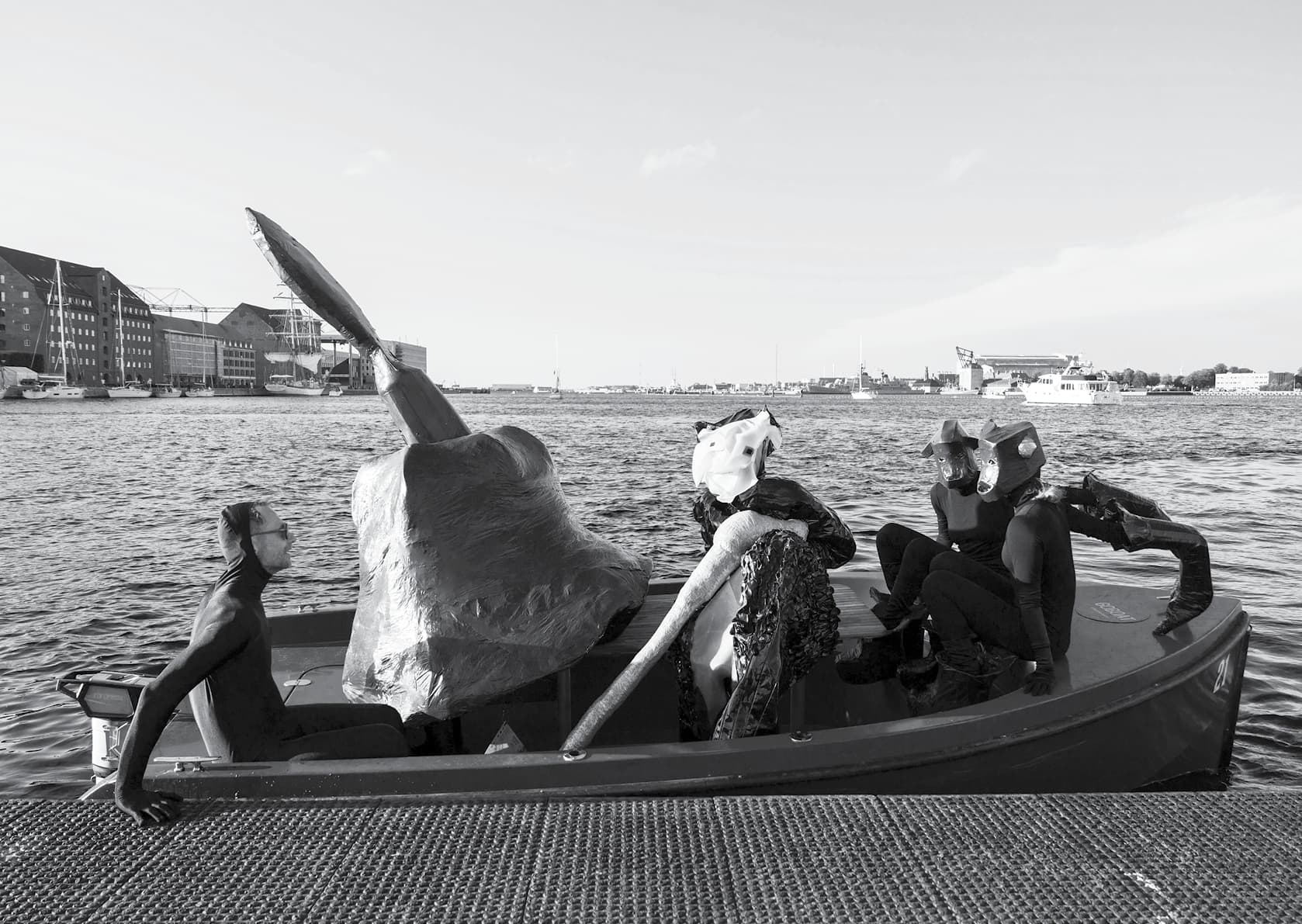
The Art Institution as a Platform for Sensing, Thinking, and Dreaming Otherwise: Toaster’s Acting In & Out Festival
By Solveig Gade
On a late November evening in 2024, I am standing at the city square outside Husets Teater. The stars are out. It is freezing cold. I join some thirty people to form a circle. In our hands we hold the extended tail of a kite, adorned with ribbons. The kite bears the inscription: “If I must die, let it be a tale.” We stand in silence. Then a person begins to recite the poem from which the words on the kite are taken:
If I must die
you must live
to tell my story
To sell my things
To buy a piece of cloth
And some strings,
(make it white with a long tail).
The poem was written by the Palestinian writer, university professor, and activist Refaat Alareer in 2011. In the text, the narrator invites the reader to fly a kite in his honour so that a Palestinian child looking up into the sky and seeing the kite might think “for a moment an angel is there/bringing back love” (Alareer 2023). Alareer shared the poem with the world in November 2023, shortly before he was killed in an Israeli airstrike in North Gaza. Since then, the poem has circulated widely on social media, and the kite has become a symbol of Palestinian freedom and resistance.
The kite happening outside Huset’s Teater was part of the festival Acting In & Out: Performance and Activism, curated by Miriam Frandsen from Toaster in collaboration with performance scholar Storm Møller Madsen. With a focus on issues, such as the climate crisis, Israel’s attack on Gaza, economic inequality, and gender transitioning, the festival brought together performances with so-called Collective Manifestations. Structured as a double-bill, the evening’s first presented a performance and then a collective manifestation, which, facilitated by invited guests from outside the field of performing arts, opened up a space for the audience to reflect together on the theme of the performance. The manifestations also offered the possibility of engaging in shared bodily activities such as choral singing, embroidering, building a kite, or receiving acupuncture. The core idea of these collective manifestations was, in the words of Møller Madsen, to foster temporary communities and create spaces for reflection and action in relation to issues which often leave us feeling disoriented, paralysed, and lonely (Møller Madsen 2024).
The evening of the kite happening opened with the performance lecture Our Other Body by dancer and choreographer Boaz Barkan. In the performance, which first premiered at The Anatomic Theater at the Copenhagen Medical Museion in 2017, Barkan mimics an anatomic dissection of a naked, white male body. While digging through the body laid out in front of him, the performer discusses, in a tone both playful and sincere, the effects that internalised racism and anti-Semitism have on bodies and identities. He finally reveals a hidden organ, which, he explains, is where racism is stored. This organ, he asserts, affects our body and the ways in which we talk, move through, and act in the world. Born in Israel as the grandchild of Holocaust survivors and the child of a Zionist Israeli soldier, Barkan shows a particular interest in the Jewish body and identity – especially the ambiguous relationship between the Jewish diaspora body and the Zionist settler body. In contrast to the polarising political discourses that intensified in Israel, Europe, and the US in the wake of 7 October 2023, Barkan resists forms of identity thinking that would grant citizens of the state of Israel an eternal status as victims while relieving the state of moral or legal responsibility regarding its military actions – indeed, its genocide – in Gaza.1 Instead, he unsettles the very notion of stable identity by showing how the role of victim and perpetrator, oppressor and oppressed, may converge within the same body. Using the first-person plural throughout the performance to signal that the audience is also implicated – that we, too, are bearers of the hidden racist organ – he asserts that “we are all both victims and oppressors, at the same time, in the same body.”
The powerful performance was followed by a collective manifestation led by representatives from Art Workers for Palestine. Visual artists and co-founders of the network, Honey Biba Beckerlee and Suada Ada Demirovic engaged in a conversation with Møller Madsen about the role of the art institution and the relation between art and activism in times of crisis and genocide. Together with the audience, additional members of the network, Banaan Al-Nasser, Asta Von Apfel, and Minna Emke, transformed pieces of white cloth into ribbons to attach to the tail of the kite that we would later hold together in the square outside the theatre. While we were busy folding the ribbons, which we were later told symbolised the thousands of Palestinian children killed by the Israeli military, the artists shared their frustration with how Danish art institutions had responded to the situation in Gaza. While these institutions were quick to declare their support for Ukraine following the Russian invasion, almost all of them refrained from taking a stand regarding what quickly developed into a genocide in Gaza. Just as importantly, Beckerlee and Demirovic reported, artists increasingly experienced cancellations or institutional distancing when they critically addressed the situation in Gaza or publicly expressed support for Palestine, often due to institutions’ fear of losing public funding. It was in response to this situation that the network for Artists and Cultural Workers in Support of Palestine was founded in early 2024. Dissatisfied with the limited impact of political demonstrations alone, the network’s members decided to draw on their knowledge of the communicative power of artistic practices. One outcome was a series of “watermelon happenings” in which cultural workers sat down in silence in front of renowned Danish art institutions such as the National Gallery of Art, Thorvaldsen Museum, the Glyptotek, and The Danish Royal Theatre while eating watermelons. The watermelon shares the green, red, white, and black colours of the Palestinian flag and has been used as a symbol of Palestinian resistance since 1967, when Israeli authorities banned public displays of the Palestinian flag in the West Bank and Gaza. To sit down with this “forbidden fruit” and to consume it in silence proved – especially when images of the happening circulated across social media – to be a powerful way of compelling publics not to look away from what was happening in Palestine, while simultaneously inviting critical reflection on the silence of the art institutions. Another signature action was the kite happening described above, which, among other places, was staged in front of the US Embassy in Copenhagen during the Week of Rage organised by Stop Annexation as well as in front of the Danish Parliament as part of the eight-day hunger strike for Palestine.
The hesitance or even resistance of art institutions to engage with the situation in Gaza did not apply to Denmark only at the time of the Acting In & Out festival. Indeed, in the wake of 7 October art institutions in the Global North were transformed into sites of an increasingly aggressive culture war that left little to no room for dissensus or alternative perspectives. Across Europe and North America, artists and cultural workers calling for solidarity with the Palestinian people thus faced accusations of anti-Semitism, leading to the cancellation of art exhibitions, talks, and lectures as well as the firing of art journal editors, curators and, in the US, even university presidents. To mention but a few prominent examples: In 2023, the Lisson Gallery in London, UK called off an exhibition by Ai Weiwei after he made social media posts critical of Israel’s conduct in Gaza. In Germany, a planned solo exhibition at the Saarland Museum’s Modern Gallery by South African Jewish artist Candice Breitz was cancelled due to her signing of an open letter that protested the German parliament’s condemnation of the Palestinian- led Boycott, Divestment, Sanctions (BDS) movement as anti-Semitic. Meanwhile, in the US, David Velasco was fired as editor of Art Forum after the journal posted an open letter signed by more than eight thousand artists that supported Palestinian liberation and condemned the “institutional silence” surrounding the war.
At the time of Toaster’s Acting In & Out festival, the lower house of Germany’s parliament had just passed a highly controversial resolution to combat anti-Semitism titled “Never Again Is Now”. The resolution states that no public funding should go to organisations or projects, including in the arts, that spread anti-Semitism, question Israel’s right to exist, call for boycotts of Israel, or support the BDS (Deutscher Bundestag 2024). The resolution was heavily criticised by civil society groups, legal experts, artists, and prominent Jewish intellectuals, who expressed fear that it might stifle fundamental rights such as freedom of speech, freedom of artistic expression, and freedom of assembly as well as leading to the stigmatisation of migrant communities (Whittle 2024). In the words of Italian historian Enzo Traverso, the passing of the resolution signalled a “weaponisation” of the term anti-Semitic meaning that any critique of Israel could now be criminalised and condemned as anti-Semitic. As Traverso astutely notes, in Germany this move was quickly utilised by far-right movements and anti-Semitic organisations to turn the fight against anti-Semitism into “a cudgel to use against immigrants and minorities associated with Islam and to bring them into line” (Traverso 2024, 40).
Conclusion
The Acting In & Out festival took place within the increasingly polarised political and cultural environment described above. Across Europe and the US, artists experienced how official state policies regarding the War in Gaza spilled over into the policies of art institutions. Conversely, art institutions feared having their public or private funding cut if they hosted artists, who openly declared their support for Palestine or demanded that institutions take a clear political stand against the war. Fault lines were drawn or re-activated between artists and institutions, art and activism, inside and outside. It was within this heated climate that, for me, Barkan’s performance and the kite workshop and happening became a testament to the enduring value of the art institution. Not as a neutral, innocent white cube for presenting “interesting” art for privileged audiences, but as a public space for encounters between different publics; a space for engaging with and disagreeing about matters of common concern; a space for embracing doubt and ambiguity rather than binaries. As Barkan reminded us, we are all implicated, one way or the other, and oppressor and oppressed tend to co-exist within the same body. The kite-workshop too left room for ambiguity and disagreement. When the floor was opened to the audience, a range of different and, at times, conflicting voices and standpoints were raised. However, perhaps because of the collaborative labour of folding the ribbons, the exchange did not develop into the hostile friend-enemy antagonism that saturated the space outside the theatre’s walls and shaped the policies of many art institutions. Later, when we gathered in the square to hold the tail of the kite, verbal discourse gave way to silence, reflection, and for my part also mourning. Yet, standing there together also filled me with a sense of hope and the courage to dream of other, less violent futures.
I am by no means trying to romanticise the art institution here. Its long history of excluding bodies, voices, and histories that do not conform to the white, heterosexual, class-based, ableist norm is all too well-known. However, if there is any role for the art institution to play in a time of war, climate collapse, and accelerating AI-epistemic crisis it is to insist on creating spaces where we may come together to sense, discuss, doubt, and dream in ways that differ from those offered by most other public arenas. For me, the November night at Toaster discussed here helped me to do precisely that.
Solveig Gade (she/her), PhD, is a dramaturge and Associate Professor at The Department of Theatre and Performance Studies at The University of Copenhagen. Her research centres on contemporary theatre and performance engaging with war, conflict, and climate crisis. She is co-editor of the books (W)archives: Archival Imaginaries, War, and Contemporary Art (Sternberg Press, 2020) and War and Aesthetics: Art, Technologies, and the Futures of Warfare (MIT Press, 2024). She is Co-Principal Investigator of the Velux-funded collective research project ‘Oikos: A Cultural Analysis of Care and Crisis in the 21st Century’.
References:
Alareer, Refaat. 2023. If I Must Die. World Literature Today, December 14, 2023. https://www.worldliteraturetoday.org/blog/poetry/bilingual-poem- gaza-refaat-alareer.
Deutscher Bundestag. 2024. Bundestag stimmt mit breiter Mehrheit für Antrag gegen Judenhass. https://www.bundestag.de/dokumente/ textarchiv/2024/kw45-de-juedisches-leben-1027708.
Liisberg, Anne. 2024. Kollektive manifestationer i krydsfeltet mellem kunst og aktivisme. Iscene. https://iscene.dk/2024/11/05/kollektive- manifestationer-i-krydsfeltet-mellem-kunst-og-aktivisme/
Traverso, Enzo. 2024. Gaza Faces History. New York: Other Press.
Whittle, Helen. 2024. Germany Passes Controversial Antisemitism Resolution. Deutsche Welle, November 6, 2024.https://www.dw.com/en/germany- passes-controversial-antisemitism-resolution/a-70715643
1. When referring to 7 October 2023, I do not intend to suggest that Hamas’ massacre on Israeli civilians erupted unprovoked or out of thin air.
Horrible, as it was, the massacre was deeply entwined with Israel’s
longstanding suppression and harassment of the Palestinian people.
I would like to thank my colleague Laura Luise Schultz for critical feedback; I am indebted to her important work in the research network The 1930s Today.
Diversity, Equity, and Inclusion in the Performing Arts: Navigating political change, artistic freedom, and organisational responsibility in a Nordic context
By Moussa Mchangama and Lea Hedeskov, In futurum
Introduction
When asked to write this article, we reflected on what we really wanted to say in these times marked by democratic backsliding, rising nationalism, and the normalisation of authoritarian and fascist tendencies across Europe and beyond.
As advisors and public speakers, we are deeply involved in the complex processes of creating better conditions and possibilities across the arts and cultural sectors in the Nordic countries. We work with private and public funders, cultural institutions, organisations, independent artists, activist collectives, researchers, and in public conversation alike – and as such, we have a fairly broad understanding of what is happening in this field. From that standpoint, we could choose a myriad of different lenses through which to examine the state of diversity, equity, and inclusion (hereafter DEI) practices in the Nordic performing arts field today: new institutional practices; those who have been given a platform and have excelled; those who push the norms and limits of the status quo; the learnings of the past few years. But that does not feel right, right now. This is not a time to mince words or to hold back.
Writing about DEI in the performing arts today raises deeply important questions about what such commitments can, and should, look like in a political climate that increasingly constrains artistic freedom, democratic participation, and mobility. Recent reports from the International Network for Contemporary Performing Arts (IETM) and the Performing Arts Coalition (PAC), among others, point to widespread budget cuts across the performing arts sector, as well as an increasing national orientation in public funding schemes creating intensified pressure on institutions and practitioners alike – and on artistic freedom more broadly.
In such contexts, practices, initiatives, and people deemed “non- essential”, “too difficult/experimental”, or “financially risky” are often the first to be deprioritised. This has significant implications for DEI work in general and for minoritised or marginalised practitioners in particular, as moments of austerity tend to expose which institutions have engaged with equity as a symbolic gesture, and which organisations and artists have embedded these commitments more deeply into their structures, practices, and artistic visions.
Against this backdrop, this article asks how DEI can be navigated amid political upheaval, militarisation and economic strain, what these shifts mean for the independent performing arts field, and how organisations and infrastructures that enable the arts are responding – or failing to respond – to these pressures. These questions are explored through a Nordic lens. The Nordic context brings a strong narrative of a presumed ‘Nordicness’, often framed as being rooted in equality, freedom and security. At the same time, the Nordic countries have strong traditions of public cultural funding, and deep narratives about the importance of artistic freedom. However, we often lack in-depth engagement with what that might mean and for whom these ideals are available. Questions we must insist on raising even in the midst of political and social transformations.
Same, same, but different
Grouping the Nordic countries together can make sense in various historic, geopolitical, cultural or collaborative contexts – but it can also flatten vast differences in both artistic realities, national policy, financial approaches, and lived experiences. For example, while Norway has had a committed, nationally coordinated effort to oversee and support DEI work through Kulturdirektoratet for a number of years, Denmark’s Ministry of Culture phased out its Bodil Koch Award, celebrating a person or institution deeply involved in supporting equality and diversity, just one year after its inception in 2023. While Sweden is often celebrated for being far ahead when it comes to gender equality and accessibility, we experience a much harder reality when it comes to talking about racialisation than in Denmark (which in itself is not an easy task). And while many minoritised and marginalised artists and cultural workers have fought to earn their place at platforms and stages in well-established institutions, many indigenous artists and collectives are far more committed to establishing their own institutions on indigenous land than fitting into the existing ones – with good reason.
Across these contexts, we observe a growing tendency to instrumentalise art. Instrumentalisation is not inherently problematic; art has always played social and political roles. What matters is how, why, and for whom it is mobilised. There is a crucial distinction between weaponising culture to serve exclusionary political agendas and creating space for artistic practices that emerge from processes of self-determination and cultural survival. When right-wing nationalists weaponise culture as a tool to uphold xenophobic and conservative nation-states, artistic freedom is limited and disciplined. By contrast, in Greenland, cultural production plays a vital role in Indigenous identity-building and in the broader nation-building process toward independence. In both cases, art and culture are politically significant – yet the intentions, power dynamics, and consequences are fundamentally different. One seeks to police borders and restrict the field of expression; the other seeks to expand it, redefining what art is and who it is for.
At the same time, we do find one approach present throughout the Nordic sector: the engagement with DEI-work from an identity-based perspective. Many institutions have worked specifically with efforts centred around gender and sexual identity; accessibility and disability; or ethnic minority groups or indigenous artists. But these initiatives are often separate and distinct efforts, which begs several questions: are we aware of who we implicitly are centring when we are working to elevate certain groups? Where in our institution or organisation do we centre these perspectives – in our artistic practice, in our organisation, in our audiences – or across all of them? When we work to better the working conditions for women in the arts, are we aware of who we think of as women and what kind of behaviour, worldviews, bodies, and practices we expect of them? If we want to engage BIPOC artists and communities and talk more about racialisation, do we have an understanding and critical reflection of whiteness as well? If we want to create access to more diverse audiences, do we also create access for more diverse artists and workers? And last, but absolutely not least: do we understand that people are more complex than one category of identity and that our initiatives therefore should be coherent and overlap rather than be separate entities?
In other words, identity-based approaches carry significant risks. When framed narrowly, they can position marginalised groups in implicit competition with one another and reinforce individualised models of representation rather than collective transformation. Too often, the question becomes how to include more people in existing structures, rather than whether those structures themselves reproduce inequity or structural violence. This tension becomes especially visible in times of political pressure, when the identities that were temporarily centred through a DEI initiative are the first to disappear from institutional priorities. The recurring need for indigenous communities to build alternative institutions underscores this point: when existing systems are rooted in colonial and exclusionary foundations, inclusion alone is insufficient. Structural transformation, not identity-based representation, becomes the more urgent task.
The militarisation of art
We are living through a period of profound geopolitical instability, marked by democratic erosion, militarisation, and increasing pressure on civil society. From a Nordic perspective, this can seem especially unsettling as the region is often framed – politically and internationally – as a stronghold of democracy, freedom of expression, and cultural resilience. These ideals are foregrounded in policy language and cultural strategies, but taking these words at face value risks obscuring the structural changes currently unfolding beneath them – and, most crucially, veiling who is included in these promises, and who is not.
Across the European continent, we see a growing national orientation in cultural and political agendas, accompanied by an increasingly instrumental understanding of culture’s role in society: in Denmark, for example, certain aspects of the conversation around art and culture have reframed art and culture as a tool for nation-building, generating a specific, nationalist political end-goal for the arts. At the same time, both censorship and self-censorship are on the rise – not always through explicit bans, but through funding priorities, political signalling, and a climate of fear around reputational or financial repercussions. It seems especially grim, when we look towards our neighbouring countries, such as Germany and the UK, where financial repercussions have not just been a threat and where political bans on pro-Palestinian initiatives put a spoke in the wheel of both artistic and democratic freedom. But in Denmark as well, we see politicians putting pressure on festivals and institutions, critiquing their bookings and communication when deemed ‘too radical’.
Within this context, approaching DEI exactly through the lens of artistic freedom becomes a tool for action. It invites us to ask: what is the current state of artistic freedom in the Arctic and Nordic regions, and how can our institutions and infrastructures actively safeguard it? And if we don’t actively safeguard it in times of crisis, why are we even here?
But what do we mean when we speak of artistic freedom? In line with independent research conducted by Elena Polivtseva for the Performing Arts Coalition, artistic freedom, “should be understood in a broad, rights-based sense: not just absence of censorship, but encompassing social and economic rights, mobility, association, fair remuneration, and the right of all to participate in cultural life”.
When artistic freedom is understood in this way, it becomes clear that pressures on artistic freedom are inseparable from questions of equality and equity. When access to funding narrows, when working conditions become increasingly precarious, or when certain voices are implicitly discouraged, the impact is unevenly distributed. Moreover, if we speak about democracy, unity, and shared values without reckoning with structural inequalities, and the cultural, social, and political differences that exist across the Nordic region, we risk reproducing the very exclusions we claim to challenge.
Impacts and meanings
In a landscape shaped by shrinking budgets, increased competition, and political pressure, we need to strengthen efforts towards collective power. It can sound vague, but in practice it means that artists, producers, and organisations are not left alone when speaking truth to power, presenting challenging work, or navigating deeply precarious conditions – factors that severely impact the livelihoods of many artists and organisations. Not Just Art are experimenting with collective organising, shared advocacy, and new global solidarities across the field. And on a regional level we could mention initiatives such as FORCE, a stakeholders’ platform for artistic freedom and collaboration.
These developments are vital. Yet they remain fragile. Many of the structures and initiatives that have emerged in recent years risk being quietly deprioritised or actively dismantled, whether due to financial pressure, fear of political or monetary repercussions, or a tendency to adopt new buzzwords uncritically in the hope of signalling sustainability or responsibility, without addressing underlying structural issues.
For the last two years, we have been organising and creating the cross-Nordic collaborative project ‘Voices in the Nordics: An Artistic Language for Justice and Inclusion’, along with Nivi Christensen (Nuuk Art Museum), Tanja Mangalanayagam (BiBu) and Mathias Danbolt and Maria Utsi (Utsi/Danbolt). The project was born with a deep mutual frustration with always having to navigate the needs and language of institutions, foundations, and media. As such, artists, cultural workers, and researchers with indigenous or ethnic minoritised backgrounds have met over three gatherings to discuss, reflect, analyse and create together in spaces that did not centre the needs or language of others. Both massively underfunded and very important, the project is in itself a testament to the harsh reality of (trying to) create alternative networks and support systems.
So what do we do?
For those organising festivals, biennials, and other large-scale platforms, this moment calls for heightened attentiveness to the spaces being created: their underlying motivations, their conditions of access, and the vastly different forms of precarity that artists and cultural workers bring with them. It also requires a critical examination of how new initiatives – however well-intentioned – may inadvertently reinforce exclusion, limit artistic freedom, or exacerbate inequality within the field. Last but not least, it requires an in-depth look at the balance between internal capacity, skill, and experience and external ambitions – an awareness we often see lacking, often with significant negative impact for everyone involved.
We therefore argue for broader coalitions and more durable structural frameworks – frameworks that cannot easily be undone by shifting political winds or short-term funding cycles. This includes a shared responsibility to assess how policies, programmes, and partnerships shape the conditions for artistic freedom, access, and equity over time.
As stages quite literally and metaphorically close in on us – through reduced funding, fewer opportunities, and heightened constraints – the task becomes to cultivate abundance rather than scarcity. To share resources, resist competition as the default mode, and instead work in coalition. To collectively demand, at the political level and from both public and private funding bodies, that a thriving performing arts ecosystem is prioritised, not for the few, but for the many. And to remind each other, these questions are intricately intertwined with the positive, value-based words used to describe the Nordic countries; words that might be completely empty if we don’t actively reinforce them ourselves.
In futurum is a change-making agency working across the arts, culture, and civil society to facilitate strategic transformation and challenge structural inequalities. We collaborate with institutions and independent actors to embed diversity, equity, inclusion, and belonging through situated, research-informed processes that support tangible and lasting systemic change.
Moussa Mchangama (he/him) is a leading strategic facilitator and change agent in the Nordic cultural conversations about diversity, equity and inclusion. He creates caring and nurturing climates for conversations that challenge norms, perceptions and business-as-usual. He introduces new insights and perspectives into the landscape by creating empathetic spaces for understanding complex and challenging agendas.
Lea Hedeskov (they/them) holds an MA in Comparative Literature and works as a project lead and advisor at In futurum. With more than five years of experience in diversity, equity, and inclusion across the arts sector, their practice focuses on institutional transformation, systemic change, and critical knowledge production.
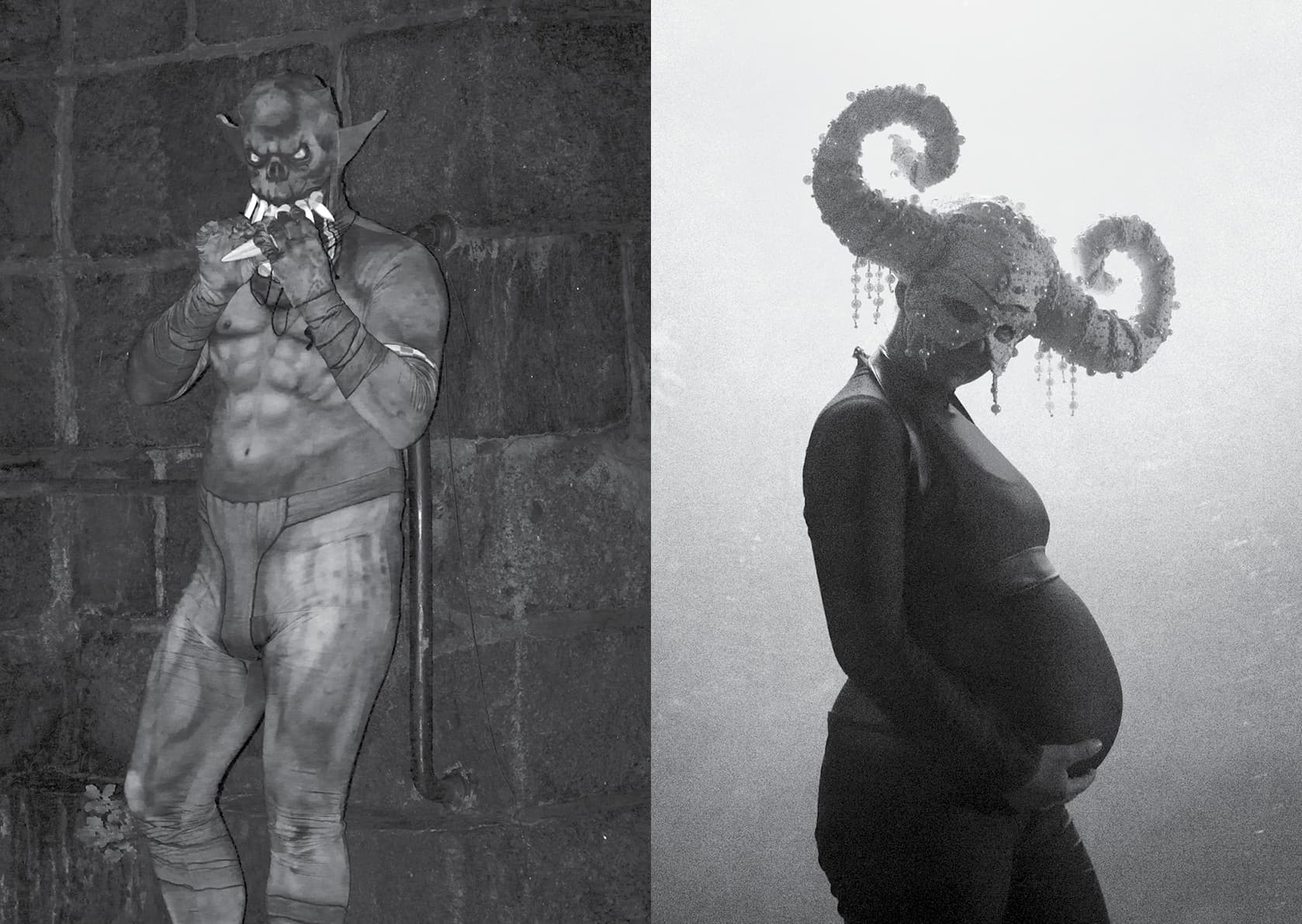
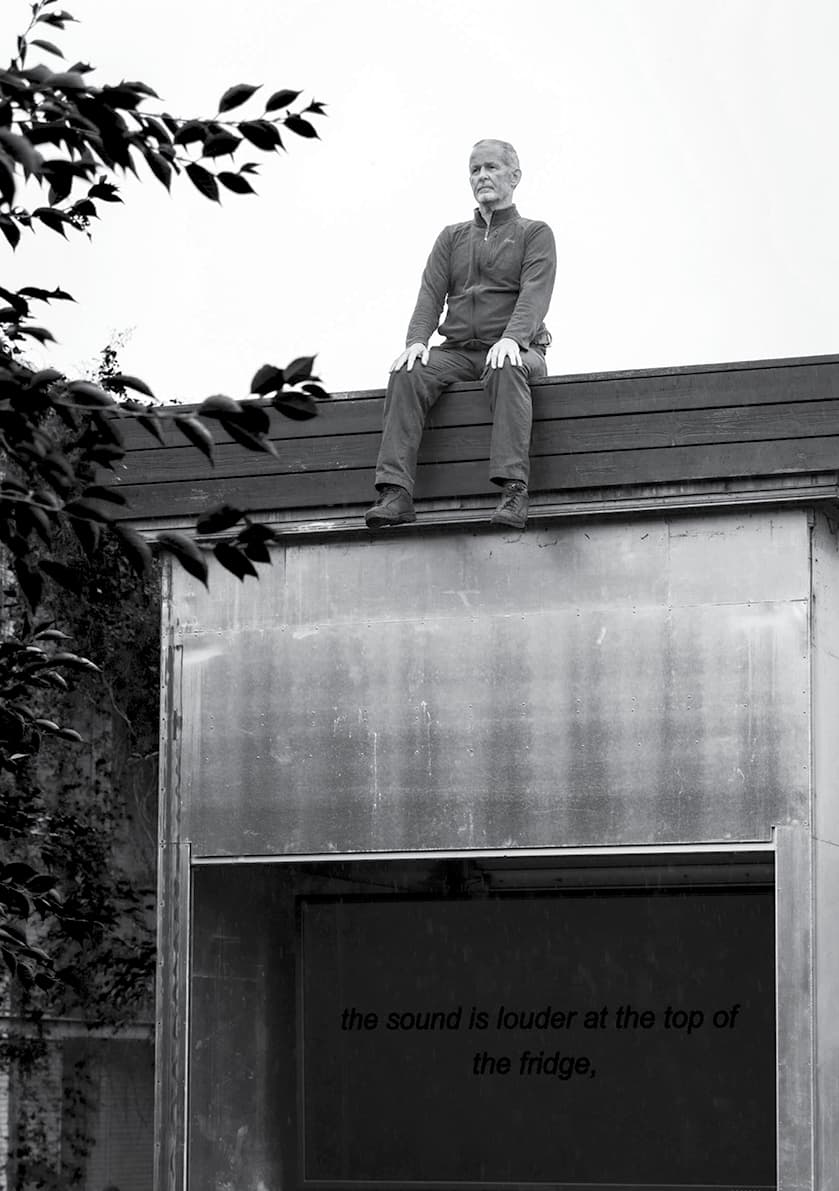
Light on Lesions
Interview with Jules Fischer
By Miriam Frandsen
Jules Fischer is currently reworking their performance Lesions for Toaster at Husets Teater. The piece premiered in Oslo at UKS (Unge Kunstneres Samfund) with three performers. In this version, it will be a solo performance. I meet Jules for a very generous and personal conversation about the work in their studio in Ryesgade.
What is the artistic motivation behind Lesions? How did the idea come about?
The idea for Lesions arose during the Copenhagen Pride in 2022. It was a summer of extreme heat, prolonged drought, and I felt that the earth was burning. That year, only the commercial Pride took place; smaller local initiatives weren’t included. I was standing there sweating, handed a 7-Eleven “Pride” water while a “Pride” burger was being sold nearby. Pride has evolved into a massive capitalist game, consuming both us and the resistance itself. It creates a sense of powerlessness. Wherever we try to resist, it gets absorbed and turned into even more destructive consumption. It all felt so ******, honestly, and out of that frustration came this angry rant, which is the foundation of Lesions. The first draft of the text was written that night when I got home. I felt like we were floating on a Titanic raft, and I was unsure what the right thing to do was: Should we just try to love until the end? Or should we acknowledge that there’s no more time for intimate relationships and instead focus on saving what can still be saved in society? Where should we direct our energy? On the big picture or the small one? These questions led to this angry textual attack on that very ambivalence. The anger opened something up, but it took some time before I picked it up again.
At the same time, I became deeply interested in hormones in general, both in relation to hormone therapy and because I wanted to become pregnant. Hormonal treatments for trans people are still relatively new from a medical perspective, and there’s a lack of research. Birth control pills are the most studied hormonal treatment regarding side effects, but to me, they’re a wild example of how female bodies have been controlled without fully considering the risks of being on the pill. Meanwhile, general medical research is focused on men because women’s hormonal fluctuations are deemed too complicated. Hormones are also in the water and everywhere. The societal discourse and approach to hormonal changes and treatments are very complex. Some issues are silenced, while others are heavily problematised and given massive societal attention.
There are no hormonal treatments specifically designed for trans people; the medications used were developed for other purposes. Trans women, for instance, might take birth control pills and testosterone blockers initially developed for cardiovascular diseases, while the testosterone that trans men take is marked with bold warnings that “women” absolutely must not use it. We still don’t fully understand the side effects that can occur after starting hormonal treatments. If it’s hormonal contraception with societal relevance, it’s deemed perfectly safe, despite evidence that, for example, hormonal IUDs contribute to breast cancer. However, when it comes to trans people, whose lives depend on HRT (hormone replacement therapy), society becomes highly focused on protecting their health – essentially making access to treatment extremely difficult. Women’s bodies are simply valued less, and trans bodies are practically disregarded. This angers me. Yet, it is the female body that carries the cyclical processes also found in nature. The same connections and systems exist, and they play a significant role in the text of Lesions. I quote Paul B. Preciado, who quotes Silvia Federici, her research, and her critique of the separation of our bodies from nature and what this means in a capitalist setup that seeks to align the human body with market logic.
I don’t see my work as explicitly activist or political; I’m just overwhelmed by the ambivalence around hormones because I, too, want to take various hormones, while living in a body that hasn’t been thoroughly researched and has been suppressed for centuries.
I try to embrace the complexity I experience and work with it artistically, perhaps to understand it better. The ambivalence and complexity are real. In general, I want to make room for this duality, acknowledging that this is how things are – they are neither one nor the other. The text in Lesions is a kind of collage with references to Testo Junkie by Paul B. Preciado, the TV show Designing Women, the film Little Women, the poem ‘The Hill We Climb’ by Amanda Gorman, and Charlie Chaplin’s The Great Dictator. Visually, I’m very drawn to surrealism, a kind of formal uncanniness, and old Hollywood drama. All of this aligns well with exploring facades and the absurdity of gender construction.
That Pride event, among other experiences, made me reflect on what it means to be part of a community that has endured so much rejection. Everyone carries wounds from early childhood, but when you’re marginalised, you’ve often felt deeply wrong and perhaps lost trust in other people and society. What does it mean to live in a community where everyone is so wounded, yet everyone tries to heal each other? When you’ve been rejected, bullied, or disowned by your family, you become highly sensitive to rejection, and you’re likely very good at rejecting others yourself. I’ve started thinking a lot about this defence mechanism and exploring it in my work.
In Lesions, there’s an interplay between societal wounds and the individual traumas we all carry because the two are interconnected. The version coming to Toaster at Husets Teater focuses heavily on intimacy issues and the distance we create between ourselves and each other.
What parameters are you most interested in exploring with the performance and exhibition? You had an exhibition in connection with Lesions in Oslo, didn’t you? What are you investigating?
Lesions in the context of Toaster is a further development of a performance and exhibition I created in Oslo in the fall of 2024. It involved a light and sound installation, along with other visual works included in the exhibition. It was more of a spatial experience. It’s challenging to ensure that an exhibition and a performance achieve the same effect since they are two distinct forms. However, I tried to play with the relationship between exhibition and performance. For instance, in Oslo, two performances overlapped. The idea was to avoid creating one monumental performance and instead lean into a “live exhibition”, with multiple performances occurring simultaneously.
One of the other performances, Perfect Lovers, took place inside Lesions. This allowed me to experiment with the different expectations audiences have of exhibitions versus performances and explore how these two formats can adopt conventions from each other. In an exhibition, it’s common to have multiple works coexisting, but you rarely see two performances happening simultaneously. That’s exactly what I tried here.
What kind of audience interaction are you working with, if any?
There’s always a significant consideration of the audience in my work. In Lesions, distance plays a crucial role – it’s part of the form. The performance is lip-synced, alternating between full spotlight and shadow, where the performer attempts to engage with the audience more intimately. The audience can move freely around the space, and we use the lighting in a way that also illuminates the audience, putting them in the spotlight as well.
When a performer stands on stage, they are often blinded by the light and can’t see the audience. This is likely not something audiences think much about, but performers often can’t see a thing because the lights are so intense. I find this aspect of theatre fascinating: we meet in an intimate, live setting, but in reality, there’s this “fourth wall”, where the performer speaks out into a vast darkness, while those in the darkness observe. This dynamic becomes a sort of mirror that I find fun to play with, especially in relation to intimacy issues – wanting to be seen, but not too closely.
In Lesions, the dramatic action revolves around the tension of who the light shines on – or doesn’t. The lamp becomes a symbol of the attention we can give or withhold from one another, for better or worse. For minorities, this can manifest as a hypersensitivity to visibility. Entering a space can feel like everyone is thinking, “Oh, here comes the queer person or the non-white person”. The paradox of being both highly visible and simultaneously ignored is something the lighting explores.
For example, we don’t exist in research statistics. Nobody knows what to do when you show up at a fertility clinic and want to have a child. This ambivalence is made physical and concrete in the performance through light – either being fully exposed or entirely overlooked. The performer also interacts with the lamp itself, observing what it does, rather than only being illuminated by it. This becomes an exploration of what’s possible when there’s no light at all.
I’m interested in exploring and breaking down hierarchies in my art, including dissolving professional hierarchies, like distinguishing between whether someone is a singer or a dancer, as I did in Dryppende Stof. In Lesions, the lamp itself becomes the main character, while the performer takes on a supporting role in a sense.
What do you hope Lesions will make the audience think about?
I hope they experience an ambivalence between distance and closeness – that the performance can reflect their own potential ambivalence. At the same time, there are several facts embedded in the text that they might ponder. Ideally, the audience becomes part of the investigation, as it can continue within them.
What would be the next natural experiment for you following this production?
Lesions refers to injuries in the tissue. But I haven’t yet reached the deepest wounds. Without making any promises, I imagine the next step might involve going even deeper. Since I started creating performances, I’ve worked with the idea of community in various forms. Yet, implicitly, there has always been an undercurrent suggesting that some are excluded – that rejection or misunderstanding exists somewhere.
In Dryppende Stof, I explored inclusion and positive community, but even in that celebration, there’s a pain underneath. Now, I’m becoming interested in what’s inside ourselves. There’s something within me that has surfaced in all the works I thought were about something else, and now I want to understand what that really is. Can I delve further beneath the surface?
I feel aligned with Alok Vaid-Menon’s perspective that love has the power to heal. Maybe we need to find ourselves before we can go out and save the world. Relationships are difficult – but why? Because we’re constantly triggered by our own wounds and patterns. Everyone knows the feeling of rejection; it’s part of being human.
What if we could show care and try to heal ourselves and each other? Love and the body are revolutionary forces, and if we were more connected, I don’t think capitalism would make sense.
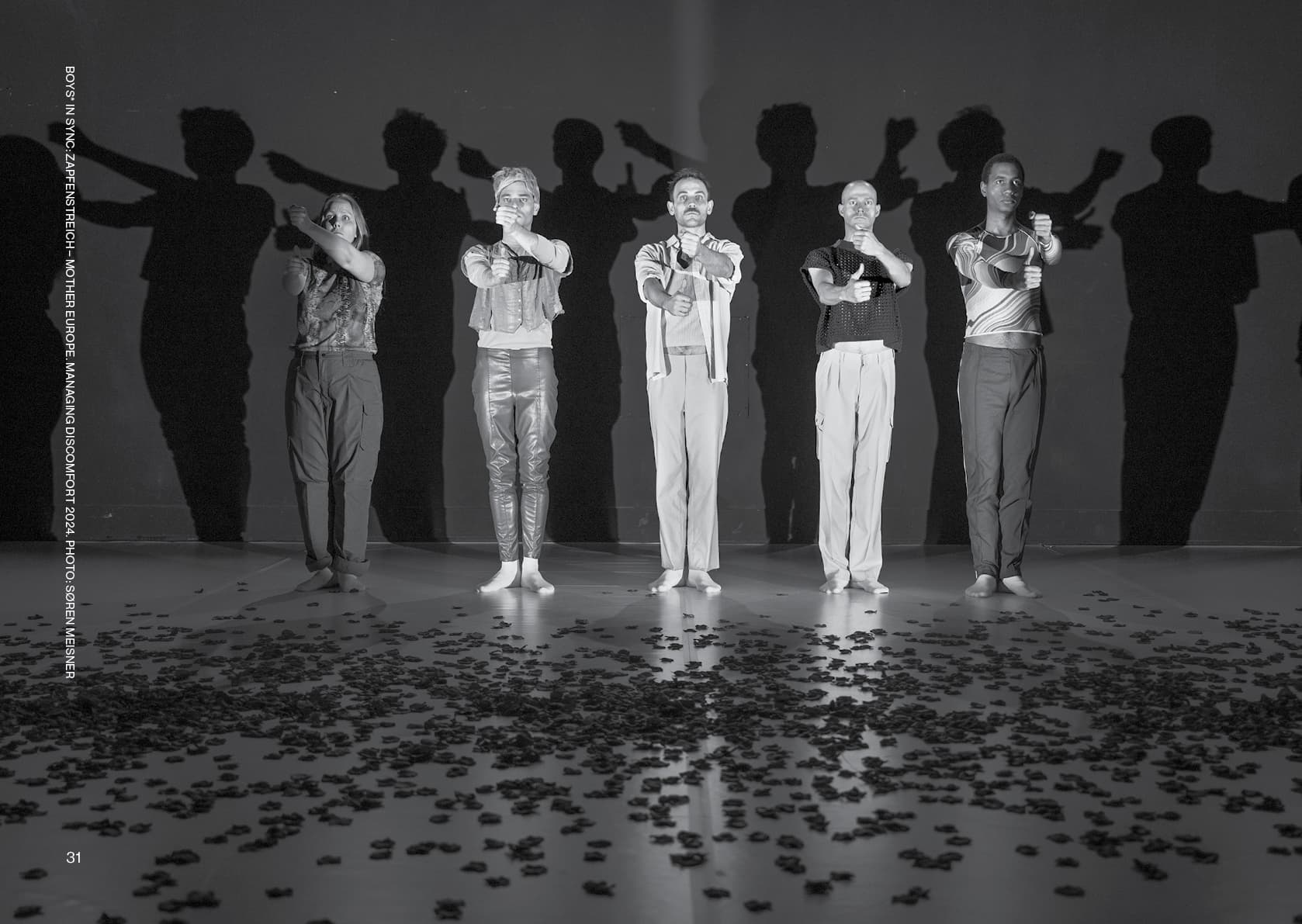
Institutionalising the Radically Unstable
By Storm Møller Madsen and Cecilie Ullerup Schmidt
(…) performance is radically unstable, dependent totally on its framing, on the by whom and for whom, on the why where when it comes into being.
Diana Taylor, Performance, 2016, p. 41
What constitutes continuity amid the pressure of structural inconstancy?
Lauren Berlant, Cruel Optimism, 2011, p. 69
Against categorisation
What is performance? Performance is an embodied, artistic practice. It is a genre opposing the fictional and rehearsed roles of theatre, however allowing subjects to perform variations of themselves: mediate, negotiate, and obscure personal and publicly ascribed identities. With durations of a few minutes and up to more than one-year performances, it takes place in public space and in art institutions, involving paying and non-paying audiences, and involuntary audiences passing by. Performance is a genre across, beyond, and sometimes in opposition to disciplinarity, to division into art forms, and to institutionalisation. At its core, performance is difficult, escaping fixed categorisation: performance, performance art, performance theatre, live art, body art, happening, and more. To work with performance requires the ability to embrace instability as a fundamental part of its very ontology and potential.
In a time when the art world in Denmark and beyond is still grappling with the silence of art institutions and the silencing of artists in relation to the genocide in Gaza,1 where cultural institutions and theatres in Germany are urged to exercise “neutral” programming by the right-wing party Alternative für Deutschland,2 and where President Donald J. Trump has inserted himself as Chair of the Board at the John F. Kennedy Center and renamed it the Trump Kennedy Center, promising “NO MORE DRAG SHOWS, OR OTHER ANTI-AMERICAN PROPAGANDA” at his social media Truth Social,3 alarmingly reminiscent of the attacks on “un-decent” feminist and queer performance art practices during the NEA Wars in the 1990s,4 it is important to stress that performance art has an inescapable critical and political legacy of dismantling power, criticising social and aesthetic norms. A legacy and practice that insists on challenge, disidentification, and difficulty (McKenzie 2001; Muñoz 1999; Doyle 2013) which makes working with and providing infrastructure for performance challenging as it, inevitably, asks critical questions of the structures, norms, and practices of those providing it with a home.
Providing infrastructural homes for performance
So, we might ask, who then cares about and takes care, infrastructurally, of performance in Denmark? Let us think about infrastructures in this way: education, festivals, venues, laboratories – and financial support.
There has never existed an education dedicated to performance in Denmark, despite aspirations at Cantabile 2 (1985–) in Vordingborg and Nordisk Teaterskole in Aarhus (1989–99), and a severe and continuous recommendation from researchers and experts from the performing arts sector (Lund et al. 2010; Dithmer et al. 2010; Peripeti 23, 2015; Schultz et al. 2019). With dedicated teachers and professors at the Danish National School of Performing Arts and the Royal Danish Academy of Fine Arts performance has been encouraged and supported for their time of tenure but never had its own educational programme.5 A collaboration between the Danish National School of Performing Arts, the Royal Danish Academy of Fine Arts, and the academic study programmes of Dramaturgy in Aarhus, Art History, and Theatre and Performance Studies in Copenhagen has never materialised in a joint performance education. However, the performance field in Denmark has profited greatly from educations abroad. Across dance and performance, artists have been trained at SNDO in Amsterdam and HZT in Berlin. Conceptual and theory-strong practices have been cultivated at Applied Theatre Studies in Giessen, at Performance Studies at NYU, and at Dartington College of Arts. Most recently, the new MA in Performing Arts as Critical Practice in Malmö has enriched the region with community- engaged performance practices. And since the early 1990s, a massive number of artists based in Denmark have graduated from the ambitious BA and MA in Performance in Fredrikstad – a school with its legacy in performance art, the avant-gardes, performance theatre, and contemporary decolonial and Indigenous performance, and regrettably closing down this year, 2026, after 30 years of being lighthouse and incubator for performance in Scandinavia.
The housing of performance in Denmark has (had) its primary caretakers in institutions and festivals such as the Fools Festival, KIT, Junge Hunde, ACTS, Metropolis, IPAF, and venues, laboratories, exhibition spaces like Kanonhallen, Entréscenen, Camp X, Warehouse9, Friisland & Zine, HAUT, Tårnby Park Studio, Museet for Samtidskunst, Astrid Noacks Atelier, Sydhavn Teater and Toaster. Festivals, venues, laboratories, and educations have been and are crucial infrastructures for the liveability and development – and precarity and scarcity – of performance in Denmark. All have, in different ways, provided platforms, discourse, archives, audiences, and artistic communities for performance. Regrettably, many have been temporary and precarious homes for performance and rarely have they been able to provide sustainable infrastructures or continuity for performance artists long term. Like cultural theorist Lauren Berlant, we might ask what then “constitutes continuity amid the pressure of structural inconstancy?” (Berlant, 2011).
In the collaboration between Den Frie and Husets Teater via the Toaster platform since 2021, efforts are being made to sustain and anchor performance art in new ways. The fundamental interdisciplinarity of performance is not only implicit but sought to be realised through a shared curatorial, interdisciplinary, and cross-institutional infrastructure and production framework. Toaster is a platform for performance presentation between the performing and visual arts, but also an investigation of how such cross-institutional and interdisciplinary anchoring of performance art must raise new questions and proposals around performance curation, production, and audience engagement. Like previously mentioned festivals and venues, the budget of Toaster is dependent on funding through the Danish Arts Council (2.5 million Danish kroner per year through the Committee for Performing Arts, Project Funding) and is now in its second period of a 4-year grant period. Its continuation beyond 2029 is dependent on the jury sitting in the board of the committees in the future, and/or on further funding strategies to stabilise and secure the unstable life of performance.
As performance is radically unstable (Taylor 2016) and anti- authoritarian, drawn particularly to political and public life, the relation to the art institution is and should remain paradoxical. On the one hand, performance is a genre of institutional critique: The signature, the economic dependence, the soloist-centred canonisation, and the gendered exclusions of the art institution are exposed and ridiculed by artists putting their signatures on both their own shit (Piero Manzoni) and the display cases of the art institution (Mierle Laderman Ukeles), circumvented through anonymous artworks and collective organisation (Guerrilla Girls), or held accountable for its embedded whiteness (Adrian Piper) and for echoing a legacy of racial tokenisation and colonial violence (Coco Fusco and Guillermo Gómez-Peña). On the other hand, performance artists need time, space, and sustainable financial support to be able to develop their practices, and the performance field needs infrastructural containers – both educationally and institutionally – to shape and sharpen the collective language and discourse of the genre. With performance disturbing the very definitional apparatus that forms the ground of institutional as well as funding structures, the question remains: How does one provide an infrastructure for the radically unstable? Our hope is that performance as a field in the future may have structural consistency, not through singular, genre-defining, and shorter-term initiatives but through multiple, continuous, and critical infrastructural homes that secure and further the unstable, political, and difficult potential of performance.
Storm Møller Madsen (they/them) is a PhD Fellow at the Department of Arts and Cultural Studies, University of Copenhagen, in the section for Theatre and Performance Studies. Their research explores representations of trans communality and trans separatism, as well as trans separatist readings of contemporary performance art. Alongside their academic work, they are active as a dramaturg and curator within the Danish performance art field, most recently as part of Skabninger Samlinger, a platform for performance art and discourse. Their work is driven by a commitment to fostering critical, care-based frameworks for performance, with a focus on amplifying marginalised voices and strengthening situated scholarly methodologies.
Cecilie Ullerup Schmidt (she/her) is Associate Professor in Theatre and Performance Studies and Cultural Studies, Department of Arts and Cultural Studies, University of Copenhagen. She has a background in performance art and curating, and has taught on the BA course Dance, Context, Choreography at HZT in Berlin (2011–15). She was a member of the Advisory Board of Toaster (2021–24) and has been a member of the Performing Arts Committee at the Municipality of Copenhagen since 2022. Her research centres on production aesthetics: conditions of living and working in the arts. With a focus on racialisation and gendered dynamics, she examines access to and subjectivation in the infrastructures of the Nordic art world: artistic education, institutions, and funding bodies.
References:
Berlant, Lauren. 2011. Cruel Optimism. Duke University Press.
Dithmer, Monna, Sven Valdemar Holm, & Lars Seeberg (red.), 2010. Veje til udvikling: Scenekunst i Danmark (s. 63-70). http://kum.dk/servicemenu/publikationer/2010/scenekunst-i-danmark-veje-til-udvikling/
Doyle, Jennifer. 2013. Hold it against me. Difficulty and Emotion in Contemporary Art. Duke University Press.
Lund, Jette, Christine Fentz, & Anette Asp Christensen (red.), 2010. Rå Hvidbog: En materialesamling vedrørende den frie scenekunst i Danmark (s. 61-67). Foreningen af Uafhængige Scenekunstnere. http://scenekunstnere.dk/ra-hvidbog/
McKenzie, Jon. 2001. Perform or Else. From Discipline to Performance. London & N.Y.: Routledge.
Muñoz, José Ésteban. 1999. Disidentifications. Queers of Color and the Performance of Politics. University of Minnesota Press.
Schultz, Laura Luise, Cecilie Ullerup Schmidt & Sofie Volquartz Lebech. 2019. ”Reclaim Challenge: Rethinking the Critical Impact of an Education of Performance Art in Denmark.” Nordic Theatre Studies, 30(2), 40–60. https://doi.org/10.7146/nts.v30i2.112951
Taylor, Diana. 2016. Performance. Duke University Press.
Notes
1. For examination and discussion of this, see for example https://kunstkritikk.dk/hvid-stoj/ and https://www.idoart.dk/blog/saadan-foeles-institutionernes-larmende-tavshed
2. AfD politicians propose that public institutions producing cultural and youth programs must be neutral, https://soziokultur-nrw.de/2024/11/darf-die-das-politische-neutralitaet-in-kunst-und-kultur/. This is not unlike the Danish right wing party Dansk Folkeparti that often claims Danish Broadcasting service to be led by political left-wing positions. According to members of Dansk Folkeparti, the Danish media should align with ”Danish values” https://danskfolkeparti.dk/nyheder/df-kraever-konsekvenser-for-dr-dokumentar-ansvarlig-redaktoer-boer-fyres/
3.https://truthsocial.com/@realDonaldTrump/posts/113981872435350592
4.https://www.aclu.org/news/free-speech/revisiting-the-nea-four-free-speech-battles-in-the-arts
5. Such as, within the past decade, Sara Gebran, Piet Gitz-Johansen, Andreas Liebmann, Katya Sander, Angela Melitopoulos, Jane Hye Jin Kaisen, Carla Zaccagnini, and Jeuno JE Kim.
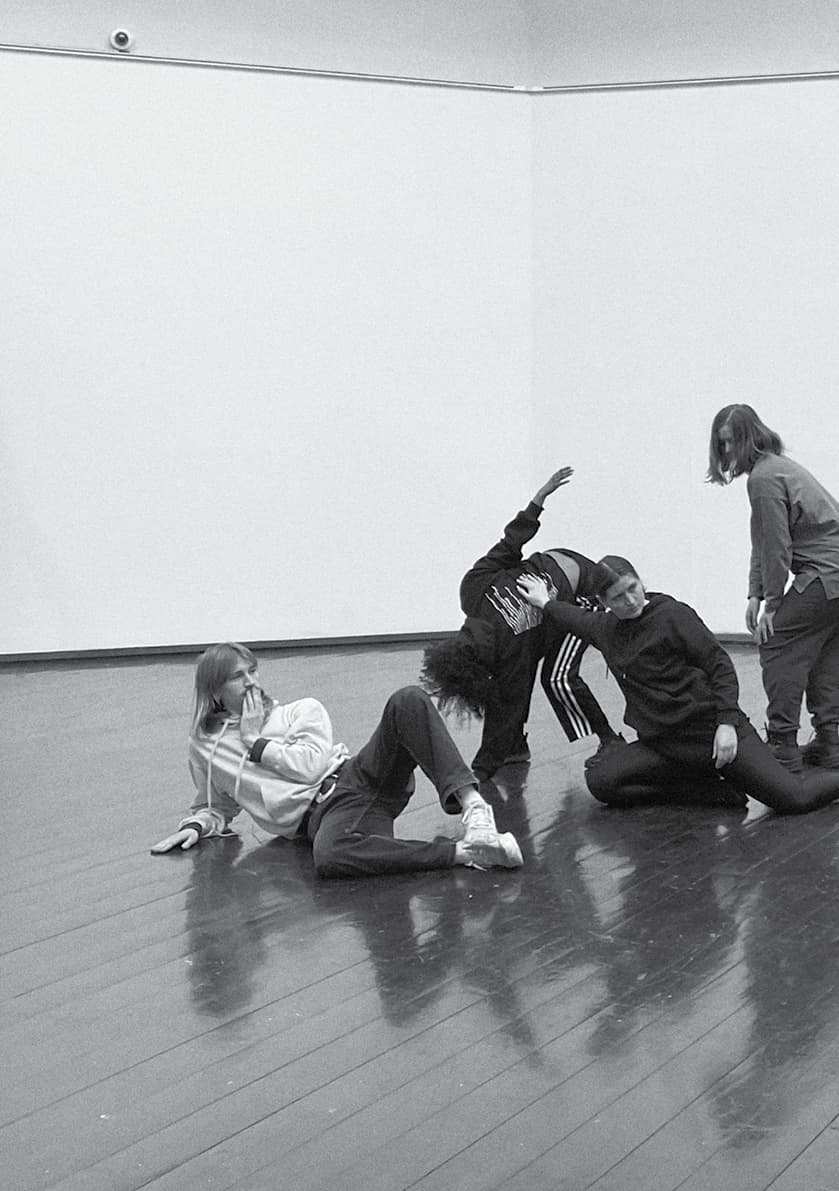
The Participants
Aase Nielsen, Adam Reumert Reffs, Adam Seid Tahir, Adrián Grimozzi, Adrian Piper, Afua Atingo, Aida Hashim Munch-Andersen, Alana Proosa, Alberte Koch, Alexandra Moltke, Aleksandr Sandovich, Alexander Moray Williams, Alex Franz Zehetbauer, Alexander Tillegreen, Alexandra Moltke Johansen, Ali Campbell, Alice Martucci, Alix Smed Dawids, Anne Kristine Elmholt, Anna Lea Ouro, Amalie Bergstein, Amalie Bornich, Amalie Rask Hellerøe, Ami Karvonen, Amira El-Hasnaoui, Ana Lumack, Anders Kirkegaard, Anders Mossling, Anders Paulin, Anders Toft Pedersen, Anders Tougaard, Andrea Pettersen, Andrea Skotland, Andreas Broby Åberg-Jensen, Andreas Haglund, Andreas Hald Oxenvad, Andreas Liebmann, Andrew Livingston, Ane Kollerup, Ane Reymann, Angela Bundalovic, Ani Bigum Kampe, Anja Ponjevic Tørnqvist, Anna Cackett, Anna Franziska Jäger, Anna Moderato, Anna Sagström, Anna Schulin-Zeuthen, Anna Sofia Bregnehave Windum, Anna Windfeldt Grønberg, Anne Bjørg Kloster, Annedore Antrie, Annika KompArt, Anton Hjejle, Antonia Steffens, Åsa Gjerstad, Asbjørn Krogh Nissen, Asger Koudahl, Ash McNaughton, Aske Thiberg, Asmus Mejdal, Aspasia Balta, Asta Von Apfel, Astrid Lindhardt, Astrid Sønderskov Andersen, Astrit Ismaili, Atle Auran, Augusto Chiappe, Augusto Corrieri, Baiba Sprance, Balz Isler, Barbara Golda Nussbaum Varlev, Beate Bloch Christensen, Beatrice Fleischlin, Beck Heiberg, Belinda Mcclory, Bella Jensen, Benedicte Ramfjord, Betty Krag, Billie Hviid Andersen, Birgitta Frello, Birgitte Boesen, Bo Kristian Jensen, Boaz Barkan, Bobby Ågren, Boe Larsen, Bojana Cvejić, Bosa Mina, Brian Mørk Hansen, Brian Tilley, Bruce Gladwin, Bruno Listopad, Bryana Fritz, Cade Moga, Camilla Lind, Camille Marie Beck Fallesen, Carl Emil Amundsen, Carly Rae Heathcote, Caro Chan, Carolyn Naish, Casper Rudolf Emil Kjeldsen, Cassie Augusta Jørgensen, Catrine Zorn, Cecilie Bogø Bach, Cecilie Penney, Cecilie Wernberg Dalhoff, Charlie Laban Trier, Charlie Tang, Charlotte Czochara, Christian Balvig, Christian Brems, Christian Schytt Fisker, Christine Borch, Christine Gjerulff, Christine Seierstad, Cille Stoltenborg Bardorf, Cille Viola Brandt Petersen, Clara Kaas Nielsen, Clara Reiner, Claudia Lomoschitz, Claus Haxholm, Colin Self, Corey Scott-Gilbert, Cornelia Sunesen, Cosmo Soltani, Cristian Vega, Crystal Wall, Dajo Vande Putte, Daniel Donato, Daniel Farrugia, Daniel Fogh, Daniel Michael Shaw, Daniel Norback, Daniel Paiva De Miranda, Darren Pettie, David Bentow, David Nicolas Abad, David Sebastian Lopez Restrepo, Dennis Dieter Kopp, Dennis Haladyn, Dennis Halydan, John Hansen, Dina Vester Feilberg, Eau Pernice, Egil Kolind, El Hogg, Eleanor Bauer, Elena Conradt, Elisabeth Carmen Gmeiner, Elisabeth Hampe, Elisabeth Molin, Eliza Bozek, Ellen Friis, Emil Boda Spallanzani, Emil Vodder Kristensen, Émile Sadria, Emilia Gasiorek, Emilie Gregersen, Emilie Hasling, Emilie Strøm, Emma Bonnici, Emma Louise Ottsen Knudsen, Emma Seebach, Emma Silja Sångren, Emma-Emilia Carla Rasmussen, Eneli Järs, Erik Christoffersen, Erik Olevik, Erik Thomas Hällman, Esben Weile Kjær, Esben Wisbech, Esbern Torgaard Kaspersen, Esther So, Éva Mag, Eve Stainton, Ewan Hindes, Filip Vest, Filippa Augusta Fjord Francke, Flak Richter, Franchesca Wong, Fred Raposo, Frédéric Gies, Frederik Tøt Godsk, Frederikke Dahl Hansen, Frederikke Hooge, Freja Ravn Nissen, Freja Veile, Freya Sif Hestnes, Georg Jagunov, George Lewis Jr AKA Twin Shadow, Gregers Hansen, Gro Frank Rasmussen, Gry Raaby, Guro Stugo, H. Hartvig, Halfdan Kajhøj, Hannibal Andersen, Hans Frederik Jacobsen, Hans Petter Eliassen, Heiko Tubbesing, Helene Kvint, Helle Kirstine Egsgaard, Henriette Bjørn, Henrik Chulu, Henrik Grimbäck, Henrik Vestergaard, Henry Kasch, Hervé Butoyi, Heva Olivia Vaupel, Holger Hartvig, Ida Christine Hougaard Johannessen, Ida Grarup, Ida Nissen, Ida Østman, Ida-Elisabeth Larsen, Idil Alpsoy, Iggy Malmborg, Imre Mark Petkov, Ina Trenk, Inaja Skands, Ingeborg Meier Andersen, Ingrid Skanke Høsøien, Ingrid Marie Aagaard Dam, Ingvild Bertelsen, Isa Marie Henningsen, Isadora Soares Belletti, Isolde Daun, Jaakko Pallasvuo, Jachya Freeth, Jacob Remin, Jacob Riegels, Jacob Tekiela, Jakob Einar la Cour (zack christ), Jakob Linding, Jakob Milthers, Jakob Schnack Krog, Jamilla Mahmud Henriques, Jan Gehmlich, Jan Vesala, Janus Rønn Lind, Jari Matsi, Jay Fiskerstrand, Jeanette Groenendaal, Jeffrey Scott Stratton, Jennifer Ma, Jens Bredholt, Jens Damsager Hansen, Jens Villy Kock, Jessica Dunn Rovinelli, Jessica Ekomane, Jessie Kleemann, Jihaan Yussuf, Joakim Wei Bernild, Joana Tischkau, Joel Degerfeldt, Joel Fritzon, Johan Jönson, Johanna Knutsson, Johanne Engbirk, Johanne Karlsrud, Johanne Møller Kjeldsen, John Gottenborg Bruun, John Hansen, Johnny Isaksson, Jon Erik Nyholm, Jonas Kjeldgaard Sørensen, Jonas Preben Jørgensen, Jonathan Bonnici, Jonathan Stougaard, Jonathan Zion, Jörn Burmeister, Josefine Else Larsen, Josefine Gynther Craig, Josefine Thornberg-Thorsøe, Joseph Wegmann, Jovana Zoric, Juan Francisco, Jules Fischer, Julia Leonhardt, Julián Rodríguez Rona, Juliane Jensen, Julie Petrine Glargaard, Julie Smed Jensen, Julienne Doko, Juliette Blightman, Justin Kennedy, Justus Gelberg, Jørgen Skytte, Kai Merke, Kaie Küünal, Karen Hal Gerup Hermansen, Karen-Maria Bille, Karin Bang Heinemeier, Karina Dichov Lund, Karis Zidore, Karoline Clasen Holland, Karoline Lieberkind, Kaspar AI, Kasper Hanfgarn Jensen, Kasper Hesselbjerg, Kathrine Skibsted, Katinka Fogh Vindelev, Katrine Brun Thorup, Katrine Leth Nielsen, Katya Muromtseva, Kira O’Reilly, Kirsten Astrup, Klara Lopez, Knud Foldschack, Kristian Byskov, Kristian Husted, Kristian Hverring, Kristian Knudsen, Kristiina Tang, Kristoffer Akselbo, Kristoffer Eriknauer, Kristoffer Tophøj, Lachlan Carrick, Lærke Bitsch Lynggaard, Lærke Valum, Lars Buchardt, Lars Kock, Lars Vind-Andersen, Lauge Falkentorp, Laura Allen Müller, Laura Cecilie Krogtoft Nielsen, Laura Emilie Andersen Lausen, Laura Gerdes-Miranda, Lea Burrows, Lea Mortensen, Lea Paulsen, Leisha Thomas, Leonie Strecker, Ligia Lewis, Liina Magnea, Lilibeth Cuenca Rasmussen, Lily Matras, Lina Hashim, Linda Nielsen, Linelu Falk, Lisa Gehring, Lise Læssøe Eiler, Lisen Pousette, Liv Helm, Liva Krüger, Lopez Bubica, Lotte Løvholm, Loui Aamot Hestbæk, Loui Ladegaard, Louis Bodnia Andersen, Louise Hassing, Louise Palle Krog-Meyer, Lua Løvholm Remin, Lucas Wichmann Melkane, Lucio Bazzalo, Ludvig Brostrup, Luka Holmegaard, Luke Howard, Luna Lund Jensen, Luna Stage, Lydia Ö Diakité, Mads Borre, Mads Christiansen, Mads Krue Bugge, Mads Lilkær, Mads Rømer Brolin-Tani, Magnus Thorø Clausen, Mai Katsume, Mai Sakamoto, Maja Bonde Holtze, Maja Malou Lyse, Maja Schicker Hartnack, Malene Brask Olsen, Manuel David Scheiwiller, Marco Berardi, Maria Bordorff, Maria Hesselager, Maria Holmegaard Hansen, Maria Ines Plaza Lazo, Maria Ipsen, Maria Louceiro, Maria Metsalu, Maria Morina, Maria Theresa Leth Clante, Marie Boye, Marie-Louise Stentebjerg, Marie-Lydie Nokouda, Marina Karpova, Marina Otero, Marina Popović, Mark Cuthbertson, Mark Deans, Marlene Bonnesen, Martín Flores Cárdenas, Martin Gantenbein, Martin O’Brien, Martin Padalak, Martin Ullits Dahl, Mathias Dyhr, Mathias Findalen, Mathias Schwartzbach, Mathias Kedak, Mathilde Helbo, Mathilde Hyttel, Matilde Böcher, Max Eilbacher, Max Morris-Doherty, Max Wallmeier, Meleat Fredriksson, Melissa Reeves, Merveille Kanga, Mette Riise, Mia-Luise Heide, Michael Chan, Michael Kitchin, Michael Scerbo, Michael Tsouloukidse, Michiel Tange van Leeuwen, Mie Katrine Kristensen, Miguel Valdivieso, Mikkel Borrisholt Grevsen, Mikkel Galløe, Mikkel Larsen, Milan Binderup Gammelgaard, Mira Winding, Miranda Godvil, Miriam Kongstad, Miriam Kræpping Mouritsen, Molly Haslund, Molly Henningsen, Morten Arnfred, Morten Bencke, Morten Burian, Morten Grove Frandsen, Nadage Azongnash, Nadia Caroline Andersen, Nadine Bakota, Nadja Mattioli, Nagi Gianni, Naia Burucoa, Nanna Hanfgarn Jensen, Nanna Krøyer, Nanna Stigsdatter Mathiassen, Nao Yazawa, Naomi Camille Rosing Hanna, Nathalie Baudy, Nathan Ooms, Nathaniel Budzinski, Neda Sanai, Nefeli Ginnerup Have, Neill Cardinal Furio, Nikolaj Schultz, Nicholas Woolhead, Nicolás Facundo Rosés Ponce, Nicolas Galeazzi, Nicole Schuchardt, Niels Martin Koefoed Rehof, Niko Ursin, Nina McNeely, Nuka Maria Marstrand, Olivia Riviere, Otto Rissanen, Oxhy, Özlem Saglanmak, Pam Van Delyra, Pavel Krisevich, Pernille Kragh, Peter Højbjerg, Peter Kohlmetz Møller, Petrea Søe, Petter Pettersson, Phie Ambo, Pia Lindman, Pianka M, Pippin Latham, Poul Helmer Laursen, Pouline W. Bay, Priidu Adlas, Priscilla Lai, Puer Parasitus, Rabih Mroué, Ragni Halle, Raphael Frisenvænge Solholm, Rasmus Bunton, Rasmus Kreiner, Rasmus Røhling, Rebecca Langley Jensen, Regina Jay, Regina Unnur Olafsdottir, Rhian Hinkley, Richard Sand, Rigmor Ranthe, Rosa Birkedal, Rosa Danielsen, Rudolf Terland Bjørnerem, Rumle Skafte, Rune Baastrup, Rune Bjerre, S. Rieser, Sa Ra Sachs, SADAK, Sall Lam Toro, Sally Bjerre Gaarde, Sally Ingvorsen, Sam Moore, Samir Kennedy, Samira Elagoz, Samira Nawa, Sandra H Turèll Henningsen Berg, Sandra Liaklev Andersen, Sara Hamming, Sara Sassanelli, Sara Sjölin, Sarah Lewis-Cappellari, Sarah Mainwaring, Sarah Pihl Petersen, Sargun Oshana, Sasha Skochilenko, Savannah Benneweis Pramming, Scott Price, Sebastian Gudmand Høyer, Sebastian Persson, Seimi Nørregaard, Şenol Şentürk, Serena Coelho, Shelley Etkin, Shio Otani, Sicilia Gadborg Høegh, Sidsel Ana Welden, Siggi Oli Pálmasson, Signe Gravlund Thomsen, Signe Lillemark, Signe Søndergaard Moore, Sigrid Stigsdatter Mathiassen, Sigurjón Sigurjónsson, Simin Stine Ramezanali, Simo Kellokumpu, Simon David Zeller, Simon Kongsted, Simon Laherty, Simon Littauer, Simone Bartholin, Sina Kießling, Siri Maj Knutsen, Siu Fung Production, Skjold Rambow, Snorre Elvin, Snorre Jeppe Hansen, Sofia Palillo, Sofia Staal, Sofie Evald Ravn, Sofie Winther, Solvej Körner Brekling, Sonia Teuben, Sophia Krowicki, Sophia Mage, Sophie Rebekka Grodin, Søren Gemmer, Søren Meisner, Søren Ulrik Thomsen, Steen Ejler Penhoat Askegaard, Steffen Bruun, Steinar Guðjónsson, Stine Frandsen, Stine Victoria Kobæk Pedersen, Súni Joensen, Susanne Sachsse, Susie J Horgan, Suziethecockroach, Svante Huniche Corell, Sven Buse, Svend E. Kristensen, Svend Sømod, Tabatha Araujo, Talita Mollerup-Degn, Tanja Diers, Tara Hashim Jensen, Tarvo Porroson, Teo Ala-Ruona, Thea Soti, Theresa N. Mangara, Thjerza Balaj, Thomas Hostrup, Thomas Hwan, Thor Gunnar Wendtland Henriksen, Thusnelda Mercy, Tiana Hemlock-Yensen, Tilde Burrows, Tim Panduro, Tone Haldrup Lorenzen, Torben Kirkegaard, Tue Biering, Tuukka Haapakorpi, Ulrich Ruchlinski, Unn Magdalena Aurell Hansson, Uriel Cistaro, Valerie Cole, Vânia Doutel Vaz, Victoria Kaldan, Victoria Marshall, Vida Wu, Vikram Pradhan, Viktor Christiansen, Ville Laurinkoski, Ville Vidø, Vincent Roumagnac, Viola Nolsøe Krebbers, Warren Jones, William Andreas Wivel, William Fly Bendix, Wynne Bennett, Xavier Perrone, Yael Salomonowitz, Ylva Maia, Zack Mennell, Zakarias Kofi Dadson Sanderson, Zuhal Kocan
Toaster 2021 – 2025
Agnete Krabbe, Alexander Melchior, Amanda Skotte, Anne Weile Kjær, Beate Bloch Christensen, Claus Arrildt, Christian Vest Berntsen, Dina Vester Feilberg, Hanne Mørup, Iben Bach Elmstrøm, Laura Gerdes-Miranda, Liv Helm, Magnus Thorø Clausen, Marianne Torp, Martin Wendelbo, Miriam Brandt, Miriam Frandsen, My van Dijk, Nikola Nedeljkovic Gøttsche, Nikolaj Friis Rasmussen, Nikolaj Roed Klüver, Pernille Mikkelsen, Pernille Zidore, Sif Lindblad, Sigrun Nolsøe, Simone Hjuler Andersen, Søren Fjeldsø, Steen Ejler Penhoat Askegaard, Åsmund Sollihøgda
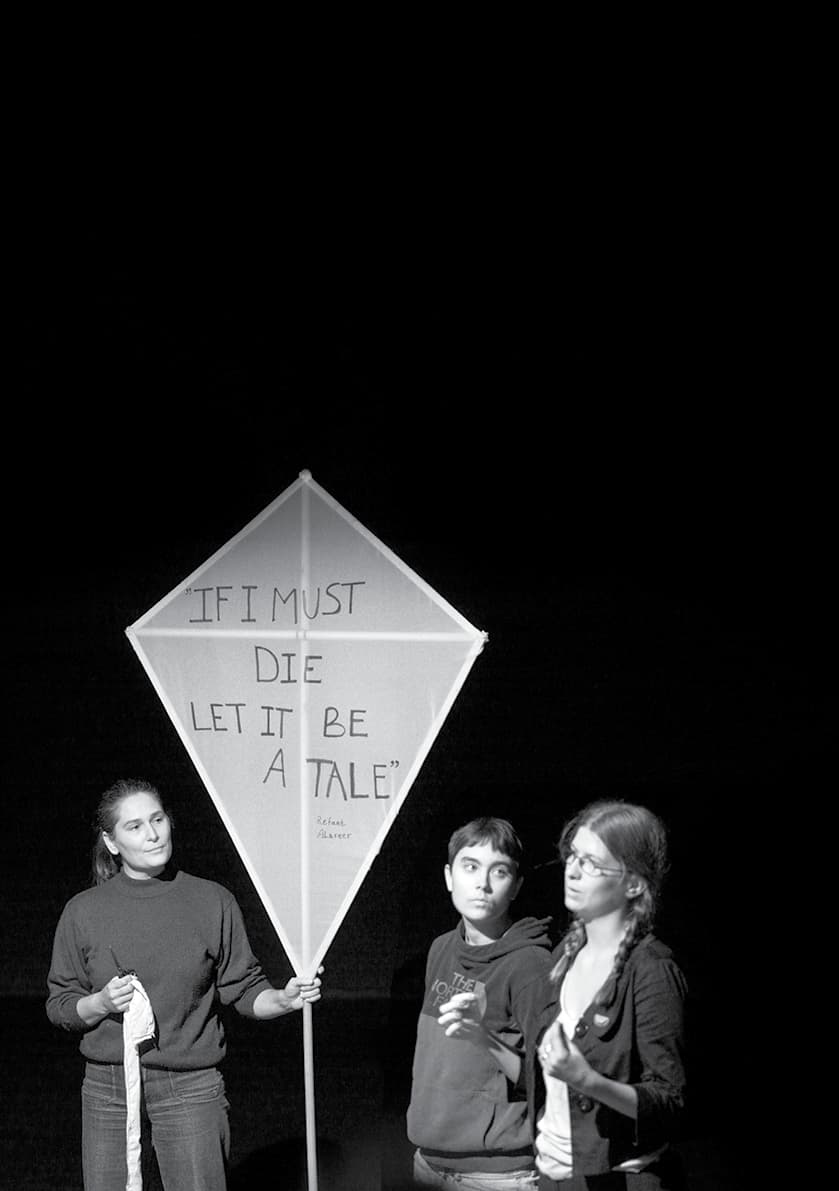
The Performances
2021
2021.08.29 The Performance Agency::Another Map to Nevada
2021.10.18 DANSEatelier::Triptykon I – Vandmærke
2021.11.01 Gaststube°::Home Made Climate Conference
2021.11.04 The Other Eye of The Tiger (TOETT): Salon #2
2021.11.07 Simo Kellokumpu, Vincent Roumagnac and
Nao Yazawa::ri:vr [astrotrilogia II]
2021.11.14 Hestnes/Popović: Salon #3
2021.11.24 Glargaard & Søe: Googleren
2022
2022.01.30 Böcher & Helm::Messias i Nat
2022.03.13 DANSEatelier::Triptykon II – Udflugt
2022.04.25 Kunstteater::Gøglerne
2022.05.28 Astrup & Bordorff::O’s historie
2022.06.09 Institute of Interconnected Realities:
Song of 8
2022.06.12 Live Art Danmark:
KABOOM – the art of destruction
2022.06.12 Joana Tischkau::PLAYBLACK
2022.06.13 DANSEatelier::Triptykon III – Splat
2022.06.27 Jules Fischer: Vanitas
2022.08.14 Søren Ulrik Thomsen & Det Glemte Kvarter:
Et øjeblik var det som om alt dette skulle forsvinde
2022.11.01 CuntsCollective:
AMOR KÆRLIGHED LIEBE LOVE
2022.11.03 Beck Heiberg & Charlie Laban Trier:
Digging a Glittery Grave
2022.11.05 Sew Flunk Fury Wit::Metamorphosen
2022.11.05 Helene Kvint::The Show Must Go ON!
2022.11.06 Andreas Liebmann & Boaz Barkan:
TOTAL INTERNATIONAL (LOKAL) #2
2022.11.06 Annika KompArt: I am Mephisto
2022.11.06 Boys* in Sync: Happy Vineyards
2022.11.20 LOGEN: Monsterbal
2022.11.27 Institute of Interconnected Realities: A Play
2023
2023.02.22 MEGA RICH COMPANY:
The big MONEY GIVEAWAY-SHOW
2023.04.16 Det Algoritmiske Teater::Labyss
2023.05.20 The Other Eye of The Tiger (TOETT)::Peer Gynt?
2023.06.02 Marina Otero::Fuck Me
2023.06.10 Hestnes/Popović::So far so good
2023.08.10 Sa Ra Sachs / AMBRA – curated by South into North::Aqua Drama
2023.11.26 Norpol::I Trust You
2023.12.08 The Other Eye of The Tiger (TOETT): Peer Gynt? – Tour
2024
2024.02.09 Sir Grand Lear & Thomas Hwan:
How to put your money in a tax shelter, part 1
2024.02.24 Maria Metsalu::Kultuur
2024.02.24 Lina Hashim::Odalisque
2024.03.02 Maria Metsalu::The Well
2024.03.02 Teo Ala-Ruona::Lacuna
2024.03.09 Jäger Ooms::Ambient Theatre Fury
2024.03.09 Liebmann/Barkan::Don’t pay your debts
2024.03.16 Sall Lam Toro: OBSIDIANA, ESTRANHA,
ERÓTICA E ULTRAVIOLETA
2024.03.16 Martin O’Brien:
An Ambulance to the Future (The Second Chance)
2024.03.22 Sir Grand Lear & Thomas Hwan:
How to put your money in a tax shelter, part 2
2024.04.06 Boys* in Sync: Zapfenstreich – Mother Europe
2024.04.06 Aaron Williamson::Let Down Your Hair
2024.04.13 Beck Heiberg::Blue Swallowings
2024.04.13 Samira Elagoz::Seek Bromance
2024.04.20 Iggy Malmborg: Satan
2024.04.20 Jessie Kleemann::The Iceflake
2024.04.21 Molly Haslund::Virtual Waltz
2024.04.21 Seimi Nørgaard: Do let us know
2024.04.21 Kira O’Reilly:
what if this was the only world she knew III
2024.04.29 The Algoritmic Theatre: Labyss
2024.06.02 Ligia Lewis::A Plot/ A Scandal
2024.06.06 Filip Vest: Resort
2024.06.21 Sir Grand Lear & Thomas Hwan:
How to put your money in a tax shelter, part 3
2024.09.06 Alexander Tillegreen: Grenzfrequenz
– Fluktuierendes Geflüster – Phantom Streams
2024.09.06 Leonie Strecker::Point of Passage (Terminal)
2024.09.20 Eve Stainton::The Joystick and The Reins
2024.09.20 Camilla Lind: MELODRAMA
2024.10.11 Jessica Ekomane: TBA
2024.10.11 Ville Laurinkoski::Fin de section
2024.10.13 Boys* in Sync: Zapfenstreich – Mother Europe
2024.10.25 Miriam Kongstad::HARD PLAY
2024.10.25 Thjerza Balaj::ANTAGONIST
2024.11.08 Jacob Remin: Magical Ritual for the Preservation of the Earth + God Energi Klimakor
2024.11.15 Boaz Barkan::Our Other Body
+ Art Workers for Palestine
2024.11.22 Sir Grand Lear & Thomas Hwan::How To Put Your Money In a Tax Shelter + Sensitive Embroidery
2024.11.29 Jules Fischer::Lesions
+ Luka Holmegaard & Cosmos Acupuncture
2024.12.01 Filip Vest::The Tryouts
2025
2025.03.23 Boys* in Sync::Zapfenstreich – Mother Europe
2025.05.23 Mega Rich Company:
Det store MONEY GIVEAWAY-SHOW
2025.05.29 Boaz Barkan::Our Other Body
2025.06.01 Back to Back Theatre:
The Shadow Whose Prey the Hunter Becomes
2025.06.07 Aske Thiberg: Theres A
2025.06.07 Elisabeth Molin::As if you could just eat time
2025.06.07 Kasper Hesselbjerg::Cooking Your Spirit Animal
2025.06.07 Sofie Winther::Hoarders Hive II
2025.06.08 Frédéric Gies::TECHNOSOMATICS
2025.06.09 Beyond Darkness: Hyphea
2025.06.09 Claudia Lomoschitz, Alex Franz Zehetbauer,
Crystal Wall: Water of Life and Domination
2025.06.09 Eau Pernice::Mellemtiden
2025.06.09 Éva Mag::At First, I Feel I’ve Got Nothing
2025.06.09 Kristoffer Akselbo::Once I was a Human
2025.06.09 Rasmus Røhling::[Welfare Foreshortened]
Perspective as Symbolic Form
2025.06.09 Sara Sjölin::Back to the Future
2025.06.09 Seimi Nørregaard: Poetic consultation in the bushes
2025.06.09 Teo Ala-Ruona::Enter Exude – CANCELLED
2025.06.09 PERSONA NON GRATA::The Dinner
2025.06.15 fix+foxy::The State
Events 2021 – 2025
2021.10.30 LOGEN: Salon #1 – Logen
2021.11.06 Toett, DANSEatelier, Institute of Interconnected Realities, Logen, Hestnes/Popović, Gaststube:
A Taste of Toaster
2022.06.06 Travers: SHOUT!
2022.05.23 Astrup & Bordorff: FACT, FICTION AND ARTISTIC FREEDOM in working with the documentary
2022.06.10 Joana Tischkau, Naima Yasin og Laura Allen Müller: PLAYBLACK AFTERTALK
2021.11.16 Julie Glargaard and Mads Rømer Brolin-Tani:
Salon about Googleren
2022.12.15 Sa Ra Sachs: Book Launch: Blond Lagoon
2023.01.09 Alexandra Moltke, Phie Ambo, Nikolaj Schultz, Mathias Findalen, Rune Baastrup &Travers:
SHOUT #2: The New Narrative
2023.04.29 The Development Platform for the
Performing Arts & Toaster:
Meeting each other – across borders
2023.04.13 Tina Ryoon Andersen from The Algoritmic Theatre:
Humans, Machines & Memories
2023.05.04 Art Hub Copenhagen: The Digital Divide
2023.14.09 + 2023.11.02 Sir Grand Lear and Thomas Hwan: How to put your money in a tax shelter
2021.09.21 German Museum for Black Music and
Entertainment and Theatre- and Performance
Studies at the University of Copenhagen,
CURRICULUM: Joana Tischkau
2023.11.18 Nikola Nedeljkovic Gøttsche,Ilia Goldfarb, Karin Hilmer Pedersen & Norpol: Trust us – Toast us!
2024.03.01 Va-Bene Fiatsi & Liveart.dk:
Artist Talk Va-Bene Fiatsi
2024.04.02 Students from Theatre and Performance Studies at the University of Copenhagen:
S.L.O.W.N.E.S.S – performance lecture
closed rehersals Tanja Diers: LYTTEKOR
2024.11.30 Students from Theatre- and Performance Studies at the University of Copenhagen:
Statslige Affærer – Performativ research
30/5 at 21.20-22.00 CPH STAGE, Toaster & REPUBLIQUE:
ARTIST TALK:
BACK TO BACK THEATRE & CASPAR ERIC
28/5 at 14.30-16.00 The Danish National School of Performing Arts – Further Education,
Glad Teater, Toaster and CPH STAGE:
WHY WORK WITH DIVERSITY
– Interview and roundtable with
Back to Back Theatre
Workshops 2021 – 2025
2024.02.22 + 2024.02.27 Maria Metsalu
2024.04.18 + 2024.04.19 Iggy Malmborg
2024.04.04 + 2024.04.05 Aaron Williamson
2024.03.07 + 2024.03.08 Jäger Ooms
2024.02.29 + 2024.03.01 Teo Ala-Ruona
2024.04.11 + 2024.04.12 Samira Elagoz
In collaboration with Liveart.dk, The Royal Danish Academy of Fine Arts – Schools of Visual Arts, The Danish National School of Performing Arts – Continuing and Further Education
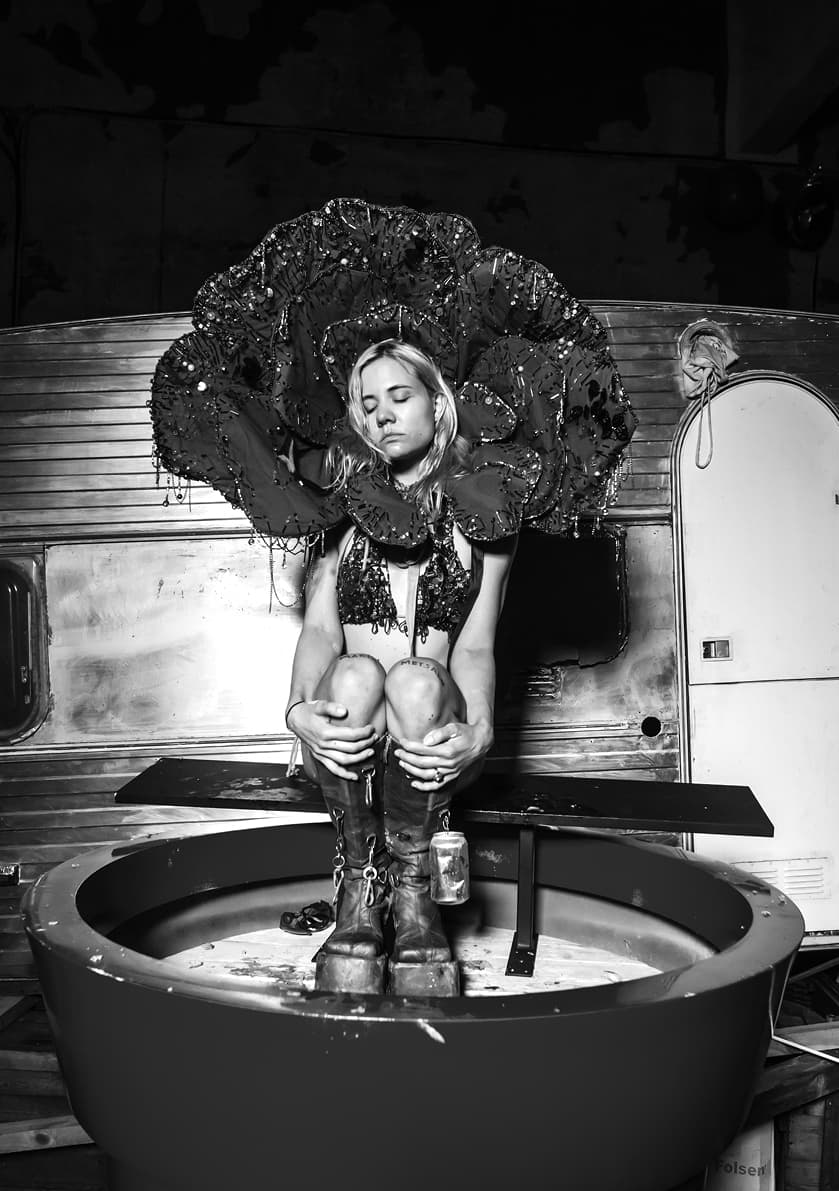
Co-production Partners
Arsenic – Centre d’Art Scénique Contemporain, Art Hub, Arts Management Helsinki, Aveny-T, BIT Teatergarasjen, Black Box Teater, Bora Bora, CAMPO, CPH STAGE, Cyrk Aps, Dansehallerne, Det Frie Felts Festival, Ehkä-production, Finish Cultural Institute Benelux, Frascati Theatre, FUTURE RITUAL, Inkonst, Jong Werk beurs TAZ, Kaerne Basel, Kanuti Gildi SAAL, Kiasma – Museum of contemporary Art, KlimaKontor Basel, Kunstenwerkplaats Brussels, Kunstenwerkplaats Pianofabriek, Live Art Danmark, Mad House Helsinki, Millfactory Studios, PrFm, Republique/Revolver, Reykjavík Dance Festival, Rosendal Teater, Rundetaarn, South into North, SPIELART Theaterfestival, SPRING Performing Arts Festival, Stamsund Teaterfestival, Tai Kwun, TAZ & Sabam For Culture, Teater GLAD, UKS (UNGE KUNSTNERES SAMFUND / YOUNG ARTISTS’ SOCIETY), Warehouse 9
Residencies
Esitystaiteen Keskus, FABRIKKEN for Kunst og Design, Helsinki International Artist Programme (HIAP), HIAP – Helsinki International, Holstebro Dance Company, Kanuti Gildi SAAL, Salon K
Performances supported by
3literværkstedet (Michael), Ammodo, Arts Council England, Arts Promotion Centre Finland, Begona Solís La Casa Encendida, Bikubenfonden, CRUDA, Cultural Endowme…3literværkstedet (Michael), Ammodo, Arts Council England, Arts Promotion Centre Finland, Begona Solís La Casa Encendida, Bikubenfonden, CRUDA, Cultural Endowment of Estonia, Cultural Ministry of Estonia, Dansehallerne, De Grote Post Oostende, Dramatikkens hus, Éditions Fayard, Estonian Cultural Endowment, Estonian Ministry of Culture, Fonds Podiumkunsten, Frederiksberg Fonden, Grosserer Andreas Collstrop, Hoffmann og Husmans Fond, Knud Højgaards Fond, Koneen Säätiö, Kulturdirektoratet in Norway,
L. Zeuthens Mindelegat, La Biennale di Venezia, Lemvigh-Müller Fonden, Music in performance: Sajida Obaid – Abu Al-Rahaf and Mr. ID ft Sonia Noor – Mra ou Mermora, Prins Bernhard Cultuurfonds, Rundetaarn, Søn Rudolf Collstrups Mindefond, Statens Kunstfond, Teaterforlaget Nordiska ApS, The Leverhulme Trust and Queen Mary University of London, Varvara Boutique, VGC, Whitechapel Gallery
Special thanks from artists to
Aleksandr Sandovich, Andreas Haglund, Angelica Stathopoulos, Bobby Ågren, Charlie Laban Trier, Georg Jagunov, Henrik Chulu, Lotte Løvholm, Lua Løvholm Remin, Martin Padalak, Nathaniel Budzinsky, Paolo de Gile, Rose Munk Heiberg, Sally Ingvorsen, Signe Lillemark, Svend Sømod
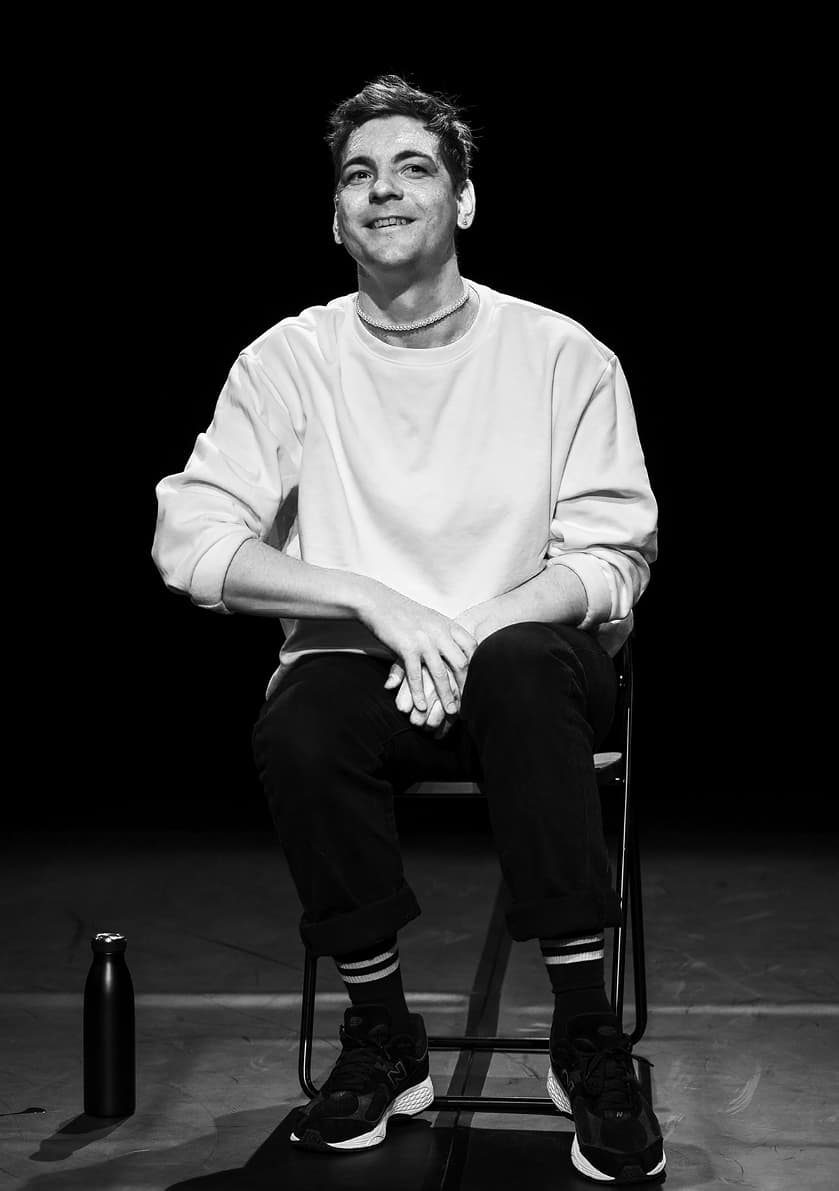
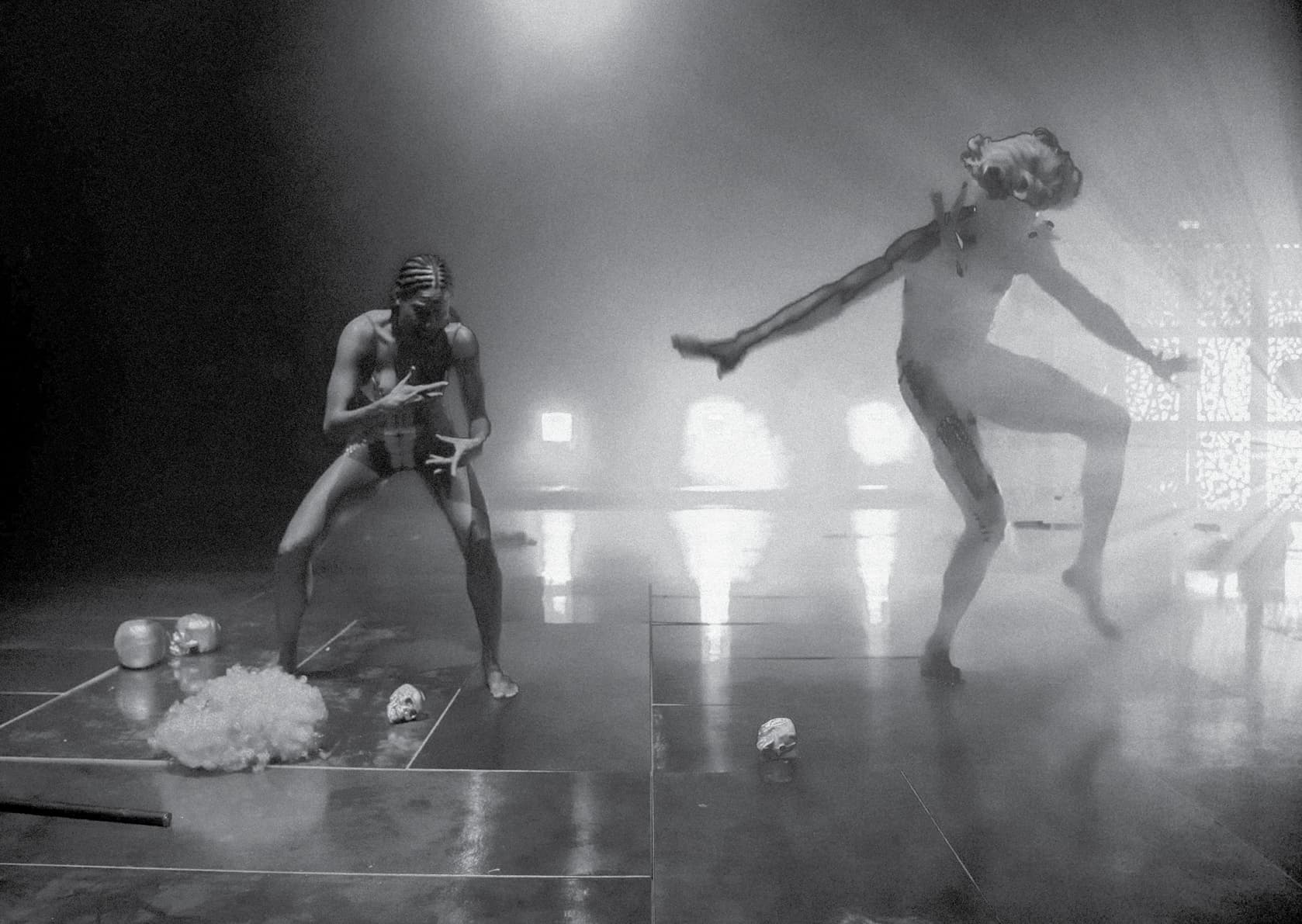
Editors
Miriam Frandsen (she/her)is a Danish dramaturg and curator, educated in Theatre Studies and Dance Aesthetics, University of Copenhagen, 2003. She has been engaged as a project developer at the Danish School of Performing Arts – Continuing Education (2004-2014) and a permanent employee at the Royal Danish Theatre as a dramaturg at the Playhouse (2015- 2019) and has been a curator and project manager at Toaster – Husets Teater and Den Frie since 2020.
Sally Marcher (she/her) is a Danish editor and cross-disciplinary culture worker. She holds an MA in Modern Culture, University of Copenhagen, 2023 and has worked with editing, project management, and communications in various formats across visual arts, literature and theatre.